
+91 9008 41 9008
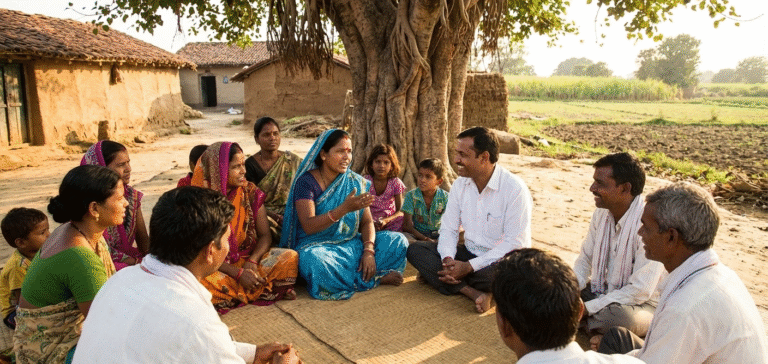
Gender equality is not just a social goal; it is the foundation on which healthy families, progressive communities, and empowered nations are built. Yet, its roots must grow where society takes its earliest shape: in the villages. Rural India is where mindsets are inherited, practices are repeated, and traditions are absorbed by every growing child. If inequality begins here, then equality must begin here too.
Across thousands of villages, little boys and girls grow up learning who they are expected to be, not based on their abilities, but based on their gender. These early lessons shape how they think, behave, and dream. If we want a future where both men and women stand together with equal dignity and equal opportunity, then we must start the change from the soil that shapes them.
Gender inequality in Indian villages is woven deeply into cultural norms, family traditions, and generational beliefs. Girls are often raised with restrictions, expectations, and boundaries that boys do not face. Roles within homes, mobility outside, decision-making power, and even access to food or education are often determined by gender.
Common rural challenges include:
Preference for sons
Early marriage pressures
Girls being pulled out of school
Restriction on mobility and exposure
Boys conditioned to feel superior
Girls encouraged to remain submissive
Household work seen as “female responsibility”
This inequality is not always intentional; it is often a reflection of what generations have followed. But awareness can break cycles that tradition cannot justify.
Long before a child enters a classroom, the village becomes their first teacher.
They watch how adults treat one another.
They notice who makes decisions at home.
They learn what is “allowed” for boys and what is “expected” from girls.
These lessons become lifelong truths.
If a girl grows up seeing women speaking less, eating last, working endlessly, and having little say in family matters, she begins to believe that this is her role in the world. On the other hand, a boy who grows up seeing men being served first, holding authority, and having freedom automatically internalizes superiority.
Equality must start in these early-learning environments before stereotypes become identities.
Across rural areas, a girl’s childhood often comes with invisible chains:
Education Restrictions: Many girls drop out due to household work, safety concerns, or lack of family support.
Domestic Burden: Young girls are expected to cook, clean, and care for siblings before attending school — if they attend at all.
Mobility Restrictions: Fear, social norms, and judgement often limit how far she can travel or who she can meet.
Early Marriage: Girls are often married off early, ending their dreams before they take shape.
Limited Aspirations: She learns to shrink her dreams before she even knows her potential.
These are not just social issues they shape her entire life trajectory.
Gender inequality harms boys too, although society rarely sees it.
Boys are told to suppress emotions: “don’t cry,” “be strong,” “don’t act weak.”
They feel pressure to be the sole earners for the family.
They are discouraged from participating in household work.
They learn entitlement without learning empathy.
They absorb harmful masculinity norms: dominance, aggression, silence.
Inequality creates emotional gaps in boys and psychological burdens that affect their mental health, relationships, and future responsibilities.
A mindset built in childhood becomes a belief held in adulthood.
If stereotypes start early, equality must start even earlier.
Starting equality at the village level ensures:
Girls grow with confidence, not fear
Boys learn emotional intelligence, not dominance
Families become more stable and supportive
Children learn to value mutual respect
Society grows with balanced skills and shared responsibilities
Early action can break decades of inherited barriers.
Education has the power to reshape entire communities. A classroom that encourages equality can undo years of bias.
A gender-equal school environment includes:
Girls’ safety inside and outside campus
Equal encouragement in sports, leadership, and academics
Teachers trained in gender-sensitive communication
Boys taught empathy, cooperation, and respect
Career guidance for girls beyond stereotypical roles
When girls learn with dignity and boys learn with sensitivity, the entire village progresses.
When women earn, families rise.
When women lead, communities transform.
Rural women empowerment thrives through:
Skill development programs
Self-help groups
Small-scale entrepreneurship
Microfinance and savings circles
Training in digital and financial literacy
Economic independence not only uplifts women; it uplifts entire families. Children educated by empowered mothers grow into confident individuals who expect equality as a norm.
Gender equality cannot be achieved by women alone. It requires men to evolve alongside them.
Men and boys can contribute to equality by:
Sharing household responsibilities
Respecting women’s choices and voices
Standing against discrimination
Supporting girls’ education
Understanding that equality strengthens, not threatens, them
Transforming boys into compassionate allies builds stronger households and healthier communities.
The path to equality becomes stronger when supported by local leadership.
Effective village-level change includes:
Women participating in Panchayat decisions
Awareness of laws related to child marriage, domestic abuse, and women’s rights
Local campaigns promoting education and safety
Government schemes reaching families who need them most
Encouraging female representation in rural governance
Policy becomes meaningful only when every villager understands and embraces it.
Lasting transformation comes from community acceptance. Changing mindsets is a gradual but powerful process.
Key elements include:
Dialogue sessions with elders
Awareness programs in schools
Conversations led by local influencers
Cultural events promoting equality themes
Breaking stereotypes through storytelling
When the entire community participates, equality becomes a shared value instead of an imposed rule.
Flybird Foundation works tirelessly across villages to plant the seeds of equality at the grassroots level.
Our initiatives include:
Interactive sessions that challenge old mindsets and encourage new perspectives on gender roles.
Skill development, literacy programs, counselling, and livelihood support for rural women.
Sessions on respect, equality, safety, and leadership to build responsible future citizens.
Guidance, mentoring, study materials, and awareness programs to keep girls in school.
Grassroots dialogues involving parents, teachers, and village leaders to reshape collective thinking.
Each initiative strengthens the idea that gender equality begins where human values first take shape inside homes, schools, and communities.
Across many rural communities, women eat last and least. Their health is often neglected due to cultural norms, low awareness, and lack of access.
Challenges include:
Unequal food distribution
High rates of anemia and malnutrition
Inadequate maternal care
Lack of reproductive health awareness
Limited access to safe drinking water
Delayed or denied medical treatment
When the women of a village are unhealthy, the next generation suffers. Strong communities begin with healthy mothers, daughters, and sisters.
Rural youth represent both the present and the future. They are open, curious, and capable of challenging deep-rooted norms.
Youth-driven change includes:
School activities supporting gender-neutral values
Youth clubs discussing equality
Role reversal tasks that teach sharing and empathy
Awareness campaigns led by students
Encouraging boys to participate in activities traditionally assigned to girls
The more youth question old norms, the faster communities accept change.
Equality is not just a social benefit, it is an economic advantage.
Gender-equal villages experience:
Higher workforce participation
More skilled labor
Stronger family income
Lower poverty rates
Expansion of rural entrepreneurship
Improved community resilience
A village that empowers both men and women becomes a thriving, self-sustaining ecosystem.
Gender equality is not an idea that belongs only in cities, textbooks, or speeches. It is a value that must be taught where identity is first shaped in villages, inside homes, and within the minds of children.
Villages are not just settlements; they are the heart of India’s future. When a girl grows with freedom and a boy grows with empathy, the entire community rises. When a woman is empowered and a man stands beside her as an equal, families flourish. When elders accept new ideas and youth lead the way, transformation becomes permanent.
Flybird Foundation believes that sustainable equality begins at the grassroots level. Together, we can nurture villages where every child, regardless of gender, dreams without fear, grows with dignity, and walks into the future with equal opportunity.
Change begins where values begin.
Change begins in the village.
And now is the time to begin.

Together, we spread hope, inspire change, and shape brighter futures.
Flybird Foundation © All Rights Reserved.