+91 9008 41 9008
Education has always been considered the foundation of a better future, but learning doesn’t stop at the classroom door. True education reaches beyond textbooks, connecting children with real-life experiences, creativity, curiosity, and confidence.
Unfortunately, millions of children, especially in rural areas, still face barriers that limit their exposure to learning opportunities outside formal schooling. That’s where Flybird Foundation steps in, helping every child explore the world beyond classrooms, nurturing skills and values that shape lifelong learners and responsible citizens.
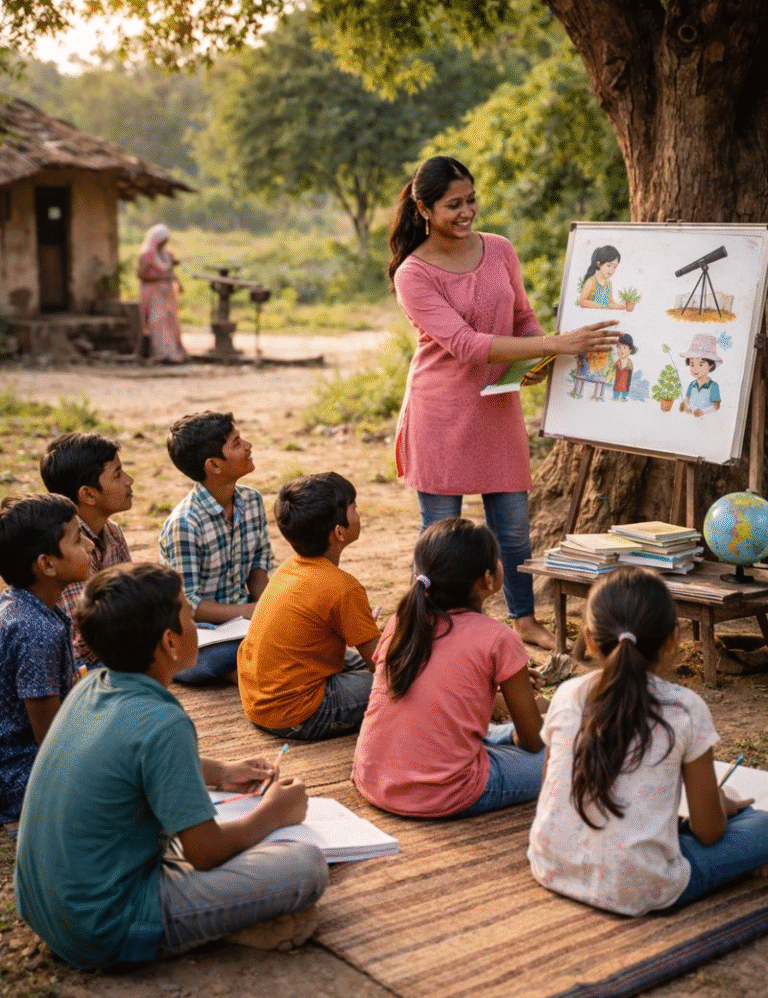
Learning beyond classrooms means giving children the chance to understand life through experiences, activities, and real-world engagement. It includes art, music, environmental awareness, teamwork, communication, and moral values lessons that no textbook can fully capture.
At Flybird Foundation, education isn’t just about marks and exams; it’s about building curiosity, creativity, and compassion. When children step outside the classroom into nature, the community, or new learning spaces, they start seeing how their education connects to the real world.
This kind of exposure helps children become thinkers, innovators, and problem solvers, ready to face the challenges of tomorrow with confidence.
Every child deserves the chance to learn, grow, and explore. However, traditional schooling often limits learning to memorizing lessons or preparing for exams. Without opportunities beyond classrooms, many children miss out on the joy of discovery and the power of experiential knowledge.
Providing access to learning beyond classrooms ensures:
Equal opportunities: Every child, regardless of background, can learn from diverse experiences.
Practical understanding: Children learn how to apply theoretical concepts in real life.
Confidence building: Outdoor and group learning activities boost communication and leadership.
Creativity and imagination: Children express themselves through art, storytelling, and innovation.
Emotional intelligence: They learn empathy, cooperation, and respect for others.
The Flybird Foundation believes that empowering children through such opportunities leads to holistic development — shaping not just smart students, but responsible individuals.
For many children, learning ends once the school bell rings, not because they don’t want to learn more, but because they lack access to supportive environments and resources.
Some of the biggest challenges include:
Limited exposure to learning tools: Rural schools often lack libraries, labs, and creative spaces.
Financial constraints: Many families cannot afford extracurricular activities or educational trips.
Lack of awareness: Parents may not realize the importance of learning beyond academics.
Unequal opportunities: Urban children often enjoy workshops, technology, and community programs that rural children miss out on.
Gender barriers: In some regions, girls face additional restrictions on participating in outdoor or mixed-group learning.
Recognizing these issues, the Flybird Foundation education initiatives aim to bridge the gap, bringing creative, inclusive, and practical learning experiences directly to children who need them most.
The Flybird Foundation works passionately to ensure that every child has the opportunity to learn beyond the classroom. Through its community-driven education programs, it creates environments where learning becomes fun, interactive, and meaningful.
Some of the key efforts include:
Skill-Based Learning Workshops: Teaching children art, communication, basic computing, and environmental awareness.
Library and Reading Drives: Donating books and setting up small reading corners in rural schools and communities.
Interactive Learning Events: Organizing quizzes, storytelling sessions, and science demonstrations to make learning engaging.
Mentorship Programs: Connecting students with educators and volunteers who guide them in building life skills.
Outdoor Learning Experiences: Nature visits, cleanliness drives, and tree plantation activities to blend education with responsibility.
Each initiative by the Flybird Foundation is designed to help children see that learning is not limited by walls — it is something they can carry throughout life.
In one of the villages where Flybird Foundation education programs were introduced, a small group of children began a reading club using donated books. Within weeks, their curiosity grew they started writing short stories, drawing illustrations, and teaching younger kids what they learned.
In another project, the Foundation organized an “Environment Awareness Day,” where students planted trees and learned about waste management. The result? Children became eco-champions, encouraging their families to follow cleaner habits at home.
These real-life transformations prove that when children experience learning through action, it stays with them forever. They begin to lead by example, becoming ambassadors of change in their own communities.
Education beyond classrooms doesn’t only depend on schools or foundations; families and communities play a huge role too. When parents encourage children to explore their surroundings, ask questions, and participate in new activities, they expand their horizons.
Simple acts such as reading together, visiting museums, gardening, or volunteering as a family help children understand real-world lessons that no book can teach.
The Flybird Foundation works with parents and local leaders to promote the idea that learning is a shared responsibility. By involving communities, the Foundation ensures that every effort continues long after workshops or events end.
A community that learns together grows together, and that’s how long-lasting change begins.
The world is changing fast, and the ability to keep learning is one of the most valuable life skills a child can develop. By exposing children to learning beyond classrooms, we prepare them not just for exams, but for life itself.
The Flybird Foundation encourages hands-on learning that teaches children how to think critically, communicate effectively, and make meaningful decisions. Whether it’s solving a math problem in the classroom or planting a tree outside, both contribute to shaping a child’s future.
When children realize that learning happens everywhere in classrooms, playgrounds, and communities, they grow into confident, adaptable individuals ready to shape a better world.
Empowering children to learn beyond the classroom has a ripple effect on society. Here’s how:
Promotes equality: Every child, regardless of background, gains a fair chance to grow.
Encourages creativity: Children bring new ideas to solve community challenges.
Strengthens communities: Education turns into shared growth and social awareness.
Builds moral values: Children learn compassion, teamwork, and responsibility.
Inspires future leaders: Exposure and experience nurture leadership qualities early.
Through each activity and initiative, the Flybird Foundation continues to prove that education is not limited to chalk and blackboards, it’s an ongoing journey of discovery that shapes lives.
In today’s digital age, technology plays a vital role in taking education beyond the classroom. Online platforms, mobile learning apps, and interactive videos give children access to knowledge that once seemed out of reach.
The Flybird Foundation promotes the responsible use of technology in education by introducing children to digital tools that enhance curiosity and self-learning. Through workshops and awareness programs, the Foundation helps students explore educational games, storytelling platforms, and creative apps that make learning exciting and interactive.
When used effectively, technology bridges gaps — connecting children from rural areas with global knowledge. It allows them to see the world beyond their locality, learn new skills, and dream bigger. For many children, a tablet or community learning center becomes a window of endless opportunity.
True education isn’t about memorizing facts, it’s about encouraging children to imagine, create, and question the world around them. Learning beyond classrooms gives them the freedom to explore art, music, drama, storytelling, and problem-solving in ways that build confidence and self-expression.
The Flybird Foundation conducts creative learning sessions where children are encouraged to paint, perform, invent, and think independently. Such activities nurture imagination and emotional intelligence, allowing every child to discover their strengths.
When curiosity is celebrated, children begin to see learning as a joyful adventure rather than an obligation. And that’s when education transforms from a subject into a lifelong passion.
Every child deserves the chance to dream, learn, and grow not only within classroom walls but beyond them. Learning beyond classrooms opens doors to imagination, critical thinking, and emotional development that academic lessons alone cannot provide.
The Flybird Foundation is dedicated to ensuring that no child is left behind in this journey of holistic learning. Through its education support programs, creative workshops, and community participation, the Foundation continues to nurture curious minds and compassionate hearts.
When we invest in experiences, we invest in futures. Let’s help every child explore, question, and learn beyond textbooks — because in those moments of discovery lies the true meaning of education, and the promise of a brighter, more compassionate tomorrow.

Together, we spread hope, inspire change, and shape brighter futures.
Flybird Foundation © All Rights Reserved.