
+91 9008 41 9008
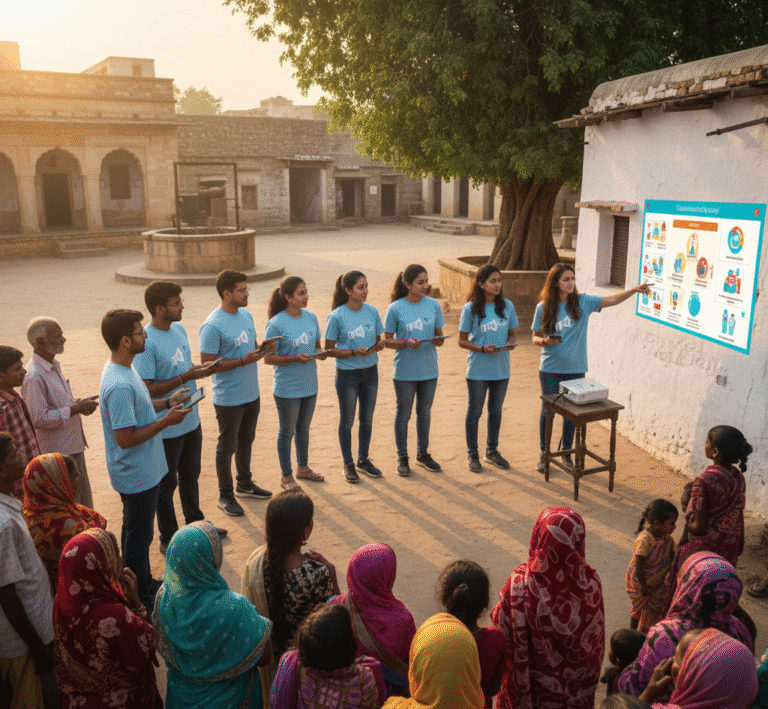
Across rural India, countless women and children navigate their daily lives with fear tucked silently between their steps. For many, the walk to school, the journey to a community well, or even the simple act of stepping outside their homes becomes an exercise in caution. What should be ordinary moments are often clouded with uncertainty. These are not isolated stories; they echo across villages where infrastructure is limited, awareness is low, and societal barriers remain deeply rooted.
The concept of creating “safe spaces” extends far beyond just physical safety. It speaks about giving women and children the freedom to learn, grow, explore, express, and dream without fear. It is about offering them dignity, hope, and confidence to shape their own future. And this belief is at the heart of Flybird Foundation’s mission, building a world where every rural woman and every child feels protected, valued, and supported.
A safe space is not defined by four walls alone. It is a space where:
A woman can voice her opinions without judgment
A young girl can study without being interrupted
A child can play without fear
A mother can seek help without hesitation
A teenager can express emotions without facing mockery
These are spaces where emotional support, psychological comfort, and physical protection come together. They cultivate trust and healing, enabling individuals to flourish. Safe spaces empower women to challenge norms and give children the freedom to grow without boundaries.
Most importantly, safe spaces give people, especially the most vulnerable, the assurance that they are seen, heard, and protected.
Rural regions often experience deeper challenges due to:
Lack of infrastructure
Poor lighting, long isolated roads, limited transport facilities, and minimal surveillance contribute significantly to unsafe conditions.
Cultural conditioning and social barriers
Several communities follow traditional norms that restrict women’s mobility or discourage children from speaking out about issues like bullying or abuse.
Limited access to education
Awareness related to self-protection, rights, healthcare, or reporting systems is significantly lower.
Shortage of supportive institutions
Helplines, counselling centers, or women’s support offices may be either unavailable or extremely distant.
All these elements combine to create an environment where the most vulnerable are left without options, and the absence of systems that protect them amplifies their struggles.
In a world where safety is scarce, a woman’s daily life becomes limited. Unsafe surroundings:
Prevent women from pursuing education or work
Create mental and emotional anxiety
Reduce their confidence levels
Restrict mobility and independence
Increase vulnerability to exploitation or abuse
Generational effects also emerge. When a mother lives in fear, her children often inherit that fear, shaping their personality, ambitions, and worldview. A woman’s sense of safety is directly linked to the well-being and harmony of her entire family.
A child’s early experiences stay with them for life. When children grow up in unsafe settings, they may face:
Psychological stress or trauma
Fear of exploring or socializing
Difficulty focusing in school
Lower self-esteem
Exposure to neglect or negative influences
Safe spaces are not merely comforting; they are essential for building a child’s emotional foundation. When children feel safe, they learn better, interact better, and express themselves freely. Their creativity blossoms, their curiosity grows, and their dreams gain clarity.
Safety begins with informed minds. Community awareness transforms:
Social attitudes
Cultural practices
Gender roles
Perceptions of rights and responsibilities
Awareness drives help families understand:
Why safety is a basic need
How early intervention prevents harm
How to recognize signs of trauma or distress
Why women’s mobility and education matter
How to create child-friendly homes and villages
Empowering local women as leaders strengthens the foundation. Equally important is involving men and youth, because sustainable change comes when everyone participates.
Physical environment plays a huge role in safety. Essential elements include:
Well-lit roads and pathways
Safe school routes
Community halls for awareness and empowerment programs
Clean washrooms and sanitation facilities
Decent housing conditions
Proper transport points
When the environment is safe, confidence rises. Families feel more secure letting women work outside and allowing children to attend school regularly.
A woman who is educated and skilled becomes a powerful force in her household and community. Education brings:
Awareness of rights
Financial independence
Improved decision-making
Increased self-esteem
A voice in community matters
Skill development programs such as tailoring, handicrafts, digital literacy, and entrepreneurship training empower women to secure employment and gain dignity. With empowerment comes safety, because independence protects them from vulnerability.
A child needs space to imagine, explore, and learn. Safe, child-friendly areas help them:
Play freely
Interact with peers
Access learning materials
Grow emotionally and socially
These zones create environments where children feel supported by teachers, caregivers, and community volunteers. For many rural children, such places become the first space where they are encouraged to speak, ask questions, and be themselves.
A community with access to healthcare is safer, healthier, and more resilient. Healthcare also includes mental well-being — a deeply overlooked aspect in rural life.
Essential components include:
Regular health camps
Mental health support
Awareness on hygiene, nutrition, and abuse
Access to doctors and counsellors
Sanitation and clean water availability
Healthy women and children are more confident, productive, and protected from avoidable harm.
Technology acts as a bridge where infrastructure falls short. Mobile phones, helplines, WhatsApp groups, and local digital kiosks can:
Provide emergency assistance
Share awareness content
Encourage digital reporting
Connect rural individuals to support centers
Teach children through online educational resources
Digital literacy programs empower rural communities to use technology not just for communication but for protection, growth, and empowerment.
Flybird Foundation remains committed to creating rural spaces where women and children feel secure, valued, and protected. Our initiatives include:
Safety-awareness workshops
Women empowerment programs
Community sensitization campaigns
Child development centers
Mental health and hygiene drives
Support groups for women
Safe play and learning zones for children
Collaboration with local panchayats for infrastructure improvements
We believe safety is the foundation of progress; when women and children are safe, entire villages rise together.
Homes are the first line of safety. Strengthening family bonds ensures:
Open communication
Awareness about emotional needs
Prevention of abuse or neglect
Protection during emergencies
Encouragement for education and growth
Flybird Foundation promotes healthy family relationships through counselling, workshops, and engagement programs.
Schools must be safe havens, not places of fear.
Key components of safe schools include:
Supportive teachers
Anti-bullying systems
Child protection guidelines
Clean and private sanitation
Emotional safety and encouragement
A child who feels safe at school performs better and grows stronger emotionally.
Men play a vital role in transforming community mindsets. Awareness programs that involve men lead to:
Respect for women’s rights
Shared responsibility for daughters’ futures
Reduction in domestic violence
Community-driven protection systems
Empowered men become protectors, mentors, and advocates for positive social change.
Long-term safety thrives when communities take ownership. Sustainable models include:
Local volunteers
Women’s groups
Youth-led safety committees
Periodic awareness sessions
Infrastructure maintenance plans
With community involvement, safety becomes a natural part of village life not a temporary project.
True progress begins when every woman and every child steps into the world with confidence instead of fear. Safe spaces create opportunities for education, dreams, dignity, and growth. As India’s rural communities evolve, the promise of safety must stand as their strongest pillar.
Flybird Foundation continues to work passionately to ensure that safety becomes a birthright, not a privilege, for every woman and every child. Together with communities, volunteers, and partners, we strive to build a future where hope is stronger than fear and where every individual has the space to flourish.

Together, we spread hope, inspire change, and shape brighter futures.
Flybird Foundation © All Rights Reserved.