
+91 9008 41 9008
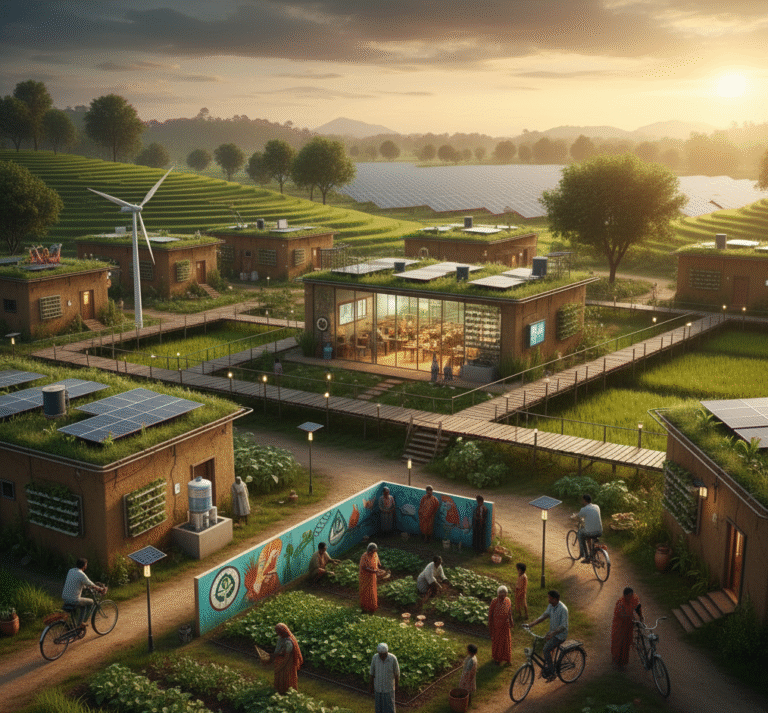
India’s villages hold the soul of the nation. They are places where people live close to nature, where every sunrise feels connected to the earth, and where communities thrive through unity and shared responsibility. Today, at a time when climate change, pollution, and resource scarcity threaten our future, it is these very villages that carry the potential to lead India into a sustainable tomorrow.
A green future for India will not be built only in big cities. It will emerge from villages that combine traditional wisdom with modern environmental practices. When rural communities take the lead, the entire country benefits from cleaner surroundings, healthier ecosystems, and responsible development. The path toward green villages is not just an environmental choice—it is a collective promise for a better future.
Rural regions have natural advantages that make them ideal for sustainability. These strengths give India an extraordinary opportunity to develop eco-friendly villages that can inspire the rest of the world.
Key Strengths Include:
Strong community bonding
A lifestyle rooted in nature
Traditional practices that align with conservation
Farmland suitable for green initiatives
Lower pollution levels compared to urban spaces
Willingness to adopt change when guided properly
Availability of open spaces for energy and water projects
These foundations make rural communities capable of leading a movement that is both sustainable and transformative.
A green village is defined not just by appearance, but by the habits, daily choices, and systems that allow both people and nature to thrive.
A Green Village Focuses On:
Sustainable usage of natural resources
Responsible waste management
Clean and renewable energy
Protected water sources
Healthy farming practices
Community-led decision making
Eco-friendly infrastructure
Awareness-driven lifestyle choices
When these elements come together, a village becomes a model of balanced development.
Transitioning to clean energy can completely change the life of a village. Renewable energy reduces pollution, lowers household expenses, and supports a healthier environment.
Practical Renewable Energy Options:
Solar-powered homes
Solar streetlights that operate without electricity cuts
Biogas units for clean cooking
Solar pumps for irrigation
Micro windmills in open areas
These solutions create long-term stability and reduce dependency on conventional sources that harm the environment.
Water is at the center of rural life. Agriculture, household needs, livestock, and daily routines depend on its availability. With changing rainfall patterns, water conservation becomes essential for protecting rural livelihoods.
Effective Water Conservation Actions:
Rainwater harvesting systems
Revival of ponds and small lakes
Strengthening of traditional water structures
Construction of check dams
Greywater recycling in households
Efficient drip and sprinkler irrigation
3 Simple Everyday Practices That Help Save Water:
Avoid wastage near community taps
Close taps immediately after use
Report leaks to village committees
Reuse water at home
Use leftover water for plants
Collect kitchen cleaning water for garden patches
Maintain clean surroundings around water bodies
Prevent dumping of waste
Encourage community cleaning routines
Water security strengthens a village’s resilience and ensures long-term prosperity.
Agriculture is the heart of rural India. Sustainable farming protects soil health, reduces costs for farmers, and helps future generations inherit land that remains fertile.
Sustainable Farming Practices Include:
Organic cultivation
Use of compost instead of chemical fertilizers
Natural pest solutions
Crop diversification
Mulching for soil moisture
Rainwater harvesting for farms
Benefits to Farmers and Communities:
Healthier produce
Lower long-term costs
Reduced soil degradation
Access to niche markets for organic products
Increased biodiversity
Sustainable agriculture becomes a legacy that supports the land and those who depend on it.
As packaged goods enter rural markets, waste generation is rising. Without proper systems, open dumping becomes a threat to soil, animals, and water sources. But rural communities can reverse this trend by embracing simple, collective waste management practices.
Key Waste Management Solutions:
Segregation of household waste into dry and wet categories
Composting pits for biodegradable waste
Community-led plastic collection and recycling
Awareness campaigns to discourage single-use plastics
Clean lane initiatives run by youth and women’s groups
These actions improve cleanliness, reduce pollution, and create pride in community spaces.
Developing infrastructure sustainably ensures that comfort and conservation go hand in hand. Villages can grow without harming the environment by choosing construction methods and public facilities that support ecological balance.
Examples of Green Infrastructure:
Solar-powered community halls
Pathways with proper drainage systems
Eco-friendly household toilets
Public dustbins placed at strategic points
Tree-lined roads and community gardens
Schools that include environmental education in daily activities
A well-planned green infrastructure strengthens the health and happiness of the entire village.
Awareness shapes behavior. When communities understand the value of sustainability, they adopt new habits with enthusiasm and pride.
Ways to Spread Awareness Effectively:
Street plays and local campaigns
Eco-clubs in schools
Women self-help group sessions
Training workshops by foundations
Youth-led community drives
Wall paintings promoting eco-friendly practices
4 Community Awareness Actions That Create Lasting Impact:
Household visits to educate families
Demonstration projects like model organic farms
Public meetings in village squares
Distribution of simple, visual learning materials
Awareness turns sustainability into a shared mission.
Villages operate on collective strength. When people come together, they become capable of creating meaningful, long-lasting change.
Important Community Groups That Lead the Transformation:
Youth clubs are working on cleanliness and plastic-free drives
Farmer groups adopting sustainable agriculture
Women’s groups promoting health and waste management
School students participating in environment programs
Village committees managing water and common resources
The unity of these groups accelerates progress and strengthens community spirit.
Green transformation does not happen overnight. It follows a natural, collective flow often seen in rural movements.
How Transformation Usually Begins:
One family or group takes a small step—planting trees, adopting solar power, or using a compost pit.
Neighbours observe the benefits and begin trying the same.
Youth groups participate and expand the idea.
Women’s groups organize awareness meetings.
Schools join the movement, teaching children about sustainability.
The village committee plans structured improvements.
What This Leads To:
Cleaner surroundings
Better water availability
Reduced waste
Healthier food production
Lower household expenses
Stronger bonds among villagers
Renewed respect for the environment
A chain reaction begins—where one action leads to many, and change becomes unstoppable.
Villages possess deep knowledge passed down through generations, and modern technology adds efficiency to these methods.
Traditional Knowledge Strengths:
Mud houses that stay cool naturally
Organic pest methods
Community rainwater harvesting traditions
Use of natural resources respectfully
Modern Additions That Support Sustainability:
Solar energy systems
Soil testing for scientific farming
Drip irrigation for efficient water use
Weather forecasting tools
Improved organic certification processes
When modern methods complement ancestral wisdom, sustainable progress becomes powerful and achievable.
Rural India is stepping into a period where sustainability is becoming a natural part of growth. Many factors contribute to a promising future.
Reasons That Strengthen This Transition:
Increasing environmental awareness
Government support for renewable and rural development
Active NGO and foundation involvement
Youth participation in eco-initiatives
Access to clean energy solutions
Improved understanding of water conservation
Growing interest in organic farming
Space for community-level green projects
All these elements create fertile ground for a rural-led sustainable revolution.
Flybird Foundation continues to empower rural communities by promoting environmental protection and sustainable practices.
Foundation Initiatives Include:
Tree plantation campaigns
Waste management awareness drives
Water conservation activities
Sustainable agriculture promotion
Women empowerment through green livelihood training
Environmental education programs in schools
Plastic-free village missions
Clean surroundings initiatives
Each effort helps build villages that grow without compromising the environment.
The future of India’s sustainability lies in the quiet strength of its villages. With their rich traditions, strong unity, and natural connection to the environment, rural communities are uniquely positioned to lead India’s green revolution. By embracing renewable energy, conserving water, managing waste responsibly, and protecting the soil, villages can become shining examples of balanced development.
A green village represents hope—a promise that progress can be achieved without harming the planet. When communities stand together, learn together, and act together, the dream of a sustainable India becomes a reality.

Together, we spread hope, inspire change, and shape brighter futures.
Flybird Foundation © All Rights Reserved.