
+91 9008 41 9008
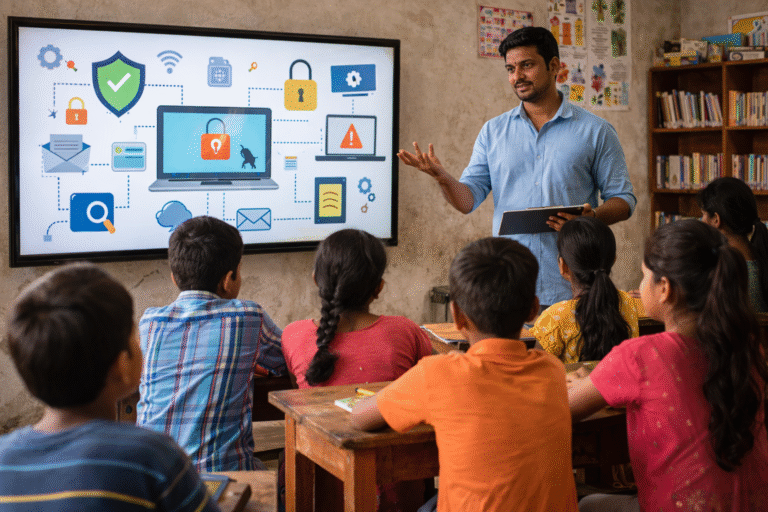
In today’s rapidly evolving digital age, the internet has quietly entered even the most remote rural households. A single smartphone, often shared by an entire family, has become a gateway to online education, entertainment, and communication for children. While this digital access opens doors to knowledge and opportunity, it also exposes young users to risks they may not fully understand or recognize. Without proper guidance, the internet can quickly shift from a learning tool to a source of confusion, fear, or harm.
Rural schools stand at the frontline of this transformation. Children are eager to explore the online world, yet many lack the awareness needed to protect themselves. Internet safety education is no longer a luxury; it is a necessity. Recognizing this growing need, Flybird Foundation emphasizes that digital inclusion must go hand in hand with digital responsibility, especially for children in rural learning environments.
Rural education has experienced a significant digital shift over the past few years. Government programs, affordable data plans, and the availability of low-cost smartphones have introduced online learning tools into village classrooms. Educational videos, virtual classrooms, and digital assignments have become increasingly common, reshaping how students learn and interact with information.
However, this transformation has also created an imbalance. While access to technology has improved, guidance on safe usage often lags behind. Many rural schools adopt digital tools without structured internet safety policies, leaving students to explore platforms independently. This gap increases vulnerability and highlights the need for proactive digital safety education embedded within the learning process.
Internet safety for children involves more than restricting access or monitoring usage. It focuses on helping young users understand how to behave responsibly online and how to protect themselves from potential harm. Children must learn that the digital world, much like the real world, has both opportunities and dangers.
Key aspects of internet safety include:
Protecting personal information such as names, locations, and passwords
Understanding the permanence of online actions and digital footprints
Recognizing unsafe interactions or suspicious content
Knowing when and how to seek help
For rural students, these concepts must be taught in simple, relatable ways that connect digital behavior to everyday life experiences.
Children in rural areas often face online risks without realizing the consequences. Limited digital supervision and lack of awareness amplify these challenges.
Some of the most common risks include:
Inappropriate content exposure, often through ads or auto-play videos
Cyberbullying, where children face harassment but hesitate to report it
Online scams and fake messages designed to mislead or exploit trust
Misinformation, where false content is accepted as fact
Excessive screen usage, leads to reduced concentration and emotional stress
Without guidance, these risks can impact a child’s confidence, academic growth, and emotional well-being over time.
Rural schools play a critical role in shaping children’s digital habits. In many cases, students are more digitally aware than their parents, placing schools in a position of responsibility. Focused internet safety programs help bridge this gap by offering structured learning rather than reactive solutions.
Such programs enable schools to:
Educate students before problems arise
Create safe spaces for discussion and reporting
Encourage responsible technology use
Reduce fear and misinformation around digital platforms
When internet safety becomes part of school culture, children develop confidence rather than anxiety toward technology.
Teachers are trusted mentors who significantly influence children’s learning behavior. Their involvement in internet safety education helps normalize conversations around online challenges. When teachers openly discuss digital risks, students feel more comfortable sharing concerns.
Teachers can promote safe internet habits by:
Integrating digital safety into daily lessons
Encouraging respectful online communication
Observing behavioral changes linked to online experiences
Guiding students toward ethical digital behavior
This approach helps students view internet safety as a life skill rather than a set of restrictions.
Internet safety education is most effective when it extends beyond classrooms. Parents and community members must be included in awareness efforts to ensure consistency in guidance. Many parents in rural areas may lack digital literacy, making school-led initiatives crucial.
Community engagement efforts may include:
Parent awareness meetings at schools
Simple demonstrations on privacy and device controls
Discussions on balancing screen time at home
Encouraging open communication with children
When communities work together, children receive stronger, unified support.
Practical learning helps children apply internet safety knowledge in real situations. Lessons should focus on everyday online behavior rather than technical complexity.
Important classroom lessons include:
Identifying safe and unsafe websites
Understanding what information should remain private
Learning to create and protect strong passwords
Knowing how to block or report harmful content
Managing screen time responsibly
These lessons empower students to make informed decisions independently.
Flybird Foundation actively supports digital awareness and child safety initiatives across rural communities. By working closely with schools, educators, and volunteers, the foundation ensures that internet safety education reaches children who need it most.
Through structured programs and awareness campaigns, Flybird Foundation focuses on:
Promoting responsible internet use
Encouraging open dialogue about online risks
Building confidence rather than fear
Supporting long-term digital literacy
The foundation’s efforts aim to create informed, empowered, and safe digital learners.
Children absorb information more effectively through storytelling and interaction. Real-life examples help them understand abstract online dangers in a familiar context. Stories about fictional characters facing online challenges can leave lasting impressions.
Effective methods include:
Story-based discussions on online behavior
Role-playing scenarios to practice responses
Group activities that promote peer learning
Classroom discussions encouraging reflection
These approaches make internet safety engaging and memorable.
Teaching internet safety in rural schools is an essential step toward responsible digital inclusion. As technology becomes an integral part of education, safeguarding young users must remain a priority. Schools, teachers, and communities together shape how children interact with the digital world.
When children are guided with knowledge and empathy, they gain the confidence to explore technology responsibly. Awareness transforms fear into understanding and curiosity into caution.
Through its continued commitment to education and digital well-being, Flybird Foundation plays a vital role in ensuring that rural children are not just connected to the internet, but protected, informed, and empowered to use it wisely.

Together, we spread hope, inspire change, and shape brighter futures.
Flybird Foundation © All Rights Reserved.