
+91 9008 41 9008
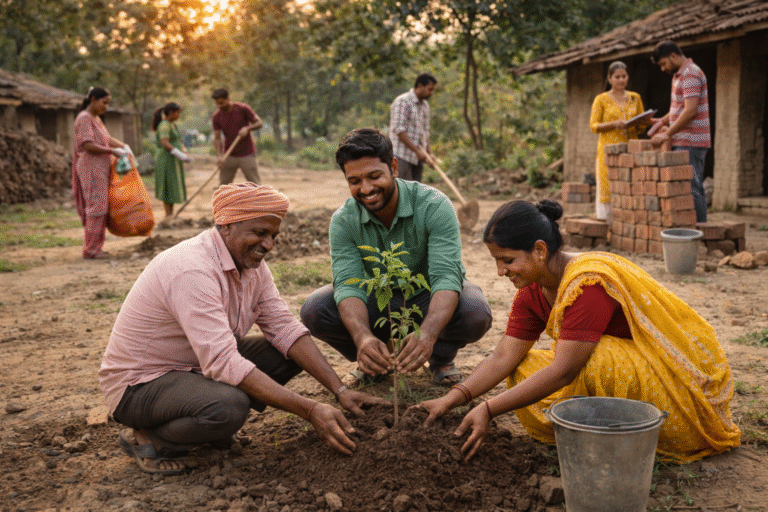
Rural development is never the achievement of one person, one organization, or one government program. It is the outcome of a community that rises together, where every individual feels responsible for the progress of all.
In thousands of villages across India, people share water, work in groups, celebrate festivals together, and support one another during hardship. This spirit of unity naturally shapes development.
When a road is built, it becomes everyone’s path.
When a child is educated, it becomes everyone’s hope.
When a farm succeeds, it becomes everyone’s prosperity.
This is the essence of collective responsibility, the true foundation of rural advancement.
This blog explores how shared participation shapes rural development and how the Flybird Foundation strengthens this culture of community-driven progress.
The heart of rural development lies in a simple idea: when the village grows, everyone grows.
Ownership is not just about land or property; it is about emotional commitment toward community well-being.
You see this spirit in:
villagers cleaning pathways and community spaces together
youth helping repair a school boundary or playground
families offering support during weddings, harvests, or emergencies
community leaders ensuring fairness in shared resources
Shared ownership transforms passive residents into active contributors.
A woman who participates in a sanitation meeting becomes a guardian of cleanliness.
A farmer who joins a water conservation drive becomes a protector of natural resources.
When people feel the village is “ours,” development becomes natural, not forced.
One of the strongest pillars of rural development is collective decision-making.
A village progresses when ideas, debates, disagreements, and solutions emerge from within the community.
This includes:
regular gram sabha meetings
transparent discussions on budget and development needs
community planning for roads, water, and electricity
ensuring women and youth have an equal voice
evaluating which needs are urgent and which can wait
Community-led decisions create trust.
They ensure that development projects are based on actual needs, not assumptions.
For example:
A village may prioritise a water tank over a community hall.
Another may choose to first improve school infrastructure rather than invest in festival decorations.
When villagers decide together, the results are long-lasting and socially accepted.
Agriculture is where collective responsibility is most visible and powerful.
The fields of a village are not isolated; they are deeply connected by water, labour, knowledge, and history.
Villagers strengthen agricultural development by:
exchanging seeds and farming tools
helping each other during sowing and harvest seasons
setting up cooperative farming groups
sharing irrigation sources like canals or borewells
guiding young farmers with traditional wisdom
Such cooperation reduces financial pressure, saves time, and protects small farmers from risks.
Agriculture becomes more efficient when farmers stand together, not compete against each other.
A unified farming community also gains stronger bargaining power when selling produce.
Collective effort creates both economic and social security.
No rural community can progress without water security.
Every drop matters, and protecting it becomes a shared responsibility.
Communities come together to:
desilt lakes and ponds before monsoon
build check dams and contour trenches
maintain wells and handpumps
control water wastage
adopt rainwater harvesting practices
protect natural streams from pollution
When villagers collectively manage water, crop failures decrease, drinking water scarcity reduces, and environmental balance improves.
Successful villages show that water conservation is not just a technique; it is a community culture.
Women are often the silent architects of rural development.
Their strength may not always be recognized, but it shapes every aspect of village life.
Women contribute to collective progress by:
ensuring children receive education
playing a key role in family nutrition and hygiene
participating in self-help groups
supporting community events and festivals
organizing savings groups and micro-businesses
spreading awareness on health and sanitation
When women work together, rural development becomes stronger and more sustainable.
They build social harmony, emotional support systems, and long-term stability.
Empowered women empower society.
Rural youth are the bridge between tradition and modernisation.
They bring new ideas, digital skills, creativity, and a willingness to change outdated practices.
Collective youth responsibilities include:
volunteering for cleanliness and awareness drives
teaching digital literacy to seniors
participating in skill-development workshops
engaging in sports, innovation fairs, and cultural programs
learning modern farming techniques
starting micro-business ventures
Youth turn energy into action.
When they work together, a village becomes future-ready.
Their enthusiasm pushes the community to grow with confidence.
Education is not just a child’s responsibility; it is a community’s collective mission.
Villages that prioritize education:
keep track of children’s attendance
prevent dropouts through awareness
support girls’ education without bias
run evening tuition classes
help students with study resources
involve parents in school activities
Education becomes a shared investment.
When every family values learning, the entire community rises.
Educated children become capable adults who contribute to progress, innovation, and unity.
Healthcare in rural areas is not limited to medical facilities; it depends heavily on awareness and collective habits.
Communities improve health by:
promoting cleanliness and waste segregation
spreading awareness about vaccinations
ensuring pregnant women receive proper care
organising health camps with NGOs
encouraging nutritional practices
teaching families about sanitation and hygiene
Health becomes everyone’s responsibility, not just the responsibility of doctors.
A healthy community stays productive, happy, and resilient.
Digital inclusion in rural areas is growing rapidly, but adoption becomes more effective when communities learn together.
Collective digital progress includes:
learning digital payments
accessing agricultural and weather apps
exploring online learning platforms
using government portals for schemes
teaching elders how to use smartphones
using social media for awareness
When technology becomes a shared skill, families avoid exploitation, gain access to opportunities, and connect with the world.
Technology turns into a powerful equalizer when shared responsibly.
Rural communities depend directly on forests, soil, water, and biodiversity.
Environmental responsibility becomes a sacred duty.
Communities protect nature by:
planting trees around fields, schools, and homes
avoiding unnecessary plastic and burning waste
conserving forest areas and preventing harm to wildlife
restoring rural ecosystems
organising village clean-up drives
adopting eco-friendly practices in daily life
When villagers unite to protect nature, they protect their own future.
Environmental care strengthens livelihoods, improves air and water quality, and makes villages sustainable.
The Flybird Foundation believes that rural progress grows from community participation.
The foundation does not simply provide support; it inspires responsibility, unity, and awareness.
Its initiatives include:
awareness campaigns on health, hygiene, and education
women empowerment and skill development programs
village cleanliness and community volunteering drives
digital literacy for youth and families
environmental programs like tree plantation
support for girl education
collaboration with local communities to build sustainable models
The foundation’s goal is simple:
to create villages where people rise together, support each other, and take responsibility for collective progress.
Flybird Foundation acts as a catalyst, activating the strength that already exists within the community.
In many rural communities, disagreements can arise over land, water, festivals, or local decisions.
What keeps the village strong is the collective effort to maintain social harmony. Villagers come together to resolve disputes through peaceful dialogue, elder guidance, and community meetings that prioritise fairness.
When people focus on understanding rather than winning, conflicts reduce, relationships strengthen, and unity grows.
This shared responsibility ensures that development work is never interrupted by personal disputes. It also promotes trust, cooperation, and a culture where every individual feels respected and heard.
Villages that protect social harmony protect the foundation on which all development stands.
A village grows faster when financial progress becomes a collective mission.
Cooperative models help communities overcome barriers that individuals cannot manage alone.
This includes:
farmer producer organizations
dairy cooperatives
women-led self-help groups
micro-savings communities
local craft and business clusters
These cooperative structures reduce financial risk, increase bargaining power, and open opportunities for better pricing, credit access, and market expansion.
When villagers pool resources, skills, and ideas, they create economic stability that benefits everyone, not just a few.
Collective financial growth builds confidence, dignity, and long-term prosperity.
Rural development flourishes when people see progress as a shared responsibility rather than an individual task. Villages grow stronger when communities participate in planning, protecting natural resources, supporting education, improving health, and embracing new technologies together. This unity creates a development model where every person contributes and every person benefits.
From women shaping social well-being to youth driving innovation, from farmers cooperating during harvest to villagers resolving conflicts with maturity, collective responsibility becomes the bridge that connects challenges to solutions. It builds villages that are resilient, inclusive, and prepared for the future with confidence.
The Flybird Foundation continues to nurture this spirit of togetherness through awareness programs, empowerment initiatives, and community-led campaigns. By encouraging unity and shared participation, the foundation helps rural communities create lasting, meaningful transformation that uplifts everyone.

Together, we spread hope, inspire change, and shape brighter futures.
Flybird Foundation © All Rights Reserved.