+91 9008 41 9008
Every day, households produce kilos of waste from leftover food and packaging materials to plastic bottles and paper scraps. Most of it ends up mixed together in bins, creating a mountain of garbage that’s hard to manage and even harder to recycle. But what if we told you that the solution to cleaner streets, greener surroundings, and a healthier environment starts right inside your home?
That’s where waste segregation at home comes in, a small step that can transform an entire neighbourhood when everyone contributes.
Many people see waste as something to throw away, but for the Flybird Foundation, waste is a starting point for change.
When we separate our waste into biodegradable, recyclable, and non-recyclable, we allow the environment, the community, and even the local economy to breathe easier.
Proper segregation ensures that what can be reused or recycled doesn’t end up polluting landfills. It reduces waste collection costs, improves sanitation, and inspires others to act responsibly.
Think about it, when every household in a lane starts separating wet and dry waste, the overall cleanliness improves. Roads look cleaner, fewer animals rummage through trash, and air quality becomes better. That’s how waste segregation at home plants the first seed of neighbourhood transformation.
Before we dive deeper, let’s understand what types of waste we deal with daily:
Biodegradable Waste:
Includes kitchen leftovers, vegetable peels, garden waste, and other organic materials that can easily decompose. These can be turned into compost, which enriches soil and supports community gardens.
Recyclable Waste:
Items like paper, cardboard, glass bottles, tins, and certain types of plastic fall into this category. When collected properly, these materials can be sold or reused, reducing the demand for new raw materials.
Non-Recyclable Waste:
Includes sanitary waste, certain plastics, thermocol, and items that can’t be reused or recycled. Minimizing this waste is crucial because it contributes most to pollution and landfill expansion.
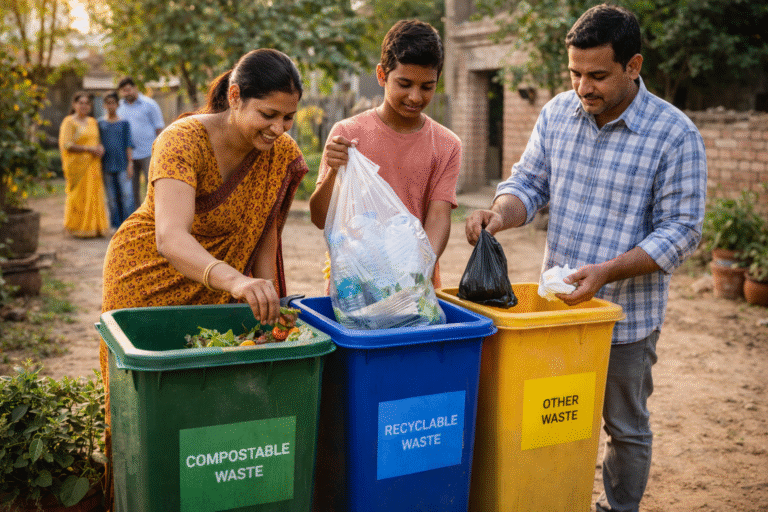
By simply keeping two or three bins at home, you give your waste a purpose. That’s why Flybird Foundation encourages families to follow a colour-coded segregation system: green for biodegradable, blue for recyclables, and red for hazardous or non-recyclable waste.
When individuals take responsibility, collective change follows.
Imagine one household starting to segregate waste. Soon, their neighbour follows, then the next street does the same. In just weeks, the entire community begins to experience visible changes:
Streets stay cleaner for longer.
The local municipality’s work becomes easier.
Scavenging animals reduce as garbage piles vanish.
Local compost pits and recycling centers thrive.
This is how a neighborhood transforms from within through awareness, discipline, and community participation.
The Flybird Foundation has seen this change firsthand in multiple areas where its awareness drives inspired families to start segregating waste at home.
It all starts small a labeled dustbin, a daily habit, and the will to make a difference.
India generates millions of tons of waste annually, and most of it is disposed of in overflowing landfills.
These dumps not only harm the environment but also pollute groundwater and release harmful gases like methane.
But when people start waste segregation at home, only a small portion of non-recyclable material reaches landfills. The rest organic waste and recyclables get reused.
Flybird Foundation’s environmental initiatives emphasize that segregation isn’t just about cleanliness, it’s about sustainability.
A well-segregated system ensures that recyclable waste gets a second life, organic waste turns into compost, and non-recyclable waste gets reduced to the minimum.
Each household that participates becomes a green ambassador for their community, creating a cleaner and safer environment for everyone.
Change becomes powerful when it’s shared.
Neighborhood associations, schools, and local groups can work together to make waste segregation a community routine.
Here’s how communities can join hands:
Set up segregation points in housing societies.
Organize monthly waste drives to collect recyclables.
Conduct educational workshops for children and families.
Encourage zero-waste events where everything used is reusable.
The Flybird Foundation believes that awareness drives community action. When people see visible improvements like cleaner surroundings, fewer overflowing bins, and better air, they feel proud of their neighborhood.
Each small act multiplies into a larger movement of cleanliness and care.
Flybird Foundation works tirelessly to spread awareness about environmental protection, waste segregation, and sustainable living habits.
Through its campaigns, volunteers visit residential areas, schools, and rural communities to educate families on how to manage waste responsibly.
Some of the Foundation’s key actions include:
Conducting door-to-door awareness drives on home waste segregation.
Installing community bins and compost units in local areas.
Distributing informational materials on recyclable vs. non-recyclable waste.
Partnering with local waste collectors to ensure segregated waste reaches the right channels.
Organizing tree plantation drives to offset environmental impact.
By empowering people with knowledge and tools, the Flybird Foundation is helping build neighborhoods that value cleanliness, sustainability, and community responsibility.
The advantages of waste segregation at home go far beyond tidy surroundings.
They extend to environmental, economic, and social benefits:
Improved hygiene: Segregated waste reduces disease-spreading pests.
Better recycling economy: Segregated materials fetch better value for recyclers.
Cleaner air and water: Less burning and dumping means less pollution.
Empowered citizens: People feel ownership of their surroundings.
Sustainable living habits: Families start thinking green, saving water, reducing plastic, and composting at home.
In communities guided by Flybird Foundation programs, even children participate by learning how to sort their waste and take pride in keeping their homes and streets clean.
Use color-coded bins: Green for wet waste, blue for dry, red for hazardous.
Label bins clearly: Helps everyone, including children, follow easily.
Compost your wet waste: Start with a small compost bin or pit.
Clean recyclables: Rinse bottles and boxes before disposal.
Educate your family: Turn segregation into a daily household routine.
Connect with recyclers: Partner with local scrap dealers or municipal collection drives.
Spread awareness: Inspire your neighbors and friends to do the same.
Every effort counts. The moment one family adopts segregation, it inspires another, creating a chain of positive change across the neighbourhood.
Waste segregation at home might seem like a simple household habit, but its impact reaches far beyond four walls. When every family chooses to separate their waste, it sets in motion a chain reaction of cleaner streets, healthier environments, and stronger communities.
The Flybird Foundation firmly believes that transformation begins with awareness and responsibility. By making small daily efforts such as separating wet and dry waste, composting organic matter, and encouraging neighbors to do the same, we take ownership of our surroundings and inspire collective change.
A clean neighbourhood isn’t built overnight; it grows through shared discipline and community spirit. So let’s start today by rethinking how we handle waste. Together, we can turn our homes into examples of sustainable living and our neighbourhoods into models of cleanliness and care for generations to come.

Together, we spread hope, inspire change, and shape brighter futures.
Flybird Foundation © All Rights Reserved.