
+91 9008 41 9008
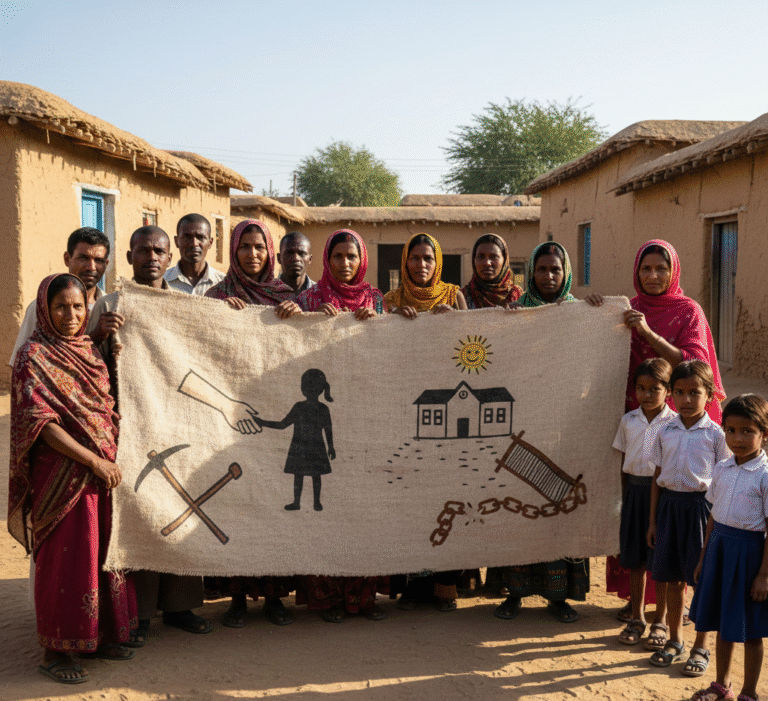
Child labor continues to hide behind closed doors, dimly lit workshops, crowded streets, and small settlements where childhood often ends too soon. In many communities, it is not always malice that pushes a child toward labor. it is silence, ignorance, and lack of awareness.
Every time a community understands the consequences of child labor, a layer of darkness lifts. Awareness is not just information; it is the spark that can guide families toward safety, dignity, and education. It can prevent a child from losing their right to a happy childhood.
This is why awareness matters. And this is where every individual, every community, and every initiative like the Flybird Foundation plays a life-changing role.
Child labor does not begin with the child. It begins with the circumstances around them. Families battling poverty often believe they have no alternative. Parents trapped in financial distress may not understand the long-term cost of forcing a child to work. Many are unaware that education is a powerful route out of hardship.
Lack of awareness is one of the highest contributing factors.
Some parents do not know about child rights.
Many believe child labor is acceptable because ‘everyone does it.’
Communities often assume it is not their place to intervene.
Schools may not have the resources to educate families.
Breaking this chain requires more than laws; it requires awareness that reaches every home and every heart.
Spreading awareness is a force that can transform an entire region.
Here’s why it creates real change:
It helps people recognize child labor when they see it.
It reduces child exploitation by educating families and employers.
It builds a community that refuses to stay silent.
It encourages reporting of illegal labor activities.
It plants the seeds of long-term social responsibility for children.
When communities understand the harm, they become the protectors children need.
Educates parents about child rights
Awareness helps parents understand what is legal, what is harmful, and what opportunities exist for their children.
Empowers communities to protect children
When people know the signs of exploitation, they become active defenders.
Reduces hidden or disguised child labor
Awareness exposes situations where children are forced to work under the label of “helping at home” or “family support.”
Promotes higher school enrollment
When families understand the value of education, they prioritize learning over labor.
Creates safer childhood environments
Awareness brings unity, and united communities do not allow child exploitation to survive.
Here are practical ways communities can actively spread awareness:
Community Workshops
explain child rights in simple language
teach families about government programs
guide parents toward safe alternatives instead of labor
Street Plays & Local Theatre
emotionally impactful performances
easy way to reach rural communities
characters and stories create instant understanding
School Awareness Programs
encourage students to become child safety ambassadors
teach older children how to report exploitation
inspire peer-driven support systems
Public Rallies & Awareness Posters
visually powerful messages
spread information across busy streets and markets
create daily reminders for the community
Digital Awareness Campaigns
use social media to share child safety content
post educational videos, reels, and short films
reach thousands of families instantly
Young people are among the strongest voices in the fight against child labor. Their energy and compassion create movements that can reshape entire neighborhoods.
Youth volunteer groups educate families during field visits.
School ambassadors help identify and prevent child exploitation.
College projects encourage door-to-door awareness campaigns.
Social media posts by young voices reach a wide audience.
When the youth stand up, communities listen.
Rural areas often lack access to information, which makes children more vulnerable. Many families do not know the legal working age or the dangers of forced labor. Hidden labor is more common in remote settlements because there is less monitoring and fewer reporting systems.
Awareness programs must travel beyond cities—into villages, small towns, tribal regions, and communities where childhood is at the highest risk. Spreading awareness in these regions ensures that no child slips into labor unnoticed. It opens doors to possibilities and encourages families to choose education and dignity over exploitation.
The Flybird Foundation believes that every child deserves safety, freedom, and the chance to dream. Awareness is at the heart of our child welfare initiatives.
Our work includes:
organizing child rights workshops for parents and communities
conducting awareness drives with schools and local volunteers
guiding families to access educational and welfare schemes
empowering youth to participate in awareness campaigns
using storytelling, arts, and visuals to communicate the dangers of child labor
By connecting directly with communities, the Flybird Foundation makes awareness more relatable, accessible, and impactful. Every awareness activity becomes a step toward protecting vulnerable children.
Education is not just a classroom; it is a shield that protects children from exploitation. When a child goes to school, they receive structure, safety, and opportunity. Awareness programs highlight how schooling can lift families out of poverty in the long term.
Parents who once believed that child labor was a necessity begin to realize that education is a powerful investment. They learn that scholarships, free textbooks, and government schemes exist to support them. With awareness comes clarity, and with clarity comes change.
Report suspected cases of child labor to authorities.
Speak to families gently when you notice a child working.
Support local NGOs working for child rights.
Share child safety content on social media.
Encourage parents to send children to school regularly.
Participate in or organize awareness events in your community.
Small steps create massive change when done collectively.
Every awareness campaign leaves behind a ripple that touches a child’s life. When communities understand their responsibility, the cycle of exploitation begins to break. Awareness empowers people with knowledge, empathy, and courage—qualities strong enough to eliminate child labor at its roots.
The transformation might not happen overnight, but it happens steadily. One informed parent, one alert citizen, one responsible shop owner, or one empowered youth can change the course of a child’s life.
This is how awareness builds a new future, one child at a time.
Child labor thrives in silence, but awareness breaks that silence. When people understand the law, the dangers, and the impact of forced labor, they choose to protect children instead of ignoring their suffering. Awareness gives communities the strength to take action, and action leads to prevention.
Through storytelling, community involvement, and consistent information-sharing, we can make sure every child grows in an environment of love, learning, and opportunity. With each awareness drive, we move a step closer to a world where no child is denied their right to a happy and safe childhood.

Together, we spread hope, inspire change, and shape brighter futures.
Flybird Foundation © All Rights Reserved.