
+91 9008 41 9008
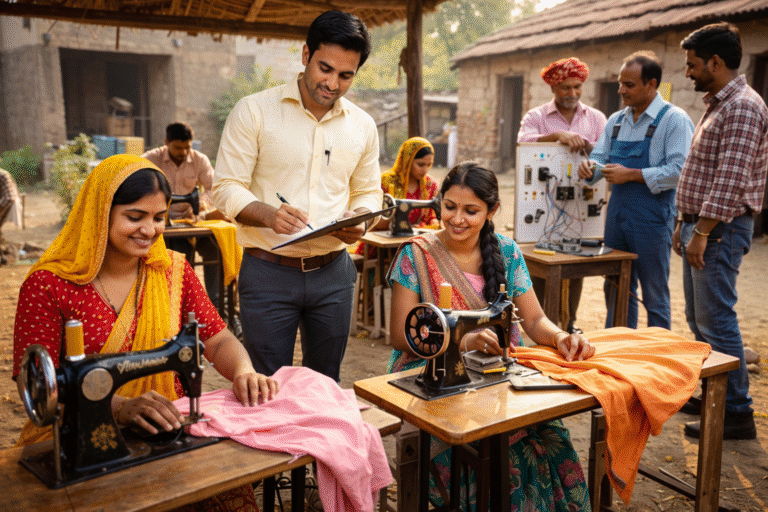
Rural India carries within it stories of strength, resilience, and silent determination. For decades, millions of families have depended on agriculture, daily wage labor, and traditional crafts for survival. But as the world evolves, opportunities shift, and the needs of modern livelihoods expand, rural communities often find themselves left behind. This is where skill development programs step in — not merely as training platforms, but as catalysts of hope, independence, and long-term growth.
Whether through rural skill training, vocational development, women empowerment programs, or digital literacy initiatives, these efforts are transforming villages into empowered ecosystems. They are creating earning opportunities, nurturing confidence, and opening doors that were once impossible to imagine.
Despite India’s rapid growth, rural areas continue to struggle with limited job options, low wages, inconsistent work, and migration pressures. A large portion of the population depends on seasonal agricultural income, which is not always reliable. Traditional livelihood avenues—like handicrafts, farm labor, and manual work—often fail to generate enough income to support families throughout the year.
The lack of formal education and professional skill exposure further limits the ability of rural youth and women to access diverse employment opportunities. As a result, many migrate to cities in search of work, leaving behind families and communities needing support.
Skill development serves as the bridge between aspiration and opportunity, giving people the tools needed to create sustainable livelihoods.
India’s rural workforce has potential, but the economic landscape demands new-age skills. The gap between traditional work and modern market demands has widened, making it essential to bring new skills closer to villages.
For example:
Traditional handloom work can be upgraded through design training.
Farming can be strengthened through modern agro-technology skills.
Youth can learn trades such as electrical repair, digital marketing, carpentry, and mobile servicing.
Women can diversify into tailoring, craft-based entrepreneurship, food processing, and digital earning platforms.
The shift from conventional livelihoods to skill-driven opportunities is helping rural families step into a more secure and confident future.
Skill development initiatives are reshaping rural life by offering accessible and practical ways to earn. Programs such as vocational training, technical workshops, digital literacy camps, and entrepreneurship development programs help individuals gain both knowledge and confidence.
These programs open new income pathways like:
Tailoring and garment creation
Electrical and mechanical repair
Beauty and wellness training
Computer and mobile literacy
Handicraft and artisanal enhancement
Food processing and small-scale business management
The beauty of these programs lies in their relevance — they align with what rural communities need and what the market demands.
India’s rural youth represent a massive untapped potential. However, limited opportunities often push them toward unstable jobs or migration-based labor. Skill development changes this narrative.
When young individuals receive training in fields like computer literacy, mobile repair, graphic design, carpentry, welding, or electrical work, they gain the confidence to choose stable career paths. Many become self-employed, while others secure jobs in local businesses and industries.
The result?
A new generation of rural youth is emerging — skilled, confident, and future-ready.
Women in rural India often face societal limitations, lack of financial independence, and restricted exposure. Skill development programs create a gateway to empowerment.
Through women skill development programs, women learn tailoring, embroidery, craft-making, food production, digital skills, and entrepreneurship. These training opportunities help them earn their own income, support their families, and break long-standing social barriers.
When a woman becomes financially independent, the impact multiplies—improving her family’s quality of life, her children’s education, and the social fabric of the entire community.
Today, even a smartphone can open the door to financial opportunities—if people know how to use it well. Digital literacy has become an essential component of rural development.
Training villagers in areas like:
online payments
accessing government services
using digital platforms for learning
selling products through social media
online job searches
creates a new horizon for economic participation. These digital literacy programs ensure that rural communities are not left behind in the digital revolution.
Many rural individuals possess skills, creativity, and the drive to succeed what they lack is exposure, mentorship, and business guidance. Skill development programs with entrepreneurial training help them transform talent into livelihood.
Programs that teach financial literacy, basic marketing, pricing, business planning, and customer management empower individuals to create micro-businesses such as:
tailoring shops
handicraft units
food processing and snack-making
repair shops
digital service centers
This shift from job-seeking to job-creating is strengthening the economic foundation of villages.
The most inspiring part of rural skill development is the personal stories of change.
A young boy who once worked as a daily wage laborer now earns a steady income as an electrician after completing a vocational course.
A woman who relied on seasonal farm work now runs her own tailoring shop.
A group of girls who completed computer training now help local businesses manage digital tasks.
These stories are not isolated—they represent thousands of lives shaped by skill empowerment. Each story fuels the belief that change is not only possible; it is happening every day.
Migration has long been a challenge for rural families. When young people leave for cities, communities lose manpower, families become emotionally strained, and villages struggle to progress.
Skill development creates local job opportunities that reduce the need for migration. When individuals can earn from within their village through tailoring, digital services, repair work, or micro-enterprises, they choose stability closer to home.
This strengthens families and builds stronger, self-reliant communities.
When entire communities gain access to skill development programs, the impact expands beyond individual success.
Some long-term benefits include:
improved household incomes
better educational opportunities for children
community-driven entrepreneurship
increased social confidence
reduction in poverty
Skill training not only empowers individuals but also uplifts entire community systems, creating a culture of growth and aspiration.
Modern skill development goes beyond traditional classroom training. Technology is now integrated into rural training centers, providing access to:
e-learning modules
virtual workshops
mobile-based learning platforms
video tutorials
online mentoring
Technology ensures that rural learners can acquire new-age skills without needing to migrate or invest heavily.
Flybird Foundation believes that empowerment begins with opportunity. The organization works closely with rural communities to design programs that are practical, accessible, and sustainable.
Its initiatives include:
rural skill development workshops
women empowerment training programs
digital literacy sessions
vocational and self-employment training initiatives
entrepreneurship support activities
By collaborating with local trainers, volunteers, and community leaders, Flybird Foundation ensures that skill development reaches those who need it most. The goal is not just to train people but to help them build long-term stability and dignity.
The benefits of skill development extend far into the future.
Families experience stable incomes, children receive better education, and rural youth remain in their communities. Women gain confidence and contribute to household decisions.
Most importantly, skill empowerment creates generational change—skills learned today become knowledge passed on tomorrow.
Empowered individuals turn into empowered communities.
Skill development programs are no longer just support initiatives—they are life-changing pathways leading rural India toward independence, dignity, and economic security. Every training session, every workshop, every new skill learned becomes a foundation stone for a stronger tomorrow.
As villages grow more skilled, they also grow more confident, self-reliant, and hopeful. And through continuous efforts, organizations like Flybird Foundation are ensuring that this transformation reaches every home, every family, and every dream waiting to rise.

Together, we spread hope, inspire change, and shape brighter futures.
Flybird Foundation © All Rights Reserved.