
+91 9008 41 9008
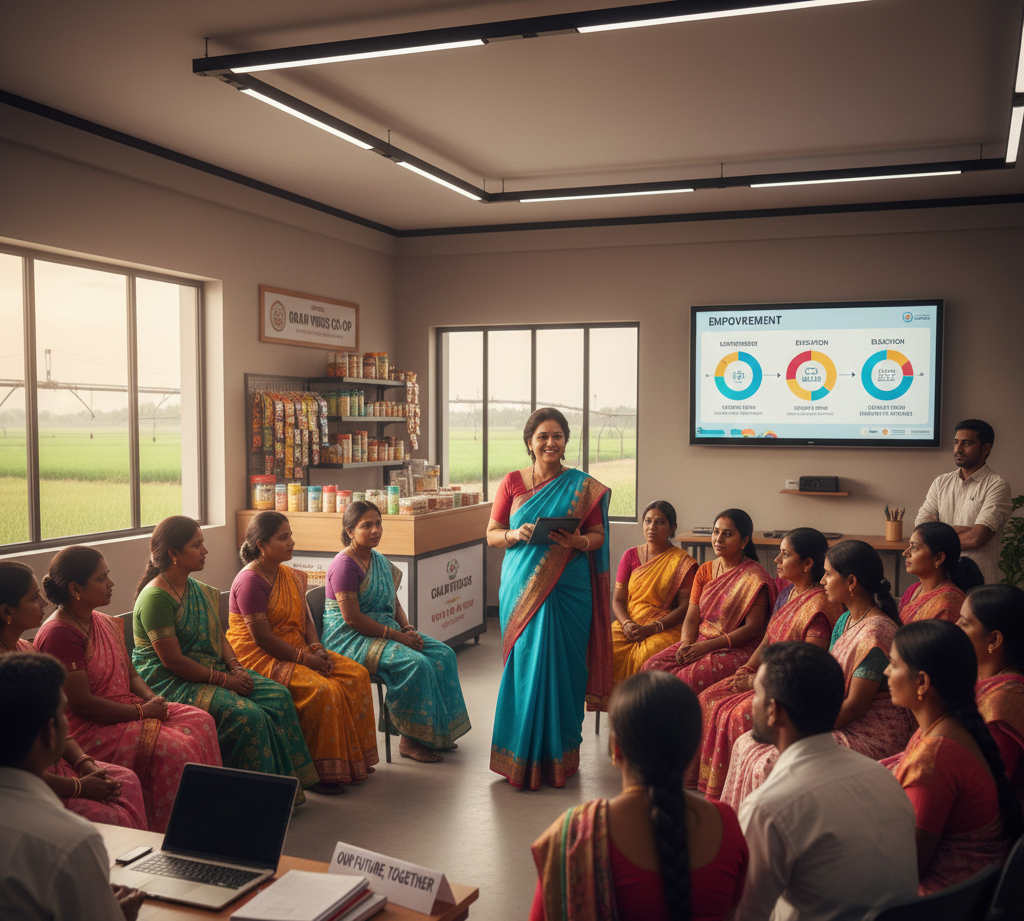
In many corners of rural India, progress feels like a distant dream. Families work hard, yet their lives remain unchanged. But in one small village tucked between fields and dusty roads, things began to shift the day its people decided to move forward not alone—but together.
It started with a group of farmers gathering under a neem tree, sharing their frustrations about low crop prices and mounting debts. They realized that individually, they were struggling to survive. Collectively, they had the power to transform their futures. With hope and hesitation intertwined, they formed a small co-operative society. What began as a simple act of unity soon became a movement that uplifted the entire village.
Their journey is a reminder that rural empowerment is not built through charity or temporary aid—it grows when people join hands, trust one another, and build systems that reflect their shared strength. This is the heart of every co-operative society.
A co-operative is more than just an organisation—it is a mindset. It is the belief that when people combine their resources, ideas, and efforts, they create opportunities no individual could create alone. In rural India, where challenges often seem bigger than resources, collective ownership becomes a lifeline.
Through co-operatives, villagers experience something rare: they become partners, not beneficiaries. This sense of shared ownership builds confidence and belonging. The profits are shared, the decisions are democratic, and accountability is mutual. Each member’s success becomes a step forward for everyone else. This spirit of unity lays the foundation for economic stability, pride, and social harmony.
Farmers are the backbone of rural India, yet they often stand weakest in the economic chain. With rising input costs, unpredictable markets, and the constant struggle against middlemen, many farmers barely earn enough to sustain their families.
Agriculture co-operatives change this reality. By pooling their production, negotiating as a collective, and accessing shared resources, farmers finally gain control over their work. They sell at better prices, buy seeds and fertilisers at lower rates, and access modern tools that were once unaffordable individually.
A farmer who once feared each harvest now stands with newfound confidence. With co-operatives providing market linkages, crop insurance guidance, and training, farmers achieve not just higher incomes but also the dignity they have long deserved.
In countless villages, women are the silent engines of progress. Their labour fuels households, farms, and communities—yet their contributions often remain invisible. Co-operative societies change this narrative completely.
Women-led co-operatives bring together mothers, daughters, widows, and homemakers who once believed their voices were too small. Together, they create self-help groups, micro-businesses, and craft collectives. They stitch, weave, make pickles, manage dairy groups, run small shops, or produce local goods that generate stable income.
The transformation is not only financial. These groups give women confidence, decision-making power, and respect in their families and communities. A woman who once hesitated to speak in public now leads meetings, manages accounts, and trains others. Co-operatives become the path through which women discover their own strength—and rewrite the story of their lives.
For many villagers, formal banking feels distant and intimidating. Without collateral or credit history, they remain excluded from financial systems. Savings and credit co-operatives fill this critical gap.
These community-based financial groups allow members to save small amounts regularly and borrow money in times of need—without falling prey to moneylenders who exploit them with impossible interest rates. Whether it is a medical emergency, school fees, seeds for the next crop, or repairs at home, co-operatives offer timely support.
More than money, they give villagers a sense of security. No one faces crises alone; the community stands beside them. This shared financial stability becomes the foundation for stronger, more resilient rural lives.
Rural India is rich with artistic heritage—handwoven textiles, pottery, beadwork, embroidery, bamboo crafts, and more. Yet many artisans struggle to earn enough from their craft due to limited market access.
Artisan co-operatives protect these traditions while ensuring that the creators are paid fairly. By organizing training, improving product quality, and connecting artisans with urban markets, co-operatives turn craftsmanship into sustainable livelihoods.
A potter who once sold his work at minimal rates in local markets now sends handcrafted pieces to larger cities. A group of women artisans see their embroidery featured at exhibitions. These successes build pride—not only in income but in culture and identity.
Dairy co-operatives have been a cornerstone of rural empowerment for decades. They provide predictable income, veterinary support, feed supplies, and processing facilities that individual dairy farmers cannot access alone.
Families who once relied on seasonal farming now gain daily income through milk sales. Better nutrition reaches children, livestock health improves, and rural households become more financially stable.
Beyond economic strength, dairy co-operatives promote solidarity. Every morning, villagers gather at collection centers—sharing stories, exchanging advice, and becoming part of a collective rhythm that strengthens both livelihoods and community bonds.
Young people in rural areas often migrate to cities in search of opportunity, leaving behind communities that could benefit from their energy and creativity. Youth co-operatives offer them a reason to stay.
Through digital services, agri-tech experiments, micro-enterprises, and skill-based ventures, youth-led co-operatives channel their enthusiasm into productive directions. With training, mentorship, and a platform to work together, rural youth become innovators rather than job seekers.
A group of young people running a digital literacy center. Another managing a village-level service hub. Another offering drone-based farm monitoring. These initiatives give rural India a modern edge—and young people a sense of ownership in their village’s future.
In individual success, there is pride. But in collective success, there is joy, unity, and structural change.
Co-operatives strengthen social bonds and create environments where families uplift one another. When incomes rise together, people invest in better homes, improved nutrition, school fees, and community celebrations. Roads get upgraded, sanitation improves, and the atmosphere of the village shifts.
Children grow up seeing their parents participate in meetings, cast votes, take leadership roles, and make decisions. They learn that dignity lies in collaboration. A prosperous village is not just wealthier—it is more confident, hopeful, and united.
Despite their strengths, co-operatives face real challenges. Many struggle with leadership gaps, limited financial knowledge, poor record-keeping, or conflict among members. Some face difficulty accessing larger markets or keeping up with modern business practices.
These challenges are not signs of failure—they are opportunities. With the right support, training, and transparency, co-operatives can overcome these barriers and continue growing stronger. Awareness, guidance, and community participation remain the keys to long-term sustainability.
The next chapter of rural development will not be written by external forces; it will be shaped by communities that stand together. Co-operatives are powerful engines of inclusive growth, especially when combined with digital tools, market linkages, and modern systems.
A future where every village has strong co-operatives is a future where opportunity stays where people live. It is a future where migration reduces, where children dream bigger, and where progress is shared, not isolated. This vision is not distant; it is unfolding in many places already.
The Flybird Foundation plays a meaningful role in strengthening co-operatives by focusing on empowerment rather than dependency. Through training programs, financial literacy sessions, and community capacity-building, the Foundation helps rural groups operate with confidence and clarity.
Women, farmers, youth, and artisans receive guidance that turns their co-operative models into sustainable, long-lasting initiatives. The Foundation’s presence gives communities hope—reminding them that support exists not to control, but to uplift and encourage.
Their efforts ensure that co-operatives become resilient systems capable of carrying villages into a future defined by dignity, progress, and unity.
Leadership is not inherited; it is nurtured. Co-operatives give villagers the platform to become leaders for the first time in their lives. Ordinary people learn to voice opinions, manage responsibilities, resolve conflicts, and guide others.
This democratic decision-making creates leaders who are accountable to their communities—not distant authorities. These leaders understand local needs deeply because they live them daily. Their decisions shape real change, rooted in compassion and experience.
Village councils, youth leaders, and women representatives grow stronger through co-operatives, creating an ecosystem of empowered decision-makers who ensure that development continues with fairness and wisdom.
Shared resources create sustainable progress. Co-operatives help villages access machinery, irrigation systems, solar panels, storage facilities, and community assets that no single household could afford.
This reduces financial burden, prevents environmental damage, and increases long-term productivity. By using shared tools responsibly and collectively, villagers build a mindset of sustainability.
A shared well irrigates many fields. A shared grain storage unit prevents food loss. A shared solar grid powers homes. Sustainable systems become pillars of a future where growth and environmental care walk hand in hand.
Empowered villages are built on collective strength, compassion, and unity. Co-operative societies prove that when people join hands with shared purpose, progress becomes not just possible, but unstoppable. They remind us that sustainable change grows from within a community, not from outside.
Through co-operatives, families discover new possibilities, women find their voice, youth find direction, and farmers reclaim dignity. These shared victories shape a future where rural India stands not in struggling silence, but in confident harmony.
And as villages move forward on this path of empowerment, the Flybird Foundation continues to stand beside them, supporting their growth, guiding their journey, and ensuring that every community rises with hope, purpose, and collective strength.

Together, we spread hope, inspire change, and shape brighter futures.
Flybird Foundation © All Rights Reserved.