
+91 9008 41 9008
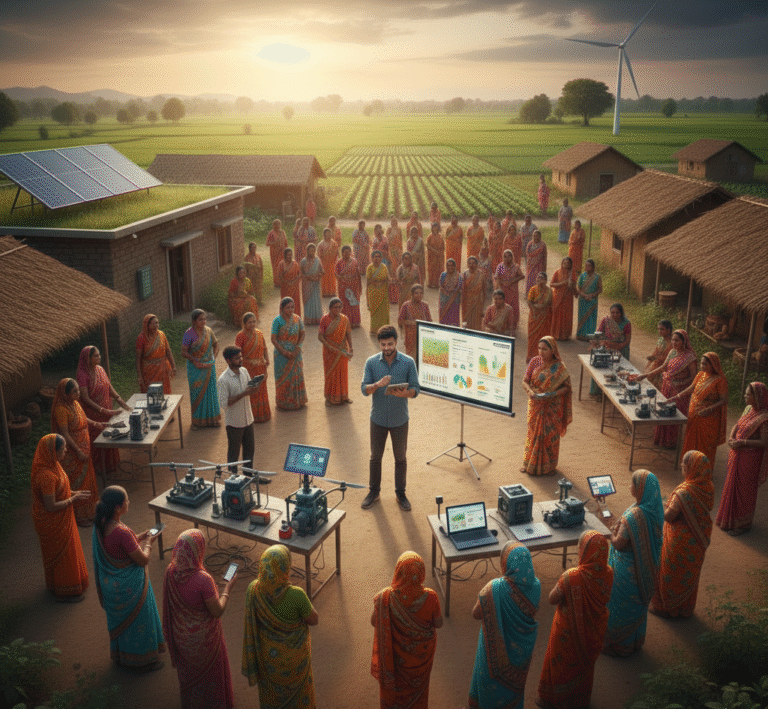
Across rural India, farming is not just a profession; it is a way of life. Yet, for generations, farmers have carried the burden of uncertainty, unpredictable weather, and limited access to reliable information. Today, the journey of empowerment begins with one powerful resource: knowledge. When combined with technology, it becomes a tool that transforms fields, strengthens communities, and ensures long-term sustainability.
Farmers who once depended solely on experience and tradition are now stepping into a future where informed decisions, timely updates, and innovative techniques shape better harvests. This shift marks the foundation of rural progress — a future where farmers grow not just crops, but also confidence.
Rural farmers face obstacles that go far beyond what meets the eye:
Erratic climate conditions that disrupt crop cycles
Minimal access to modern farming techniques
Dependency on traditional tools and outdated practices
Limited entry to fair markets
Rising costs of seeds, fertilizers, and equipment
Delayed access to information on weather, pests, and subsidies
For many families, a single season of crop loss can mean months of financial instability. This is why bridging the knowledge gap is not optional — it is essential.
Earlier, farming relied heavily on ancestral methods passed down through generations. While culturally rich, these practices cannot keep pace with modern agricultural demands.
Today’s farmer requires:
– Awareness of climate-smart farming
– Understanding of soil health and nutrients
– Efficient water management techniques
– Access to digital tools for smarter decision-making
– Practical knowledge about crop diversification
Modern skill needs are reshaping agriculture, helping farmers become more resilient, competitive, and self-reliant.
Knowledge is a silent revolution. When farmers learn something new, the transformation is immediate:
Learning how to select the right seed variety
Understanding optimal sowing times
Knowing which fertilizer combination works best
Becoming aware of pest-control methods before damage occurs
Workshops, field demonstrations, and community gatherings are becoming powerful platforms for spreading agricultural knowledge. A single training session can change how an entire village farms.
Technology is no longer limited to urban industries. It has entered the fields and farms of rural India, bringing hope and efficiency.
Examples of technology empowering farmers:
Weather apps that warn farmers of rainfall or storms
Mobile platforms that guide on seed selection, pest control, and irrigation
Modern drip systems that save water
Solar-powered pumps are reducing cost and labor
Smart sensors that monitor soil moisture
By integrating technology, farmers reduce uncertainties and improve productivity.
Sustainable methods ensure the land stays fertile and productive for years:
Organic composting to improve soil structure
Controlled irrigation to avoid waterlogging
Crop rotation for maintaining soil nutrients
Using bio-fertilisers instead of chemical heavy solutions
Mulching to retain moisture and regulate temperature
These practices not only protect the environment but also lower farming expenses , a win-win for both farmers and the planet.
Soil is the lifeline of agriculture, yet many farmers remain unaware of its condition.
Through soil testing, farmers learn:
Which nutrients are lacking
The correct fertilizer required
How to avoid overuse of chemicals
The ideal crops suited for their soil type
Healthy soil equals healthy crops, which equals a stable and sustainable livelihood.
A new wave of digital solutions is transforming agriculture:
Mobile apps offering step-by-step crop advisory
Weather alert platforms that prevent crop damage
Digital marketplaces connecting farmers directly to buyers
Government portals offering information on schemes, loans, and subsidies
For the first time, farmers can access real-time information from anywhere — bridging the rural-urban knowledge gap.
Quality seeds are the foundation of a good harvest. Farmers who shift to improved seed varieties often experience better germination, disease resistance, and higher yields.
Additionally, access to modern tools like:
Seeders
Rotavators
Power tillers
Drip systems
Low-cost solar pumps
Helps farmers save time, reduce labor costs, and work more efficiently.
Financial awareness empowers farmers in ways that traditional farming knowledge cannot. A financially literate farmer understands:
How to apply for agricultural loans
Which subsidies they qualify for
How crop insurance protects against loss
Budgeting for seasons
Smart investment in fertilizers, seeds, and tools
Financial literacy creates a safety net that shields rural families from sudden economic shocks.
With unpredictable weather becoming more frequent, farmers must adapt.
Climate-smart techniques include:
Drought-resistant crops
Early-warning weather systems
Water-saving drip irrigation
Shade nets for temperature control
Precision farming that reduces waste
By preparing for climate risks, farmers reduce losses and protect their livelihoods.
Technology is helping farmers overcome long-standing challenges:
Digital marketplaces reduce dependence on middlemen
Weather apps reduce crop damage
Online tutorials teach new skills
Mobile banking ensures safe payments
Knowledge sharing happens instantly
Younger farmers especially benefit, finding motivation and opportunity through digital access.
Some of the strongest changes happen through collective learning. When farmers come together:
They exchange ideas
Share experiences
Solve problems cooperatively
Support each other during crop crises
Community-led growth builds stronger, more informed villages.
The Flybird Foundation is deeply committed to empowering farmers by giving them access to modern tools, practical training, and knowledge that elevates their livelihoods.
Key contributions include:
Organizing farmer training camps on sustainable agriculture
Conducting workshops on soil health and water management
Introducing farmers to digital tools and mobile-based learning
Raising awareness about crop insurance and government schemes
Encouraging youth participation in modern farming
Providing support for efficient irrigation techniques
The foundation’s mission is to ensure that no farmer is left behind in the journey toward modern, informed, and sustainable agriculture.
When farmers gain access to the right knowledge and tools, the impact is long-term and transformative:
Higher and more stable incomes
Reduced losses due to climate or crop failures
Better financial planning
Enhanced community prosperity
Improved education opportunities for children
Stronger rural economies
Knowledge doesn’t just change fields it changes futures.
Empowering farmers through knowledge and technology is not a one-time action; it is a continuous process that strengthens rural India from its roots. By bringing awareness, innovation, and opportunity to the fields, we ensure that agriculture remains sustainable, profitable, and capable of supporting future generations.
With every farmer who learns something new, a village grows stronger. With every tool introduced, farming becomes easier. And with every step toward innovation, the foundation of rural India stands taller.
This is the future we build one empowered farmer at a time.

Together, we spread hope, inspire change, and shape brighter futures.
Flybird Foundation © All Rights Reserved.