
+91 9008 41 9008
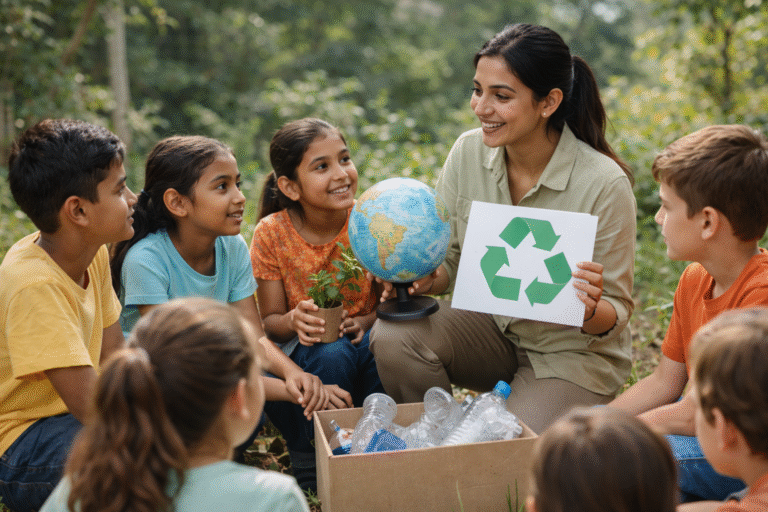
In a world where technology evolves faster than ever, one lesson remains timeless: our connection to nature. Yet, as screens grow brighter, the greenery around us seems to fade. Children today often know more about digital apps than about the trees outside their windows. This growing disconnect between humans and the environment is one of the greatest challenges of our time.
But there is hope, and it begins with education. Eco-education is more than a subject; it’s a philosophy that teaches children to respect, understand, and protect the natural world. By nurturing environmental awareness from a young age, we can inspire a generation that values sustainability over consumption, and care over convenience.
At Flybird Foundation, we believe that empowering the next generation with ecological wisdom is one of the most powerful ways to ensure a sustainable future. This blog explores why eco-education matters, how it can be practiced, and how collective efforts can shape a greener tomorrow.
The earth’s future lies in the hands of today’s children. Teaching them about environmental care is not just a school subject, it’s a life skill. Eco-education helps children develop empathy toward living beings, understand the impact of human actions, and adopt habits that protect natural resources.
When children learn how a tree produces oxygen, how rivers nourish life, or how pollution affects wildlife, they begin to see nature not as a backdrop but as a living system they are part of. This sense of connection inspires responsibility and gratitude, two values that modern society desperately needs.
Studies also show that children exposed to environmental education are more likely to practice recycling, conserve energy, and advocate for eco-friendly policies as adults. In short, teaching eco-awareness doesn’t just shape individuals, it builds a generation of responsible global citizens.
Children learn best through experience. When they plant a seed, care for it, and watch it grow, they understand patience, responsibility, and the miracle of life. Eco-education is about creating these real-world experiences that connect them with nature on an emotional level.
Schools can introduce gardening programs, where students learn about soil, water, and plant life cycles. Nature walks and outdoor science lessons can replace classroom walls with open skies. These activities transform learning into a journey of discovery and wonder.
Parents also play a vital role. Encouraging children to spend time outdoors, observe birds, or participate in community clean-ups can instill a love for the planet that no textbook can teach. When a child picks up litter or saves water while brushing, those small actions build lifelong eco-conscious habits.
At Flybird Foundation, we’ve witnessed how these simple experiences leave lasting impressions. A single environmental activity can awaken curiosity, compassion, and commitment in young hearts.
Eco-education can be implemented both in schools and at home through creative, engaging methods that make learning fun and meaningful. Here are some practical ways to nurture eco-awareness in children:
1. Classroom Sustainability Projects
Encourage students to participate in recycling drives, paper-making workshops, or waste segregation activities. When children actively sort and reuse materials, they understand the value of conservation.
2. Nature Clubs and Eco-Camps
Setting up student-led nature clubs or eco-camps gives children a platform to explore, innovate, and take initiative. They can organize plantation drives, bird-watching events, or awareness skits within their communities.
3. Environmental Storytelling
Stories have immense power. Sharing tales about forests, animals, or environmental heroes can spark imagination and empathy. Storytelling connects children emotionally to the cause and helps them understand the importance of balance in nature.
4. Integrating Nature into Curriculum
Subjects like science, art, and geography can naturally include environmental themes. For example, art projects can use recycled materials, or geography lessons can explore renewable energy sources.
5. Family Participation
Eco-learning continues at home. Parents can encourage eco-friendly habits such as avoiding plastic, composting kitchen waste, or switching off unnecessary lights. Family outings to parks or nature reserves can strengthen the bond between children and the environment.
These small yet powerful steps cultivate awareness and responsibility, proving that eco-education is not limited to classrooms—it’s a way of living.
Teachers are not just educators—they are environmental role models. When a teacher carries a reusable water bottle or talks passionately about protecting trees, students observe and absorb these values naturally.
Eco-education flourishes when mentors lead by example. Teachers can inspire through innovative classroom methods, interactive workshops, and real-life demonstrations of sustainability. Inviting environmental experts or activists to speak in schools can also expose students to real-world issues and solutions.
Moreover, educators should focus on action-based learning. Instead of only discussing environmental issues, they can encourage children to design small projects—like creating mini gardens, organizing “no plastic” days, or developing posters that spread awareness. These activities help children see themselves as contributors to change, not just learners of information.
The influence of eco-education extends beyond children—it reshapes entire communities. When children bring home the values they learn, they inspire their parents, friends, and neighbors to act more responsibly.
A child who learns to recycle often becomes the family’s environmental guide. A classroom that adopts a zero-waste policy can influence the entire school community. Over time, these small circles of awareness grow, forming a ripple effect that reaches society at large.
Eco-educated individuals grow up to become thoughtful consumers, responsible citizens, and conscious leaders. They make informed choices—whether it’s supporting sustainable products, conserving resources, or advocating for environmental laws.
This transformation, when multiplied across millions of young minds, can redefine how our world approaches sustainability. It’s the seed of a greener civilization.
While the importance of eco-education is undeniable, implementing it effectively can be challenging. Many schools lack resources, trained staff, or proper curriculum integration. In some areas, environmental education is treated as an optional topic rather than a core life skill.
Additionally, the rise of urbanization and digital lifestyles means children are spending less time in nature. This growing “nature deficit” limits their firsthand understanding of the environment.
However, these challenges can be overcome through collaboration. NGOs, educational institutions, and government bodies can work together to provide resources, organize workshops, and train teachers in eco-education methods. Public awareness campaigns can also play a major role in reminding society that education for the planet is education for survival.
At Flybird Foundation, we consistently address these challenges by working directly with communities and schools. Our eco-learning initiatives are designed to make environmental education accessible, interactive, and inspiring for every child.
The Flybird Foundation is deeply committed to spreading environmental awareness among children and youth. We conduct eco-education workshops, awareness campaigns, and school programs that inspire young minds to take action.
Our volunteers teach children about topics like waste management, recycling, biodiversity, and water conservation through games, storytelling, and real-life demonstrations. Tree plantation drives and clean-up campaigns are also organized to give students practical exposure to environmental work.
Through these activities, children not only learn environmental facts but also develop compassion, responsibility, and teamwork. We’ve seen how their enthusiasm spreads to their families and communities, creating a lasting ripple effect of awareness.
Our ultimate goal is to nurture a generation that doesn’t just understand nature—but truly cares for it.
Eco-education isn’t just about saving trees or cleaning rivers; it’s about shaping a mindset that values balance and coexistence. It teaches children that every small action, like turning off a light, planting a sapling, or saying no to plastic matters in the grand picture of sustainability.
When we teach children to care for the environment, we’re not just preparing them for exams; we’re preparing them for life. A future where they grow up to be changemakers, innovators, and protectors of the planet.
Every young mind that learns to love nature today becomes a voice for the Earth tomorrow.
Inspiring eco-consciousness in the next generation is one of the most meaningful investments we can make. Eco-education plants the seeds of awareness, compassion, and responsibility that will grow into a sustainable future for all.
At Flybird Foundation, we continue to dedicate our efforts toward environmental learning and youth engagement. Together, we can empower children to reconnect with nature, lead with empathy, and build a planet where progress and preservation walk hand in hand.
The future depends not just on innovation—but on education that teaches us to respect the very Earth we call home.

Together, we spread hope, inspire change, and shape brighter futures.
Flybird Foundation © All Rights Reserved.