
+91 9008 41 9008
Plastic is everywhere—wrapped around our groceries, carried in our hands, scattered across our streets, lying silently in landfills, and floating in our rivers. For most people, plastic is a convenience. But for communities struggling with waste mismanagement, it is a burden that grows heavier every day. Yet, in some corners of India, this burden is slowly being transformed into a resource. And at the heart of this transformation is a simple, brilliant idea: Eco-Bricks.
Eco-Bricks are not machines, chemicals, or expensive innovations. They are ordinary plastic bottles packed tightly with non-recyclable plastic waste until they become strong, compact building blocks. And for many communities, these little blocks represent hope—hope for cleaner neighborhoods, safer environments, creative community spaces, and a future built through collective participation.
This is where the Flybird Foundation steps in, nurturing an idea that does more than reduce waste. It empowers people, brings communities together, and proves that transformation can begin from something as humble as a discarded plastic bag.
Every day, thousands of single-use plastic items find their way into garbage bins, drains, and open lands. Plastic wrappers, chips packets, multilayered packaging, and thin carry bags are some of the hardest kinds of waste to recycle. They break down slowly, pollute water bodies, and affect wildlife.
For many households, the waste generated in a single week could fill an entire eco-brick. Yet, without awareness and systems in place, this waste simply becomes one more contribution to the growing plastic crisis.
Communities often believe that waste management is a government responsibility, but meaningful change requires involvement from everyone—from households segregating their waste to children learning new habits to local volunteers creating solutions.
Eco-Bricks offer an approachable, practical, low-cost way for people to take control of their plastic waste, and the Flybird Foundation has embraced this idea with an approach rooted in education, participation, and long-term sustainability.
The beauty of an eco-brick is its simplicity. Anyone can make one. All you need is:
A clean plastic bottle
Dry, non-recyclable plastic waste
A stick to compress the waste
As the bottle fills up and becomes denser, it transforms from a piece of trash into a usable building block. And when many people from one community each create just a few eco-bricks, the impact is huge.
Eco-bricks are:
Durable
Low-cost
Easy to make
Environment-friendly
Useful for building structures
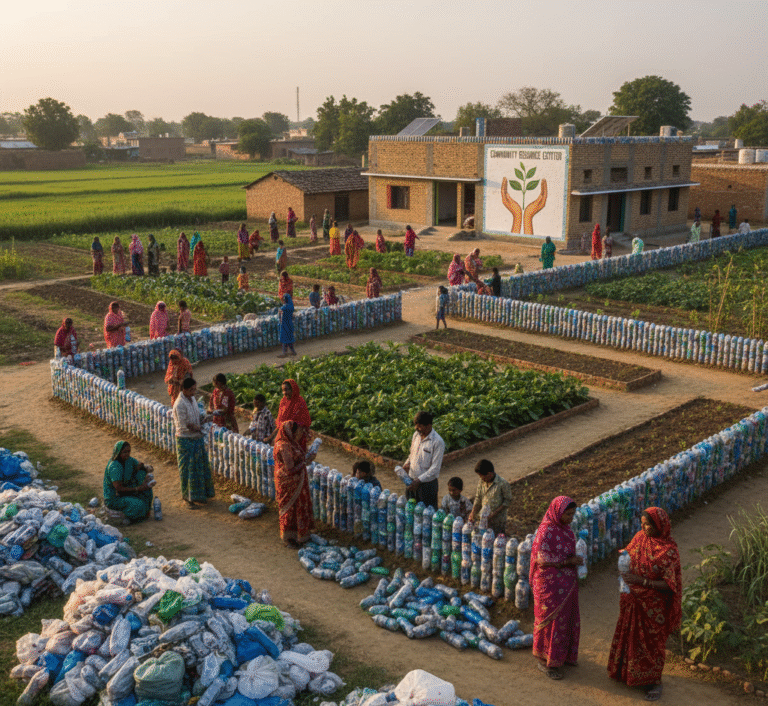
Through the Flybird Foundation’s initiatives, eco-bricks are being collected to create benches, garden boundaries, mini walls, planters, learning corners for children, and even outdoor seating spaces. What begins as waste becomes something meaningful—something people can see, touch, and take pride in.
Flybird Foundation’s eco-brick movement began with a simple observation: plastic waste was everywhere, yet there was no community-level solution that people could participate in easily. Instead of depending solely on recycling agencies, the Foundation asked a powerful question:
“What if communities could turn their own waste into their own resources?”
This question became a mission.
The Foundation now works with:
Schools
Housing societies
Local volunteers
Women’s groups
Youth organisations
Neighborhood committees
Each group contributes eco-bricks while learning why plastic segregation is crucial. It is not just an activity; it is a mindset shift.
By turning waste into a building material, the Foundation helps people understand that plastic does not have to end up in open landfills. It can be directed into something constructive—literally.
The eco-brick journey begins at home. Families rinse plastic bottles, collect dry waste, and slowly fill their eco-bricks through the month. Children often take the lead, turning it into a fun activity rather than a chore.
Once a sufficient number of bricks are collected, communities bring them to a common drop-off point, where the Flybird Foundation team inspects, weighs, and stores them. Eventually, these bricks are used to build various micro-structures that benefit the entire neighborhood.
Some examples include:
● Seating Corners in Local Gardens
Eco-brick benches made by the community, for the community. These spaces become reminders of collective responsibility.
● Eco-Walls for Awareness
Walls constructed using eco-bricks serve as vibrant, colorful installations that also educate people about waste reduction.
● Small Play Zones
Using packed bottles and mesh structures, play spaces are created for children, making waste management a joyful visual experience.
● Community Planters
Eco-brick planters become symbols of green living—plastic waste on the inside, greenery on the outside.
● Learning Corners in Schools
Schools use eco-bricks to build reading corners, mini seating areas, and activity zones where children learn the value of sustainable living.
Each structure tells a story—of awareness, participation, teamwork, and transformation.
Behind every eco-brick project lies a deeper emotional connection. Parents feel proud when their children remind them to segregate waste. Women’s groups often turn eco-brick making into weekly bonding sessions. Volunteers experience the satisfaction of contributing to something they can physically see.
It shifts people from feeling helpless about pollution to feeling empowered to reduce it.
There is joy in knowing that:
A plastic wrapper won’t end up clogging a drain
A chips packet won’t choke an animal
A carry bag won’t blow into a farm field
A single family’s waste can create a community resource
This emotional awakening is just as important as the technical benefit of eco-bricks. When people feel responsible, they act responsibly.
While eco-bricks are the core, the Flybird Foundation takes the idea beyond just bottle-based creations. The long-term vision focuses on growing a plastic-conscious community with deeper, more sustainable habits.
1. Awareness Drives in Schools
Children are the biggest ambassadors of change. The Foundation organizes sessions where students learn why waste segregation matters and how small daily steps lead to big environmental benefits.
2. Door-to-Door Waste Segregation Campaigns
Trained volunteers visit households, explain the importance of separating dry and wet waste, and demonstrate how to make eco-bricks efficiently.
3. Plastic-Free Events
The Foundation collaborates with societies and institutions to conduct eco-friendly celebrations, reducing single-use plastic consumption.
4. Upcycling Workshops
Workshops focus on reusing old plastic items creatively—turning containers into pots, buckets into organizers, and packaging into art materials.
5. Community Competitions
Monthly eco-brick competitions encourage households to participate actively, turning waste management into a fun challenge.
Through these initiatives, the Flybird Foundation nurtures a long-term, behavior-driven approach that goes far beyond creating eco-bricks.
The Foundation believes that sustainability flourishes when people work together. Eco-bricks have become a tool that unites neighbors, empowers children, and builds trust among residents.
They help create:
● Community Participation
People come together with a shared purpose.
● Skill-Building
Children and adults learn new techniques, from waste compaction to simple building activities.
● Cleaner Streets and Neighborhoods
Visible reduction in plastic litter motivates people to stay greener.
● Shared Pride
When a community structure is built from their own eco-bricks, people feel deeply connected to it.
● Awareness That Spreads
Once one neighborhood adopts eco-bricks, others become curious and join the movement.
In this way, eco-bricks become more than building blocks—they become relationship builders.
● A school where children turned plastic waste into a reading space
Students spent a month collecting plastic, filling eco-bricks, and designing a small reading corner using their bricks. Teachers reported a noticeable change—children became more conscious of waste, reminding adults to dispose responsibly.
● A women’s group that built planters for their society
A group of homemakers spent evenings collecting dry plastic waste and turning them into bricks. They used these bricks to build colourful planters that now decorate their society’s entryway.
● Young volunteers creating benches for local gardens
Youth volunteers partnered with Flybird Foundation and built eco-brick seating corners for public gardens, inspiring a ripple of awareness among morning walkers.
These stories reflect the heart of the mission—simple actions turning into powerful results.
The Flybird Foundation aims to expand the eco-brick movement across more communities, schools, and institutions. The goal is not just to create structures but to build habits—habits that reduce plastic waste at its source, encourage thoughtful consumption, and cultivate environmental responsibility.
Future plans include:
Establishing more eco-brick collection hubs
Collaborating with larger institutions
Developing eco-brick learning centres
Involving rural communities in structured eco-brick projects
Building larger community structures through collective participation
The journey is long, but each eco-brick takes us one step closer to a cleaner, greener future.
Community participation is the backbone of the eco-brick movement, and every small effort adds up to visible change.
When residents gather for collection drives or join hands to build structures, a sense of unity naturally forms.
People begin to feel emotionally connected to the outcome because their individual contribution becomes part of a larger, shared achievement.
This participation also helps break social barriers—neighbors who barely interacted earlier start collaborating for a common purpose.
As more people get involved, the movement evolves from an initiative into a community habit, creating long-lasting ownership.
Children act as powerful environmental influencers in their homes and schools.
Their enthusiasm for collecting plastic waste and filling eco-bricks encourages parents to adopt responsible waste habits.
Schools notice that students develop a deeper understanding of sustainability when they participate in hands-on activities.
Eco-brick projects often become a source of pride for children, motivating them to continue eco-friendly practices throughout their lives.
This early awareness ensures that the next generation will grow up with a stronger commitment to environmental responsibility.
Eco-bricks do not just solve a waste problem—they add color, creativity, and character to public spaces.
Structures created through community-collected eco-bricks often become local landmarks because people can see their combined effort reflected in them.
Parks, open grounds, school entrances, and garden pathways become more vibrant and inviting when decorated with eco-brick planters, borders, or seating corners.
These creative designs also serve as silent educators; anyone who walks by understands instantly that waste can be repurposed with imagination.
The visual impact of these structures encourages other communities to join the movement.
The eco-brick model is simple and highly scalable, making it easy for households, schools, or institutions to adopt and replicate.
It requires no machinery, complicated tools, or high budgets—making it accessible even in low-resource communities.
As the movement spreads, new groups often learn from existing projects, creating a continuous chain of awareness and action.
The Flybird Foundation’s approach focuses on building habits, not just completing projects, ensuring that communities continue segregating plastic long after the initial initiative.
Over time, this model helps cultivate a widespread culture of sustainability that can reach cities, towns, and rural areas alike.
Turning plastic waste into community resources is more than an environmental initiative—it is a movement of responsibility, creativity, and unity. Eco-bricks show us that even the simplest ideas can spark powerful change when people come together.
With the Flybird Foundation leading the way, communities learn how to manage waste more wisely, build meaningful spaces from discarded materials, and inspire others to join the mission. What once polluted our streets and rivers now becomes benches, walls, play zones, and learning corners—symbols of transformation created by the hands of the very people who use them.
Eco-bricks prove that waste is not the end of the story. It is the beginning of a better one—one built from awareness, action, and hope.

Together, we spread hope, inspire change, and shape brighter futures.
Flybird Foundation © All Rights Reserved.