
+91 9008 41 9008
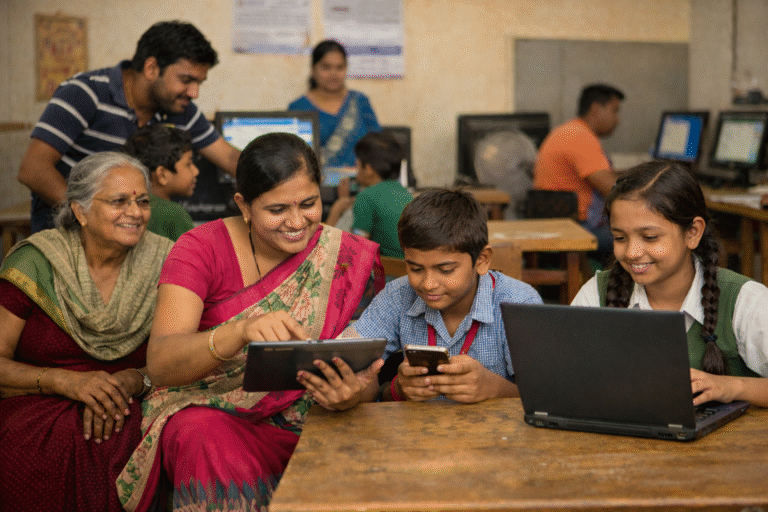
Technology today touches every part of our lives, from how we learn and work to how we connect and communicate. Yet, while digital transformation is accelerating across cities, many people in rural and underprivileged regions are still left behind. Bridging this digital divide through digital literacy is not just a developmental goal; it’s a social responsibility.
Digital literacy gives people the ability to use technology effectively and confidently. It helps students learn beyond classrooms, empowers women with financial independence, and gives farmers access to real-time information. In essence, it opens doors to equality and opportunity.
Digital literacy means more than just knowing how to operate a computer or smartphone. It involves understanding how to find, evaluate, and use digital information responsibly.
It helps individuals:
Access government services online.
Perform secure digital payments.
Use digital tools for education and career growth.
Communicate effectively through digital platforms.
In a connected world, being digitally literate is as essential as being able to read and write. It enables people to take part in a modern economy and make informed decisions in their daily lives.
India has taken impressive strides toward becoming a digital-first nation. The Digital India initiative, launched in 2015, envisioned a country where every citizen can access technology for growth and inclusion.
Several initiatives have played a key role in promoting digital learning and access:
PMGDISHA (Pradhan Mantri Gramin Digital Saksharta Abhiyan): Trains rural citizens in basic digital skills.
Common Service Centres: Provide access to digital government services in remote areas.
BharatNet: Expands internet connectivity to rural villages.
These efforts have brought millions closer to digital inclusion, but a significant section of society still remains untrained or unaware. That’s where organizations like Flybird Foundation step in to bridge the last mile.
At Flybird Foundation, we believe digital literacy is the key to empowerment. By educating people about technology, we aim to create equal opportunities for all, regardless of geography, age, or gender.
Our digital awareness programs focus on:
Training for all age groups: From students and homemakers to senior citizens.
Practical learning sessions: Teaching participants to use smartphones, computers, and internet tools.
Digital banking and safety: Guiding users to perform secure online transactions and recognize cyber risks.
Accessing e-governance: Helping people apply for documents, welfare schemes, and health services online.
Every workshop and awareness drive we conduct brings people one step closer to independence not just economically, but socially and intellectually as well.
Digital literacy is not just about learning technology; it’s about creating inclusion. It gives people the power to connect, learn, and grow.
For example:
A young student from a small town can now attend online classes and build global knowledge.
Women entrepreneurs can promote homegrown products on social media and online stores.
Farmers can check market prices and sell produce directly, reducing dependency on middlemen.
When individuals are digitally empowered, entire communities progress. This transformation multiplies to improve education, employment, and social equality.
Despite ongoing efforts, several challenges still limit India’s digital literacy growth:
Limited Internet Connectivity: Many rural areas still lack reliable access.
Lack of Awareness: People are often unaware of digital opportunities and services.
Language Barriers: English-based interfaces can be difficult for non-English speakers.
Cyber Safety Concerns: Fear of scams and fraud prevents people from using online platforms.
Flybird Foundation addresses these issues by conducting community programs in local languages, using simple teaching methods, and emphasizing online safety. Our approach ensures learning is accessible, relatable, and lasting.
The dream of a “Smarter India” can only be realized when every citizen becomes part of the digital journey. Governments, corporations, and foundations must work hand-in-hand to ensure access, awareness, and affordability reach all corners of the nation.
Flybird Foundation continues to support this vision by encouraging people to embrace technology fearlessly and responsibly. We believe that when every citizen is digitally empowered, India doesn’t just move forward, it transforms into a stronger, smarter, and more inclusive nation.
Digital literacy is more than a skill; it’s a tool for empowerment, equality, and progress. It gives people the confidence to connect with opportunities, manage their lives better, and contribute to the country’s growth.
As India steps confidently into a digital future, initiatives like those led by Flybird Foundation ensure that no one is left behind. Together, we can truly make digital literacy a stepping stone toward a smarter, self-reliant India.

Together, we spread hope, inspire change, and shape brighter futures.
Flybird Foundation © All Rights Reserved.