
+91 9008 41 9008
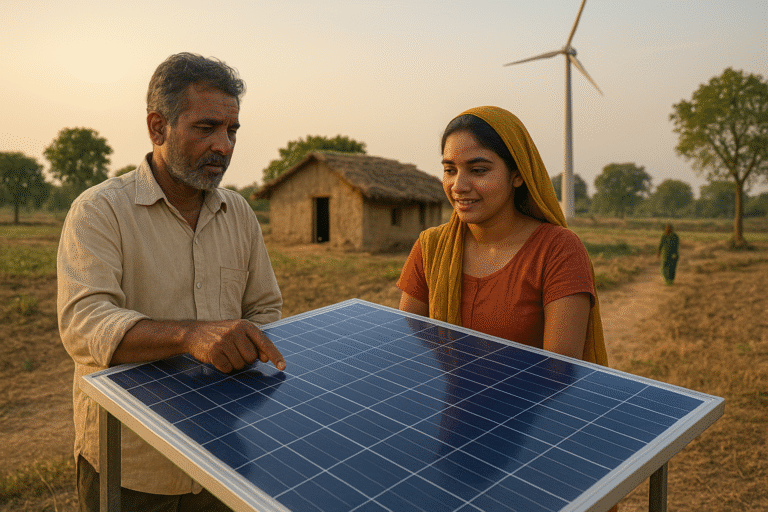
In many rural regions of India, life begins early—long before the sun rises. For decades, families have relied on dim kerosene lamps, smoky chulhas, and unpredictable electricity that comes and goes without warning. Children finish homework before dusk, women cook over firewood in poorly ventilated kitchens, and small businesses struggle to function after dark. These challenges have shaped daily life for generations, limiting access to opportunities that many urban areas take for granted.
Across villages, clean energy is breaking old barriers and lighting a path toward sustainable and inclusive development. Solar lamps glow in homes that once sat in darkness. Biogas units replace smoky stoves. Renewable microgrids power community centres, schools, and small shops. And through initiatives supported by organisations like the Flybird Foundation, communities are learning how clean energy can redefine their futures.
This blog explores how clean energy is reshaping rural communities and why it stands at the heart of long-term, meaningful development.
For rural households, access to energy is not just a convenience—it is a gateway to progress. When electricity is unreliable or unavailable, basic needs such as studying, cooking, or running a small business become difficult. Clean energy provides a safe, affordable, and sustainable alternative that matches the realities of rural life.
What clean energy brings to rural communities:
Consistent lighting after dark
Safer and smoke-free cooking solutions
Reduced household expenses
Better air quality and healthier homes
More opportunities for work, study, and entrepreneurship
A foundation for long-term, independent growth
As clean energy expands, so does the confidence of communities. Energy becomes a tool that supports daily life, fuels ambition, and creates possibilities where limitations once existed.
One of the clearest and earliest impacts of clean energy appears in education. In many villages, children have long struggled to study at night because kerosene lamps offer poor light and produce harmful smoke. These lamps also pose fire hazards, making them unsafe for indoor use.
Solar-powered lamps and home lighting systems have changed this reality dramatically.
Children can now study in well-lit rooms without straining their eyes or breathing in toxic fumes. Parents often describe solar lights as the turning point that made evening study routines regular and effective. Schools powered by clean energy also become more functional—allowing teachers to use digital tools, keep classrooms well-lit, and conduct activities even after sunset.
When the Flybird Foundation supports solar-installation programs in schools or distributes solar lanterns in rural learning centres, the change is immediate. Education becomes less limited by daylight, and students experience a more motivating learning environment.
The impact stretches far into the future: better learning outcomes, greater attendance, and more confidence in the possibility of academic growth.
Women are often the most affected by traditional energy challenges. Hours spent gathering firewood, cooking over smoky stoves, and managing households without electricity limits their time, health, and opportunities.
Clean energy changes this dynamic in powerful ways.
How clean energy empowers rural women:
Less time spent on fuel collection, giving them more time for income-generating activities
Improved indoor air quality, reducing health risks
Opportunities to run home-based businesses using electricity
Access to lighting that makes evenings safer and more productive
Increased financial independence through clean energy-driven livelihoods
In many communities, women’s self-help groups are managing solar charging stations, maintaining small renewable systems, and earning income by providing energy services. Clean energy not only reduces their workload it is strengthens their role as leaders in village development.
Traditional energy sources such as kerosene, firewood, and coal contribute heavily to indoor air pollution, one of the most serious but often overlooked health risks in rural India. Breathing smoke daily leads to respiratory illnesses, chronic coughing, eye irritation, and long-term damage, especially for women and children.
Clean cooking solutions such as biogas plants, improved cookstoves, and solar-powered appliances provide immediate relief.
Families adopting clean energy report:
Significantly reduced smoke in kitchens
Faster cooking times
Less health-related expenditure
Cleaner living spaces
The transition to clean energy is not just a shift in technology; it is a public health improvement that can extend life expectancy and reduce disease burden across entire communities.
Clean energy acts as a catalyst for local economic development. When power becomes reliable and affordable, rural entrepreneurship thrives. Small shops stay open longer, farmers use equipment more efficiently, and craftsmen can operate tools that once required expensive fuel.
Clean energy contributions to rural livelihoods include:
Solar-powered sewing machines for tailoring
Refrigeration for dairy, poultry, and fisheries
Solar irrigation pumps for farming
Charging stations for mobile phones and electric tools
Small manufacturing setups using renewable energy
Solar irrigation pumps are particularly transformative. Farmers shift away from costly diesel pumps and unreliable grid electricity, saving money while stabilizing crop production. This leads to better yields, higher profit margins, and more climate-resilient agriculture.
The Flybird Foundation, through its rural livelihood initiatives, often helps communities adopt these clean-energy solutions—empowering farmers, small entrepreneurs, and artisan groups to expand their businesses sustainably.
When clean energy powers public spaces, the collective development of a community accelerates. Solar streetlights, for instance, improve safety after dark and reduce the risk of accidents or wildlife encounters. Electrified community halls enable night-time meetings, training programs, and cultural events.
Health centres powered by solar energy can refrigerate vaccines, run medical equipment, and operate without interruptions during emergencies. Schools with renewable energy are able to offer computer literacy programs and host evening classes.
These improvements strengthen social bonds and enable smoother functioning of essential services. Clean energy, in this way, becomes a silent but powerful driver of community resilience.
Rural communities are deeply connected to nature; their livelihoods depend directly on environmental health. Yet traditional fuels contribute to deforestation, air pollution, and greenhouse gas emissions.
Clean energy dramatically reduces this environmental burden.
Environmental benefits include:
Less firewood consumption
Reduced carbon emissions
Lower pollution levels
Protection of forests and natural resources
More sustainable agricultural practices
When villages adopt renewable energy, they safeguard their environment for future generations. Children grow up in cleaner spaces and learn to value sustainable living, shaping environmentally conscious communities for the future.
For many years, rural youth migrated to cities due to limited opportunities at home. With clean energy improving education, powering small businesses, and supporting modern farming, young people now have meaningful reasons to stay.
They find new livelihood options:
Managing solar infrastructure
Starting energy-powered micro-enterprises
Developing renewable-powered agriculture
Training others in clean energy technologies
Clean energy gives them a chance to envision growth without leaving their villages. They become part of the development process—innovating, contributing, and leading.
Energy independence is a foundation for long-term development. When villages generate their own power through solar or biogas systems, they become less dependent on external grids, uncertain fuel prices, or frequent outages.
Renewable systems continue working even during floods or storms, providing reliable light, communication, and essential services. Communities stay connected and prepared during emergencies.
Many villages supported by the Flybird Foundation have adopted small-scale renewable systems that strengthen self-reliance and resilience—ensuring continuity of daily life regardless of external circumstances.
Clean energy is far more than a technological advancement; it is a transformative force shaping the future of rural India. It improves education, strengthens healthcare, empowers women, boosts local economies, and protects the environment. Its impact reaches every corner of rural life, enabling communities to grow with dignity and stability.
With the support of organisations like the Flybird Foundation, clean energy becomes accessible, meaningful, and sustainable for even the most remote villages. As solar panels light up homes and biogas units fuel daily cooking, rural families gain hope, security, and opportunities they once thought impossible.
The path to rural development is illuminated not just by electricity, but by empowerment. Clean energy ensures that every village, regardless of location, has the power to build its own brighter future.

Together, we spread hope, inspire change, and shape brighter futures.
Flybird Foundation © All Rights Reserved.