
+91 9008 41 9008
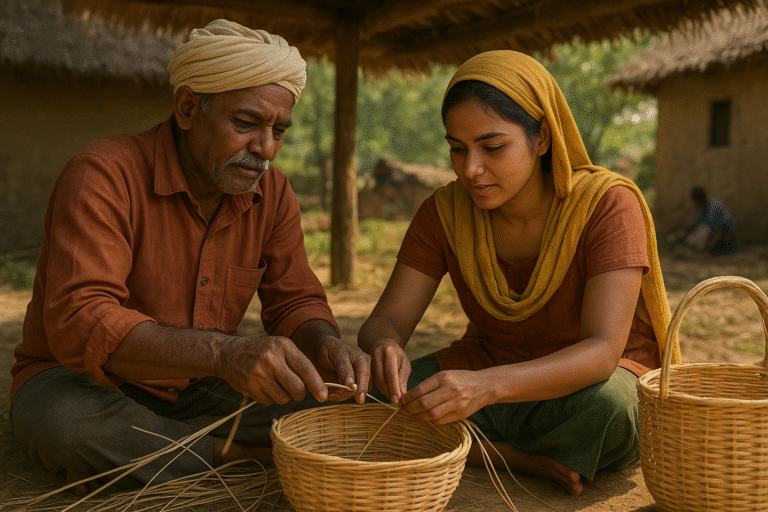
In the heart of India’s villages, where the rhythm of life remains connected to the soil and seasons, traditional skills have been passed down for generations. These skills are not just techniques; they are stories carved in wood, woven into fabric, moulded in clay, and crafted with hands that honour heritage. Today, as the world shifts toward sustainability, these rural artisans are proving that the wisdom of the past holds the power to shape the future.
Across communities, the Flybird Foundation has witnessed a silent but powerful transformation. When artisans receive recognition, support, and opportunities, they do more than create beautiful products; they uplift families, preserve culture, and rebuild local economies. This blog explores how traditional skills are being revived, protected, and channelled into sustainable growth for rural India.
Rural progress often begins with a collective decision, a shared dream for better living conditions, education, healthcare, and livelihood. Community-driven growth is built on collaboration rather than dependence.
When villagers work together, they pool their skills, labor, and local wisdom to solve challenges. One farmer may offer his land for a water tank; another may contribute tools; women’s groups may manage the finances. This shared responsibility not only accelerates results but also strengthens relationships within the community.
The Flybird Foundation supports this approach by facilitating dialogue and participation. Rather than imposing ideas, it listens to what communities truly need whether it’s a clean water source, a learning center, or improved sanitation. By nurturing ownership, the Foundation ensures that development is both meaningful and lasting.
Rural craftsmanship is an inheritance. It is something children observe long before they are taught. A daughter watches her mother weave baskets out of natural fibres. A young boy follows his grandfather to the pottery wheel. A family stitches quilts using patterns that have existed for decades.
These traditions form an unbroken chain that continues to pass from one generation to the next. Yet, for many years, the chain was at risk of breaking. With the rise of mass production, many artisans struggled to survive. Younger generations slowly turned away, believing their heritage had no place in a modern world.
However, today, as consumers reconsider their choices, the value of handmade, natural, and sustainable products has regained significance. What once seemed outdated is now becoming essential. The revival of interest in handcrafted crafts is restoring dignity and opportunity to rural communities.
Traditional skills by nature are environmentally friendly. The artisans of rural India have always relied on materials sourced directly from nature—mud, bamboo, jute, cotton, reclaimed wood, natural dyes, and plant fibres. Their processes involve minimal waste and low energy consumption, making them a model for sustainable production.
Why rural craftsmanship supports sustainability:
Uses locally available natural materials
Generates almost zero waste
Requires no industrial machinery
Encourages circular usage and upcycling
Strengthens local economies while reducing carbon footprint
In a world challenged by climate change and overconsumption, these age-old practices offer solutions that are both ecological and economically resilient. They show that sustainability does not always lie in innovation—it often lies in rediscovering wisdom that already exists.
Behind every handcrafted product is a story of patience, skill, and resilience. Rural artisans are often self-taught, learning through observation, repetition, and familial guidance. And while challenges exist—limited markets, low income, lack of modern platforms—they continue to create with dedication.
The Flybird Foundation has seen remarkable examples:
a group of women in a village turning traditional embroidery into a successful livelihood…
a community of young men reviving bamboo craft that was once nearly forgotten…
potters adapting designs to meet modern home décor trends without changing their traditional technique.
When given support, these artisans flourish. They innovate while staying true to their roots. They experiment with patterns, colors, and styles that appeal to contemporary buyers. And most importantly, they realize their talent holds value far beyond what they once believed.
In many villages, women are the backbone of traditional craftsmanship. Whether it is weaving, stitching, jewellery making, or natural dye work—their hands carry generations of expertise. Yet, their contributions often remain invisible.
Empowering these women is one of the most impactful ways to strengthen rural communities. When a woman artisan earns, she invests directly in her family—education for her children, healthcare for elders, and better nutrition for the household.
How traditional skills uplift rural women:
They gain financial independence
They experience increased social recognition
They balance home responsibilities with livelihood
They pass skills to younger girls, ensuring continuity
They become decision-makers within their families
The ripple effect of skilled women is remarkable. A single mother’s weaving group can transform the future of an entire village. A young artisan’s success can inspire dozens of girls to learn, create, and dream. This empowerment is the foundation of sustainable societal progress.
One of the biggest challenges artisans face is access—access to buyers, platforms, technology, and fair pricing. Many talented artisans produce stunning work but are unable to showcase it beyond their local area.
This is where organisations and foundations play a vital role.
Through workshops, exhibitions, digital training, and marketplace support, artisans are now able to connect with national and global customers. They learn how to present their products, understand pricing, and maintain quality standards.
When artisans see their products valued by people far away from their village, something powerful happens: they begin to believe in themselves. They see their work not just as tradition, but as a pathway to prosperity.
For many years, rural youth migrated to cities for work, leaving behind the crafts of their ancestors. But today, a positive shift is unfolding. Many young people are rediscovering the economic and creative potential of traditional skills. They are blending old techniques with modern ideas, developing new product lines, experimenting with materials, designing for lifestyle markets, and using digital platforms to promote their work.
Technology has become a bridge, not a barrier. It has opened doors for artisans to reach customers on social media, sell on online marketplaces, and share their craft stories globally.
This new generation is proving that traditional skills are not just cultural treasures—they are entrepreneurial opportunities.
Every craft form is a cultural language. It tells stories of past generations, their beliefs, festivals, landscapes, and experiences. When artisans continue practising their crafts, they keep these stories alive.
The preservation of culture is a kind of sustainability too. It ensures that future generations do not lose their identity. It protects heritage that cannot be replaced once forgotten.
Traditional art forms such as:
Warli painting
Handloom weaving
Clay pottery
Kantha embroidery
Metal handicrafts
Bamboo artistry
Mirror work
Block printing
…all carry the soul of Indian culture. Each time a handcrafted piece is purchased, a part of that culture survives.
Skill development is not just training; it is empowerment. When artisans receive structured guidance, exposure, and technical support, their craft becomes a long-term livelihood.
Skill-based programs supported by foundations help artisans:
Improve product quality
Learn new design trends
Understand pricing strategies
Access wider markets
Build self-confidence
This type of support creates durable, sustainable futures. Instead of relying on unstable income sources, artisans gain a stable and dignified profession. Their children grow up in households where tradition is respected and talent is rewarded.
Traditional skills are more than techniques passed from one generation to the next they are living expressions of culture, resilience, and identity. In rural communities, these skills form the backbone of sustainable growth because they combine natural materials, mindful practices, and collective wisdom. When artisans receive recognition, training, and market access, their craft transforms from a survival tool into a powerful source of progress.
As these artisans continue shaping eco-friendly products and preserving heritage, they are quietly building a future rooted in dignity and opportunity. Their craftsmanship uplifts families, strengthens communities, and restores confidence in local economies. The sustainable futures we envision for tomorrow already exist in the hands of those who carry centuries of tradition.
By supporting rural artisans, we honour their stories and help ensure that these stories continue shaping the world with beauty, responsibility, and human connection.

Together, we spread hope, inspire change, and shape brighter futures.
Flybird Foundation © All Rights Reserved.