+91 9008 41 9008
In India’s heartlands, where fields stretch beyond sight and villages hum with simplicity, health often takes a backseat to daily survival. Many rural communities continue to face limited access to healthcare, lack of awareness about diseases, and inadequate medical infrastructure. Despite the beauty of rural life, these regions often struggle with health issues that could be prevented through knowledge and awareness.
At Flybird Foundation, we believe that the foundation of a healthy nation begins with informed citizens, and that journey starts by spreading health awareness where it is needed most. This blog explores why health education is vital in rural areas, the challenges these communities face, and how awareness can empower them to live healthier, longer lives.
Health awareness isn’t just about knowing how to treat an illness, it’s about preventing it before it begins. In rural communities, a lack of information often leads to avoidable suffering. Many people remain unaware of the causes of common diseases, the importance of hygiene, or the value of preventive healthcare.
A simple understanding of nutrition, sanitation, and regular check-ups can save countless lives. For instance, many rural families continue to rely on traditional remedies without consulting doctors, leading to complications that could have been easily avoided. Awareness bridges this gap between knowledge and action.
When communities understand the importance of clean drinking water, balanced diets, vaccinations, and hygiene, they begin to take control of their health. This transformation not only improves individual well-being but also strengthens entire communities.
Rural India is home to nearly 65% of the country’s population, yet healthcare facilities are often scarce and under-equipped. Many villages lack proper medical centers, qualified doctors, and emergency care services. As a result, people must travel long distances for even basic medical attention.
Common health issues such as malnutrition, maternal mortality, vector-borne diseases, and water-borne infections continue to affect rural areas at alarming rates. Poor sanitation and limited access to clean water further worsen the situation.
However, the biggest challenge isn’t just lack of infrastructure it’s lack of awareness. People may not know the symptoms of diseases like diabetes or tuberculosis until it’s too late. They may neglect vaccinations or hygiene simply because they’ve never been taught their importance.
This is where health awareness campaigns play a crucial role. Knowledge can empower rural communities to take preventive measures and seek timely medical help, reducing the burden on healthcare systems and improving quality of life.
Rural regions face a unique set of health challenges that differ from those in urban areas. Some of the most common include:
Limited access to healthcare services: Hospitals and clinics are often located far from villages, making regular check-ups difficult.
Malnutrition: Many families cannot afford or are unaware of balanced diets, leading to nutrient deficiencies, especially among children and women.
Poor sanitation and hygiene: Open defecation, unsafe drinking water, and lack of waste management increase the risk of infections.
Maternal and child health issues: Many women do not receive proper prenatal or postnatal care, leading to high maternal and infant mortality rates.
Communicable diseases: Diseases like malaria, dengue, and tuberculosis spread easily due to poor preventive measures.
Lack of mental health awareness: Mental health remains an ignored topic in most rural communities, leading to untreated conditions and stigma.
Understanding these challenges is the first step toward creating practical solutions through health education and community engagement.
The old saying “prevention is better than cure” holds true everywhere, but even more so in villages where medical facilities are limited. Awareness empowers individuals to recognize early signs of illness, practice good hygiene, and adopt preventive habits.
For example, when families learn about the importance of washing hands, using mosquito nets, and boiling water, they can significantly reduce the spread of infectious diseases. Similarly, awareness about vaccination schedules ensures that children are protected from deadly illnesses.
Educational workshops on nutrition help families understand how local produce can be turned into nutritious meals. Information about mental health encourages people to seek support rather than suffer in silence.
When people understand why something matters, they are more likely to practice it. That’s the power of awareness—it transforms knowledge into action.
Health awareness cannot succeed through top-down approaches alone; it thrives when communities take part in it. Involving local leaders, school teachers, self-help groups, and youth volunteers helps create trust and engagement.
When people from within the community spread health messages, others listen. Community-driven awareness campaigns, such as village meetings, street plays, and school programs, can make a deeper impact than formal lectures.
For example, a local health volunteer teaching families how to purify water or use sanitation facilities can bring real behavioral change. Similarly, involving schoolchildren in health education activities creates long-term awareness as they share this knowledge at home.
At Flybird Foundation, we encourage community ownership of health initiatives. Our volunteers work closely with local families to discuss everyday health challenges and find sustainable solutions. Because when awareness is shared through familiar voices, it becomes a movement rather than a message.
Women are the backbone of every community, especially in rural India. They manage households, care for children, and influence family health decisions. Yet, many women lack access to even basic health education.
Empowering women with knowledge about nutrition, sanitation, and reproductive health has a ripple effect. When a woman learns, her entire family benefits. She ensures clean food preparation, regular doctor visits for children, and better hygiene practices at home.
Programs focused on women’s health education can also address issues like maternal care, menstrual hygiene, and anemia prevention. These topics, often surrounded by social stigma, need open conversations and community support.
Through Flybird Foundation’s women-centered initiatives, we aim to break these barriers by organizing workshops that encourage dialogue, awareness, and empowerment.
Education and health are deeply interconnected. Literate individuals are more likely to understand health messages, seek medical help, and follow hygienic practices. That’s why promoting education in rural areas also enhances public health.
Schools can serve as powerful platforms for spreading awareness. Introducing health education into the curriculum helps children learn about nutrition, personal hygiene, and disease prevention. Over time, they become ambassadors of health within their families and communities.
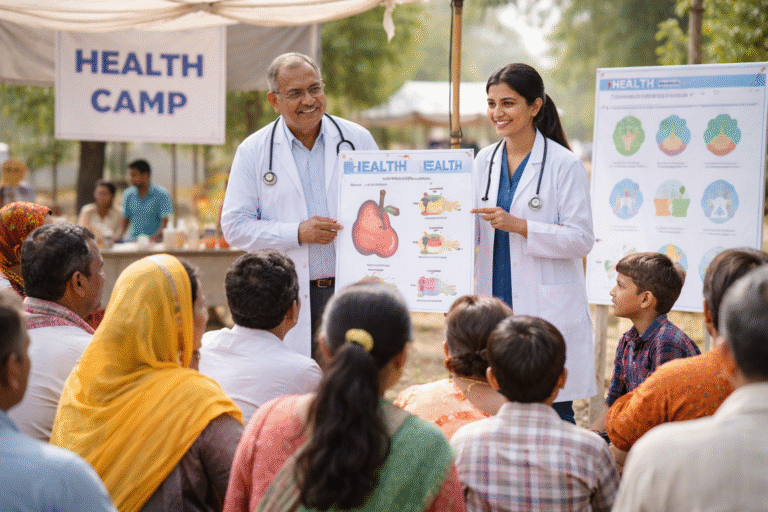
Health camps and school drives conducted by organizations like Flybird Foundation create a lasting impact by combining learning with real-life health practices. When education and health awareness go hand in hand, the benefits multiply across generations.
The Flybird Foundation has always believed that awareness is the first step toward empowerment. Our rural health programs are designed to educate, engage, and empower communities through hands-on initiatives.
Some of our key efforts include:
Health awareness camps where villagers receive information on nutrition, hygiene, maternal care, and preventive medicine.
Free health check-ups for early diagnosis of common conditions like anemia, diabetes, and hypertension.
Workshops for women and youth focusing on hygiene, mental wellness, and family health.
School health programs that teach children the basics of personal cleanliness, dental care, and healthy eating.
Community clean-up and sanitation drives to promote hygiene and disease prevention.
Through these initiatives, we aim to ensure that rural communities are not just recipients of care but active participants in their own well-being.
While progress is being made, much work remains to be done. Many rural regions still lack permanent healthcare infrastructure and consistent awareness programs. Misconceptions and traditional beliefs can also stand in the way of adopting healthy practices.
To overcome these challenges, continued collaboration between government bodies, NGOs, and local communities is essential. Technology can also play a transformative role in telemedicine and mobile awareness campaigns can reach even the most remote villages.
Flybird Foundation continues to expand its efforts by partnering with healthcare experts and volunteers to take awareness to every doorstep. Our goal is not only to provide information but to inspire people to take charge of their health with confidence and understanding.
Health awareness is not a luxury, it’s a necessity for progress. A healthy rural community forms the backbone of a strong and prosperous nation. By educating people about preventive care, hygiene, nutrition, and disease management, we can reduce suffering and improve quality of life.
At Flybird Foundation, we remain committed to spreading health awareness, empowering women and youth, and building sustainable systems of care in rural regions. Because every person, regardless of where they live, deserves the right to good health and well-being.
When awareness reaches every home, every heart, and every village, India will truly move toward a healthier, brighter future.

Together, we spread hope, inspire change, and shape brighter futures.
Flybird Foundation © All Rights Reserved.