+91 9008 41 9008
Water is the essence of life, the foundation of growth, and the heartbeat of our planet. Yet today, it’s a resource we are rapidly exhausting. From urban cities to rural villages, the signs of water scarcity are becoming visible and alarming. At a time when clean water should be a universal right, it has instead become a growing concern for communities across the world.
Through its various environmental and social initiatives, Flybird Foundation stands committed to raising awareness about water conservation and building a future where every drop is valued, preserved, and protected.
Every living organism depends on water. It’s what sustains crops, fuels industries, maintains hygiene, and nurtures ecosystems. However, due to population growth, urbanization, pollution, and climate change, water scarcity is becoming one of the biggest global challenges of the 21st century.
India, home to 18% of the world’s population but only 4% of its freshwater resources, is facing severe water stress in many regions. Rivers are drying, groundwater levels are declining, and rainfall patterns are changing. Water conservation is not just a responsibility, it’s a necessity for survival.
The goal is simple yet urgent: To use water wisely today so that future generations are not deprived of it tomorrow.
It’s easy to take water for granted when it flows freely from our taps. But behind every drop lies a complex system of reservoirs, treatment plants, pipelines, and the fragile ecosystems that sustain them. Sadly, over extraction, pollution, and wastage have disrupted this natural balance.
Groundwater depletion is a major issue, with many cities expected to run out of usable groundwater in the coming years.
Agricultural overuse continues to drain water tables, as unsustainable irrigation practices consume over 80% of India’s freshwater.
Water pollution caused by industrial waste, sewage, and plastic contamination has rendered many water sources unsafe.
Climate change has intensified droughts and floods, making water management more unpredictable than ever.
These challenges demand not just awareness but collective action, and that’s where initiatives like Flybird Foundation’s water conservation drives play a pivotal role.
The Flybird Foundation believes that sustainable change begins with community participation. Its water conservation initiatives are designed to promote responsible water use, revive natural sources, and empower people to take charge of their environment.
Through campaigns and awareness programs, the Foundation has encouraged rural and urban communities to adopt sustainable practices such as:
Rainwater harvesting to recharge groundwater levels and reduce dependency on external sources.
Watershed management to restore the natural flow of streams and rivers.
Clean water accessibility projects that ensure safe drinking water in underserved areas.
Educational workshops and awareness drives that teach children and families the value of conserving every drop.
Each initiative is built around a powerful idea: when communities unite, small actions can lead to significant change.
Water conservation cannot succeed through individual efforts alone; it requires a shared sense of responsibility. Flybird Foundation has witnessed the power of collective participation in several of its projects, where villagers, students, and local volunteers worked together to implement sustainable water solutions.
In many rural areas, rainwater harvesting tanks built through community collaboration have transformed barren lands into fertile fields. In urban centers, awareness drives have inspired households to fix leaking taps, reuse greywater, and reduce water wastage.
When people understand the why behind conservation, they naturally become part of the how.
This sense of ownership is what creates long-term, meaningful change, and Flybird Foundation continues to nurture this spirit across all its environmental programs.
To build a water-secure world, innovation must go hand in hand with awareness. The Foundation promotes and educates communities on eco-friendly technologies that make water management more efficient and sustainable. Some of the effective methods include:
Rainwater Harvesting Systems: Capturing and storing rainwater from rooftops or open spaces for domestic and agricultural use.
Drip Irrigation: Delivering water directly to plant roots, reducing wastage and increasing crop yield.
Greywater Recycling: Treating and reusing wastewater from sinks and showers for gardening or cleaning purposes.
Eco-friendly Sanitation Systems: Minimizing water use in toilets and promoting waste-to-compost initiatives.
Watershed Development Projects: Restoring natural water channels and recharging aquifers for long-term sustainability.
By integrating these techniques into daily life, individuals and communities can make a measurable impact on conserving water resources.
A sustainable future depends on an informed generation. Flybird Foundation places a strong emphasis on educating children and youth about the importance of water conservation.
Through school campaigns, interactive sessions, and eco-club activities, young minds are encouraged to think critically about their role in preserving nature.
When children understand how precious water is, they carry that awareness home — influencing their families, neighborhoods, and communities.
This ripple effect of awareness is one of the Foundation’s most successful outcomes, transforming education into empowerment.
Every campaign, workshop, and on-ground activity organized by Flybird Foundation creates ripples of positive change.
When one household adopts rainwater harvesting, neighboring families get inspired to do the same. When one community revives a local pond, it restores biodiversity for the entire area.
This interconnected cycle of awareness and action fuels a sustainable water culture, one that recognizes every drop as a shared responsibility.
The Foundation’s message is simple yet profound: We didn’t inherit the Earth’s water from our ancestors; we are borrowing it from our children.
Every person has the power to contribute to water conservation through small but meaningful actions:
Turn off taps tightly after use.
Fix leaks immediately.
Use water-saving fixtures.
Collect rainwater in simple containers.
Reuse leftover water for plants.
Choose native plants that require less watering.
Avoid polluting water bodies with detergents or waste.
When millions of people commit to these small steps, the impact becomes monumental. That’s the spirit Flybird Foundation aims to cultivate — a culture of mindfulness and responsibility.
Water is not just a resource; it is the rhythm of life itself. Every living being, every green leaf, every grain of soil depends on it to thrive. Yet, we continue to use it as if it were endless. The truth is, the future of our planet depends on how we act today.
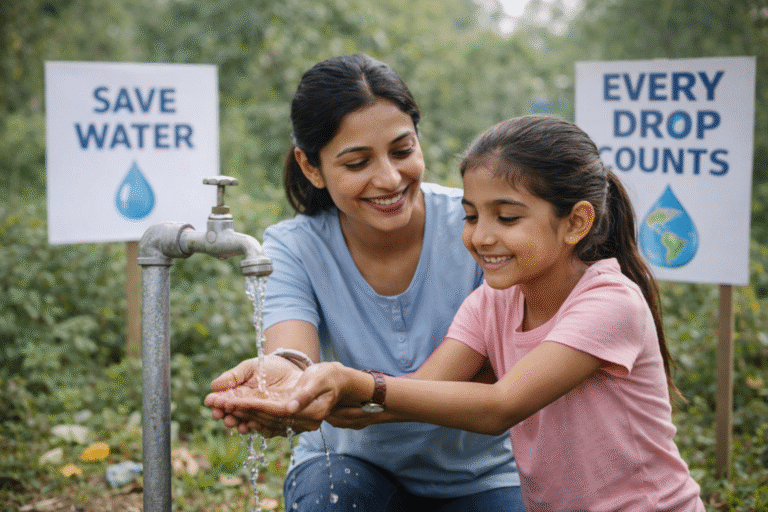
By embracing mindful habits, supporting community initiatives, and standing with organisations like Flybird Foundation, we can protect this priceless gift for generations to come. Every act of conservation, no matter how small, creates ripples of change. Let’s remember that when we save water, we save life. Because indeed, every drop counts.

Together, we spread hope, inspire change, and shape brighter futures.
Flybird Foundation © All Rights Reserved.