
+91 9008 41 9008
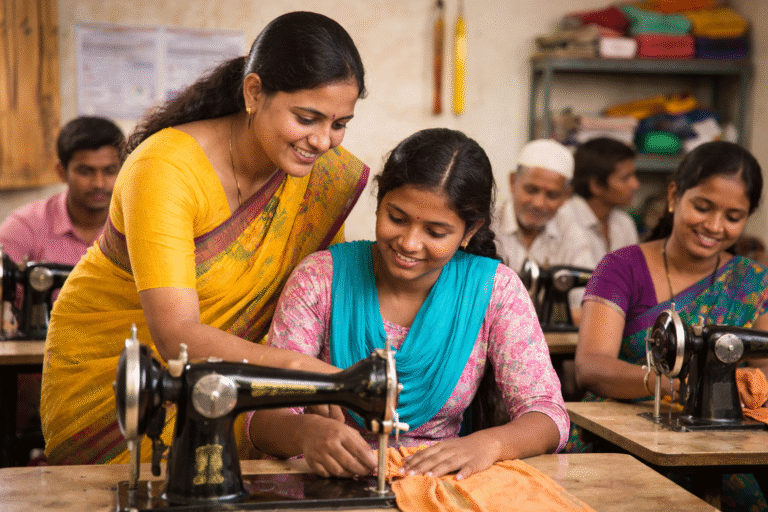
Education gives wings to dreams, but skill development gives those dreams the strength to fly. In a world where opportunities often depend on employable skills, providing practical knowledge and vocational training has become one of the most effective ways to uplift underprivileged communities. Skill development not only transforms individuals into self-reliant earners but also creates a ripple effect that strengthens families, communities, and eventually, the nation itself.
For many in rural and marginalized areas, lack of formal education or resources often limits employment opportunities. Yet, with the right skills—whether in carpentry, tailoring, digital literacy, or craftsmanship—individuals can create meaningful livelihoods and move toward a future of dignity and stability. That is the true power of skill development: it empowers people not just to survive, but to thrive.
Skill development is more than learning a trade—it’s about unlocking potential. It equips individuals with hands-on abilities and practical knowledge that help them earn, innovate, and contribute to the economy. It bridges the gap between raw talent and employment readiness, ensuring that even those without formal education have a chance to succeed.
When people are given access to skill-based learning, they don’t just gain work opportunities—they gain confidence, independence, and purpose. It transforms their outlook from “looking for jobs” to “creating opportunities.”
Skill development, especially in underprivileged areas, is essential because:
It provides sustainable income sources through self-employment.
It reduces unemployment and migration by creating local work options.
It fosters economic equality by including those left behind by formal education systems.
Empowered with skills, individuals find dignity in their work and the ability to stand tall in society.
The benefits of skill development go far beyond individuals—it has the power to transform entire communities. When one person becomes skilled, it often inspires others to follow. Over time, the collective progress lifts the whole community out of dependency and poverty.
Key impacts of skill development on communities include:
Economic Empowerment: Skilled individuals start businesses, find employment, and circulate income within their community.
Social Inclusion: It bridges gaps by offering equal opportunities for women, youth, and marginalized groups.
Community Stability: Local employment reduces migration and keeps families together.
Innovation and Self-Reliance: Skilled workers often introduce new ideas, technologies, and services that benefit others.
A community filled with skilled individuals becomes more self-sufficient, resilient, and future-ready.
In underprivileged communities, women often face double barriers—economic hardship and social restrictions. Skill development becomes their gateway to empowerment. When women learn tailoring, handicrafts, food processing, or digital skills, they gain not only financial independence but also a voice in decision-making.
Why women’s skill training matters:
It increases household income and improves children’s education and health.
It enhances women’s confidence, self-worth, and participation in society.
It encourages gender equality by breaking traditional stereotypes.
A single woman who learns a skill can transform her entire family’s destiny. Over time, hundreds of such stories come together to redefine what progress means in a community.
Unemployment remains one of the biggest challenges for youth in underprivileged regions. Many young people leave schools early or lack access to higher education, leaving them with limited job prospects. Skill development programs fill this gap by teaching them practical trades and digital literacy that can immediately lead to work opportunities.
When young people are skilled, they no longer depend on others—they become job creators, innovators, and role models. From small-scale entrepreneurs to digital freelancers, skill-based learning empowers them to build meaningful futures within their own communities.
It’s not about giving charity; it’s about giving capability. And that’s what makes the change sustainable.
Poverty often traps generations in a cycle of dependency and hopelessness. Skill development acts as the tool that breaks this cycle. With training in specific trades, individuals begin to earn, save, and invest back into their communities. Over time, this leads to better living standards, improved education for children, and enhanced local development.
When communities learn to rely on their own skills instead of external aid, they move from vulnerability to strength. Economic growth becomes inclusive, and opportunities reach even those who were once left behind.
That’s why skill training is not merely an economic initiative—it’s a social revolution that replaces dependency with dignity.
At the heart of Flybird Foundation’s initiatives lies a simple but powerful belief: everyone deserves a fair chance to grow. Recognizing the need for skill-based empowerment, the foundation actively supports programs that help individuals in underprivileged areas gain practical abilities for livelihood and self-reliance.
Some of the foundation’s ongoing efforts include:
Vocational Training Programs: Offering courses in tailoring, handicrafts, plumbing, and electrical work.
Digital Skill Workshops: Teaching computer literacy and online earning opportunities for rural youth.
Women Empowerment Projects: Providing income-generating training for women artisans and homemakers.
Entrepreneurship Support: Helping skilled individuals start small businesses through guidance and resources.
By focusing on skills that match local needs, the Flybird Foundation ensures that empowerment remains sustainable, relevant, and deeply impactful.
Skill development brings change that can be seen and felt. It replaces hopelessness with action and dependency with creativity. Take for instance, a young boy in a rural village who learns to repair electrical appliances—soon he starts his own service shop and earns for his family. Or a woman who learns tailoring—she begins stitching clothes for her neighbors, later opening a small boutique.
These may seem like small victories, but collectively, they represent monumental change. When people begin to earn through their skills, their self-esteem rises. Their families gain stability, children continue education, and the community starts moving toward progress.
It’s a cycle of empowerment—one that starts with a single skill but leads to countless opportunities.
A country’s progress depends on how well it nurtures the talents of its people. In a rapidly evolving economy, traditional education alone is no longer enough; skills are the currency of the future. By promoting vocational training, digital learning, and entrepreneurship, we can build a workforce that’s capable, confident, and creative.
For India, a country rich in human potential, skill development can be the bridge between unemployment and innovation. When every hand becomes skilled and every mind confident, we not only reduce poverty but also build a nation ready for global challenges.
While great progress has been made in promoting skill development, much more needs to be done. Collaboration between governments, NGOs, and corporate sectors can amplify the reach and impact of training initiatives. It’s also essential to make these programs accessible in local languages, affordable for all, and aligned with real market needs.
Moreover, awareness plays a big role—many people in remote areas are still unaware of the opportunities that skill development can bring. Foundations like Flybird continue to bridge this awareness gap by conducting workshops, community sessions, and support programs that encourage participation and lifelong learning.
When skill becomes a part of everyday life, development stops being a dream—it becomes reality.
Skill development is not just a means to employment—it is a means to empowerment. It turns potential into productivity, dreams into reality, and challenges into opportunities. For underprivileged communities, it offers the freedom to stand tall with dignity, without depending on charity or circumstance.
The Flybird Foundation continues to lead this vision, creating opportunities where there were once obstacles, and nurturing talent where there was once limitation. Every skill learned, every life empowered, and every dream realized adds another step toward an inclusive and equitable society.
Because when people learn to work with skill, they don’t just build their own future—they build the nation’s future too.

Together, we spread hope, inspire change, and shape brighter futures.
Flybird Foundation © All Rights Reserved.