+91 9008 41 9008
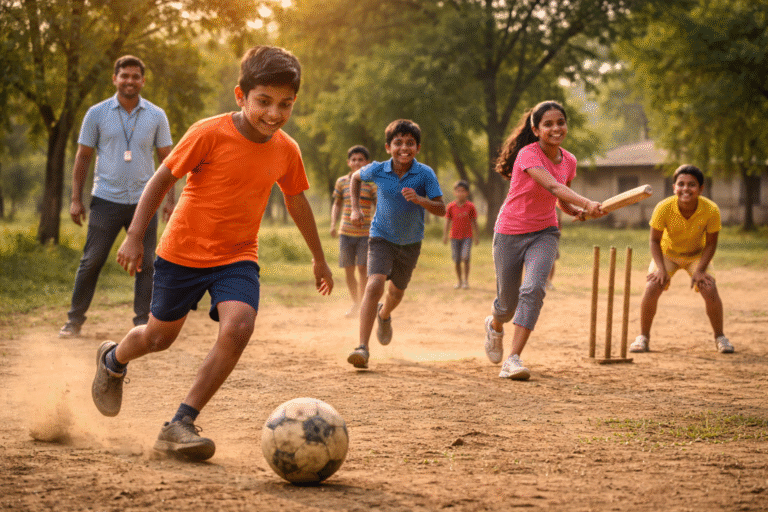
In rural communities, young people often grow up with limited access to platforms that nurture self-expression, leadership, and personal growth. While education remains essential, it alone cannot address every developmental need of rural youth. Sports, however, have emerged as a powerful force that fills this gap by building confidence, discipline, and emotional strength.
The importance of sports for rural youth lies in their ability to shape character beyond academics. On playgrounds and village fields, young individuals learn lessons that textbooks cannot teach—resilience, teamwork, respect, and self-belief. Sports become a medium through which rural youth discover their potential and learn to trust their abilities.
At Flybird Foundation, sports are recognized as a transformative tool for holistic youth development. By supporting sports-based initiatives, the foundation works to ensure that rural youth grow into confident, disciplined, and socially responsible individuals who can positively influence their communities.
Rural youth face a unique set of challenges that often limit their personal and professional growth. Opportunities for skill development, exposure, and recreation remain scarce, leaving many young individuals without constructive outlets.
Key realities faced by rural youth include:
Limited access to extracurricular and sports facilities
Early responsibility toward family and household work
Lack of mentorship and guidance
Minimal exposure to competitive and team-based environments
In this context, the role of sports in rural areas becomes crucial. Sports offer rural youth a structured space to grow, express themselves, and build skills that prepare them for real-life challenges.
Sports hold a deep cultural and social significance in rural settings. They bring people together, foster unity, and create shared experiences across generations.
From a developmental perspective, sports matter because they:
Encourage active participation and inclusion
Promote equality by valuing skill and effort over background
Strengthen community bonds and collective identity
The importance of sports for rural youth is amplified because sports require minimal resources yet deliver maximum impact. A simple game played on open ground can inspire confidence, teamwork, and discipline that lasts a lifetime.
Confidence grows when youth are given opportunities to try, fail, and try again. Sports create such opportunities naturally.
Through regular participation, rural youth experience:
Achievement through skill improvement
Recognition from peers and mentors
A sense of belonging within a team
Confidence building through sports allows young individuals to overcome self-doubt and fear of failure. Each practice session and match reinforces the belief that effort leads to growth. This self-assurance often carries over into academics, communication, and social interactions.
Discipline is one of the most valuable life skills taught through sports. The playing field becomes a classroom where consistency and responsibility are non-negotiable.
Sports instill discipline by teaching youth to:
Follow rules and respect authority
Maintain regular practice routines
Accept consequences and accountability
Balance time between sports, studies, and responsibilities
Discipline through sports activities helps rural youth develop habits that guide their daily lives. These structured routines bring order and focus, especially in environments where discipline may otherwise be difficult to cultivate.
Rural youth often carry emotional burdens related to financial pressure, uncertainty, and social expectations. Sports provide a healthy outlet for emotional release and mental balance.
Through sports, youth learn to:
Handle pressure and competition
Accept losses with resilience
Celebrate wins with humility
Sports nurture emotional intelligence by teaching patience, self-control, and perseverance. The physical activity involved also supports mental well-being, reducing stress and building inner strength.
Leadership emerges naturally in team-based sports environments. Youth learn to communicate, coordinate, and take responsibility for collective outcomes.
Sports and character development become evident when players:
Support teammates during challenges
Take initiative during critical moments
Learn to lead by example rather than authority
Teamwork teaches rural youth the value of collaboration over individual success. These leadership qualities prepare them to contribute positively to their families, schools, and communities.
Sports and academics are not opposing forces; they complement each other. Participation in sports enhances discipline, focus, and time management.
Observed positive outcomes include:
Improved classroom concentration
Better attendance and punctuality
Reduced behavioral issues
Healthier peer relationships
Youth engaged in sports often display balanced social behavior, learning respect, cooperation, and responsibility. These qualities strengthen both academic and personal growth.
At Flybird Foundation, sports are a key pillar of youth empowerment through sports. The foundation designs programs that use sports as a medium for confidence-building, discipline, and character development.
Flybird Foundation initiatives focus on:
Creating accessible sports opportunities for rural youth
Encouraging inclusive participation for boys and girls
Building life skills such as teamwork and leadership
Strengthening community engagement through sports
By working closely with communities, Flybird Foundation ensures that sports become a sustainable tool for nurturing confident, disciplined, and motivated rural youth.
Sports have the unique ability to dissolve social divisions. On the field, every participant is equal, judged only by effort and teamwork.
Inclusive sports initiatives help:
Bridge caste and economic differences
Encourage participation of girls
Promote mutual respect and understanding
By fostering equality and inclusion, sports reshape social norms and create a sense of shared identity. Rural youth grow up valuing fairness and unity over division.
Sports are transforming the lives of rural youth by shaping confidence, discipline, and emotional resilience. Through consistent participation, young individuals develop life skills that prepare them for both personal and professional challenges. The importance of sports for rural youth lies in their ability to empower individuals while strengthening communities.
When supported by families, schools, and communities, sports become more than recreational activities—they become instruments of social change. They nurture leadership, inclusion, and responsibility, laying the foundation for a stronger future.
At Flybird Foundation, this belief continues to drive impactful initiatives. By using sports as a tool for empowerment, Flybird Foundation is helping rural youth build confidence, embrace discipline, and step forward as capable leaders of tomorrow.

Together, we spread hope, inspire change, and shape brighter futures.
Flybird Foundation © All Rights Reserved.