
+91 9008 41 9008
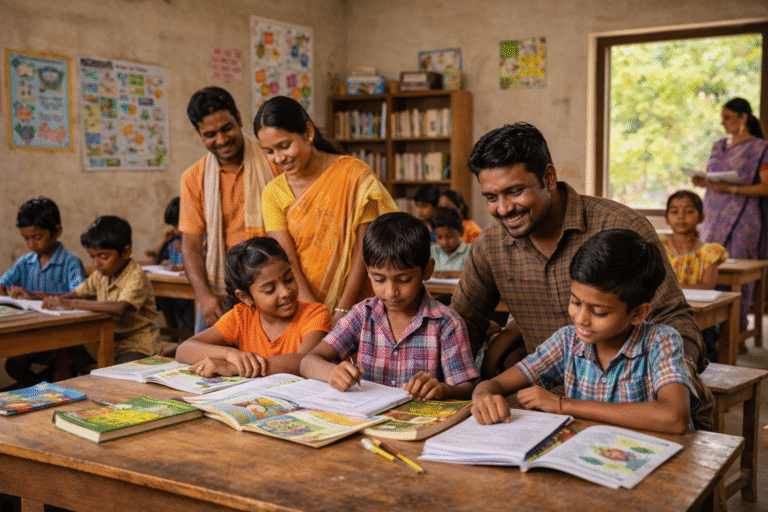
Education is often described as the foundation of progress, yet in many rural regions, this foundation remains fragile. Limited infrastructure, economic struggles, and social barriers continue to affect rural education in India, making learning a daily challenge for children. While schools, teachers, and government programs play vital roles, one influence quietly shapes a child’s educational journey more than any other: the parents.
The role of parents in rural education goes far beyond sending children to school. Parents become motivators, protectors, guides, and sometimes the only source of encouragement a child receives. In environments where educational resources are scarce, parental involvement often becomes the difference between a child continuing education or dropping out early.
At Flybird Foundation, the belief is simple yet powerful: when parents are empowered, educated, and engaged, rural education transforms from a struggle into an opportunity. Understanding how parents contribute to learning is essential to building a sustainable and inclusive educational future for rural communities.
Rural education operates under conditions very different from urban learning systems. Schools in villages often face shortages of qualified teachers, outdated learning materials, and inadequate infrastructure. In many areas, children must travel long distances to reach schools, making attendance difficult and inconsistent.
Challenges in rural education are not limited to physical resources alone. Social and economic pressures often force children to prioritize household responsibilities or income-generating work over schooling. Seasonal migration, agricultural labor, and financial instability further disrupt learning continuity.
In such circumstances, parents become the closest link between children and education. Their attitude toward schooling, willingness to sacrifice, and ability to motivate children play a decisive role in sustaining education even when external support is limited.
In rural settings, schools cannot function in isolation. Teachers may change frequently, and classrooms may lack individual attention. This is where parental involvement in rural schools becomes critical.
Parents who value education instill a sense of purpose in children. Even simple actions—asking about school, encouraging homework, or discussing lessons can significantly improve a child’s confidence. When parents actively support learning, children begin to associate education with stability and hope rather than obligation.
Moreover, parents act as decision-makers. Whether a child continues school after primary education, especially girls, often depends entirely on parental support. Their belief in education shapes the child’s future more than policies or programs alone.
Learning does not begin or end in classrooms. Homes play a crucial role in shaping a child’s attitude toward education. In rural households, where formal learning tools may be limited, parents still influence learning through daily interactions.
Parents build a learning mindset by:
Encouraging curiosity and asking children about what they learned
Setting simple routines for study time
Praising effort rather than just results
Creating an environment where questions are welcomed
Even parents with limited literacy can support education by showing interest and respect for schooling. When children see that their parents value education, they develop intrinsic motivation to learn, grow, and succeed.
One of the most pressing issues in rural education is school dropout. Economic hardship, early responsibilities, and lack of awareness often push children out of the education system. Here, parents supporting children’s education becomes a powerful preventive force.
Parents who prioritize attendance ensure that education remains a non-negotiable part of daily life. Their involvement helps children overcome fatigue, self-doubt, and external pressure. When parents communicate with teachers and monitor progress, problems are identified early before they escalate into dropouts.
Consistent parental encouragement has proven to reduce absenteeism and improve academic persistence, especially during critical transition stages like secondary education.
Before children ever enter a classroom, parents are their first educators. From language and values to behavior and discipline, early learning begins at home. In rural contexts, this informal education holds immense importance.
Parents teach children:
Respect, responsibility, and discipline
Basic communication and social skills
Moral values and ethical thinking
Practical life skills alongside academics
This foundational learning strengthens formal education. Children who receive guidance at home adapt better to school environments, follow instructions confidently, and develop stronger interpersonal skills.
Poverty remains one of the biggest obstacles to improving education in rural areas. Limited income often forces families to choose between survival and schooling. Despite this, many parents make extraordinary sacrifices to keep their children educated.
Parental support helps children overcome:
Financial pressure and resource scarcity
Emotional stress caused by instability
Feelings of inferiority or discouragement
Fear of academic failure
By reinforcing the long-term value of education, parents help children stay focused even when circumstances are challenging. Their emotional backing often becomes the strongest shield against socio-economic adversity.
Gender disparity continues to affect rural education, particularly for girls. Cultural norms, safety concerns, and early marriage often interrupt a girl’s education. In this context, the importance of parents in education becomes even more critical.
Parents who support girls’ education challenge traditional barriers and open doors to independence and empowerment. Their encouragement ensures that girls complete schooling, build confidence, and aspire beyond societal limitations.
When parents advocate for their daughters’ education, entire communities begin to shift attitudes, creating a ripple effect of awareness and progress.
At the core of sustainable educational development, Flybird Foundation believes that parents are the strongest drivers of change in rural learning ecosystems. By working directly with families, the foundation helps parents understand their influence in shaping consistent learning habits and long-term educational goals for their children.
In many rural communities, parents hesitate to engage with schools due to limited awareness or confidence. Flybird Foundation bridges this gap by creating supportive environments where parents feel valued, informed, and empowered to actively participate in their children’s educational journeys.
Flybird Foundation supports parental involvement through:
Awareness programs that highlight the role of parents in rural education and its long-term impact
Community meetings that encourage open dialogue between parents, teachers, and local educators
Guidance sessions that help parents support learning at home despite limited resources
Initiatives focused on reducing dropouts by strengthening parental involvement in rural schools
Inclusive outreach programs that promote equal support for both boys’ and girls’ education
Through these collective efforts, Flybird Foundation ensures that parents are not passive observers but active contributors to educational progress. This parent-centered approach strengthens rural education systems and creates lasting change for future generations.
The effects of parental involvement extend far beyond classrooms. Educated children grow into skilled individuals who contribute positively to society. Over time, this transforms rural economies and social structures.
Long-term benefits include:
Improved employment opportunities
Reduced poverty cycles
Stronger civic participation
Healthier and more informed communities
When parents invest in education, they invest in generational progress, ensuring sustainable development rooted in knowledge and opportunity.
The role of parents in rural education is both profound and transformative. Parents serve as motivators, mentors, and guardians of their children’s dreams, often standing as the strongest pillar of support amid limited resources and challenges. Their involvement shapes not only academic success but also character, resilience, and ambition.
By encouraging attendance, fostering learning at home, supporting girls’ education, and collaborating with teachers, parents become catalysts for meaningful change. Their belief in education turns adversity into opportunity and struggle into progress.
At Flybird Foundation, this belief drives every initiative. By empowering parents and strengthening communities, Flybird Foundation continues to nurture hope, learning, and lasting impact, ensuring that rural education becomes a pathway to dignity, growth, and a brighter future for generations to come.

Together, we spread hope, inspire change, and shape brighter futures.
Flybird Foundation © All Rights Reserved.