
+91 9008 41 9008
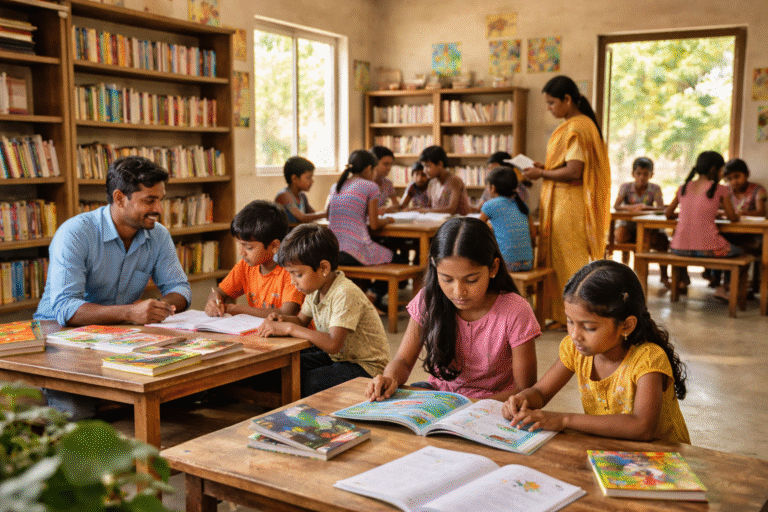
In many parts of rural India, education still struggles against limitations such as lack of resources, inadequate infrastructure, and restricted access to quality learning materials. While schools form the backbone of formal education, they are often unable to meet every learning need of students due to overcrowded classrooms or limited teaching aids. In such settings, libraries emerge as powerful gateways to knowledge, opening doors to learning beyond textbooks.
Libraries are not just rooms filled with books; they are spaces of possibility. For children, they represent curiosity, imagination, and freedom to explore ideas at their own pace. For youth and adults, libraries provide opportunities for self-learning, skill development, and awareness. In rural India, where educational opportunities are uneven, libraries act as equalizers that bring knowledge closer to communities.
By nurturing reading habits and providing access to diverse learning resources, libraries help revive a culture of learning. They transform education from a necessity into a choice, encouraging learners of all ages to engage with knowledge voluntarily and confidently.
Rural India faces unique educational challenges that go beyond classroom teaching. Many schools operate with limited infrastructure, outdated materials, and insufficient exposure to diverse subjects. As a result, learning often becomes exam-oriented rather than curiosity-driven.
Students in rural areas may not have access to reference books, storybooks, newspapers, or learning tools that expand their understanding of the world. This lack of exposure restricts creativity, critical thinking, and independent learning.
Key challenges in the rural education landscape include:
Limited availability of learning resources beyond textbooks
Overburdened teachers and large class sizes
Gaps in reading comprehension and language skills
Lack of quiet and supportive study environments
Libraries help bridge these gaps by providing structured yet flexible learning spaces that support students beyond school hours.
Libraries play a crucial role in strengthening rural learning ecosystems by offering access, inclusivity, and continuity. They support formal education while encouraging informal and self-directed learning.
For rural learners, libraries provide an opportunity to explore subjects that may not be covered in school. Exposure to literature, science, history, and general knowledge nurtures curiosity and broadens perspectives.
Libraries matter because they:
Offer free or low-cost access to books and learning materials
Create safe spaces for focused study
Encourage independent thinking and exploration
Support learners of different age groups
By complementing schools, libraries become pillars of holistic education in rural communities.
Children in rural India often face multiple barriers that hinder consistent learning. Economic challenges, household responsibilities, and lack of guidance can interrupt their educational journey.
Many children do not have access to a quiet place to study at home. In such environments, libraries provide structured spaces where children can focus on learning without distractions.
Common barriers include:
Limited access to books and learning tools
Economic pressure to support family income
Lack of academic guidance outside school
Minimal exposure to diverse learning opportunities
Libraries help overcome these barriers by offering stable, supportive, and resource-rich environments that encourage continued learning.
In rural areas, libraries often serve as more than educational spaces they become community hubs. They bring together children, youth, adults, and elders under one roof, fostering a shared culture of learning.
Community libraries support lifelong learning by offering reading materials for different age groups. Adults may use libraries to improve literacy, access information, or learn new skills, while children develop foundational reading habits.
As community hubs, libraries:
Encourage knowledge-sharing across generations
Promote social interaction and collaboration
Strengthen community involvement in education
Create a sense of collective ownership
This inclusive approach makes libraries powerful tools for community development.
Strong reading habits are essential for academic success and personal growth. Libraries play a vital role in nurturing literacy by making reading enjoyable and accessible.
Children who regularly visit libraries develop better comprehension, vocabulary, and language skills. Reading beyond textbooks also enhances imagination and critical thinking.
Libraries support literacy by:
Providing age-appropriate reading materials
Encouraging regular reading routines
Introducing children to diverse genres
Making reading a pleasurable activity
Over time, these habits lead to confident readers and independent learners.
Libraries also benefit teachers and schools by supplementing classroom learning. They provide access to additional reference materials, teaching aids, and educational content.
Teachers can use libraries to enhance lesson plans, recommend reading materials, and encourage research-based learning. This support improves teaching quality and student engagement.
Libraries support schools through:
Additional learning resources
Quiet study spaces for students
Collaborative learning opportunities
Reinforcement of classroom concepts
This collaboration strengthens the overall educational ecosystem.
Libraries play a particularly important role in supporting girls’ education in rural India. For many girls, access to safe and supportive learning spaces can determine whether they continue their education.
Libraries provide secure environments where girls can read, study, and learn without fear or social pressure. Exposure to books and stories also inspires confidence and aspiration.
Libraries help promote girls’ education by:
Offering safe and inclusive learning spaces
Encouraging regular study habits
Supporting confidence and self-expression
Reducing dropout rates
By empowering girls through education, libraries contribute to long-term social progress.
Flybird Foundation believes that access to knowledge is a fundamental right. With a strong commitment to education and community development, the foundation actively supports initiatives that strengthen rural learning infrastructure.
Through library development programs, resource support, and community engagement, Flybird Foundation works to make learning accessible to underserved communities. These initiatives focus on creating sustainable libraries that serve learners of all ages.
The foundation’s efforts include:
Supporting the establishment of rural libraries
Providing educational resources and books
Encouraging community participation in learning initiatives
Promoting inclusive and sustainable education models
By investing in libraries, Flybird Foundation helps create lasting educational impact.
As education evolves, libraries are also adapting to include digital learning tools. Digital resources help rural learners access information that may otherwise be unavailable.
Blending traditional books with digital content prepares students for modern learning environments. Libraries introduce technology in a guided and supportive manner.
Digital integration in libraries includes:
Access to educational videos and e-learning content
Digital literacy training
Exposure to online learning platforms
Preparing students for future opportunities
This balanced approach ensures rural learners are not left behind in the digital age.
Libraries hold the power to transform education in rural India by making knowledge accessible, inclusive, and inspiring. They revive learning by nurturing curiosity, supporting literacy, and empowering communities.
When libraries become part of everyday life, education extends beyond classrooms and exams. Learning becomes continuous, meaningful, and community-driven.
Through its dedication to educational equity and community development, Flybird Foundation continues to support rural libraries as engines of change, helping build informed minds, empowered communities, and a stronger future for rural India.

Together, we spread hope, inspire change, and shape brighter futures.
Flybird Foundation © All Rights Reserved.