
+91 9008 41 9008
Desertification is one of the most pressing environmental challenges facing the world today. It refers to the gradual degradation of fertile land into dry, unproductive terrain due to natural and human-induced factors. What makes desertification especially concerning is that it does not occur overnight; it advances slowly, often unnoticed, until the land can no longer support vegetation, agriculture, or livelihoods.
In India, land plays a vital role in sustaining agriculture, rural economies, and food security. As population pressure increases and natural resources are overused, large areas of productive land are losing their fertility. Soil erosion, declining water availability, and reduced vegetation cover are transforming once-usable land into barren landscapes. This process directly affects farming communities, ecosystems, and long-term environmental stability.
Recognizing the urgency of this issue, Flybird Foundation emphasizes the importance of land protection, restoration, and sustainable environmental practices. Desertification is not only an ecological concern but also a social and economic challenge that requires awareness, responsibility, and long-term commitment to sustainable land management.
Desertification is often misunderstood as the natural spread of deserts. In reality, it is the degradation of land in dry, semi-arid, and sub-humid regions caused largely by human activities and climatic variations. Fertile soil gradually loses its structure, nutrients, and moisture-retaining capacity, making it unsuitable for agriculture and vegetation growth.
Unlike natural deserts, desertified land was once productive. The loss of vegetation exposes soil to wind and water erosion, accelerating land degradation. Over time, this creates a cycle where reduced plant cover leads to lower soil fertility, which further limits plant growth.
Key characteristics of desertified land include:
Loss of topsoil and soil nutrients
Reduced water retention capacity
Sparse or no vegetation cover
Increased vulnerability to erosion and drought
Understanding desertification is essential to addressing its root causes and preventing irreversible damage to land resources.
Desertification in India is driven by a combination of environmental stress and unsustainable human practices. As land is pushed beyond its natural capacity, it begins to degrade, leading to long-term productivity loss.
Major causes include:
Deforestation and loss of vegetation, which expose soil to erosion
Unsustainable agricultural practices, including over-cultivation and poor crop rotation
Water mismanagement, such as excessive groundwater extraction
Climate variability and prolonged drought, which weaken soil resilience
When these factors overlap, the rate of land degradation accelerates, making recovery more difficult and costly.
Agriculture is one of the first sectors to feel the impact of desertification. Degraded land produces lower crop yields, forcing farmers to invest more resources for diminishing returns. This creates economic pressure and threatens the stability of food systems.
As fertile land decreases, food production becomes less reliable. Reduced agricultural output can lead to higher food prices, increased dependence on external resources, and greater vulnerability for rural communities. Desertification, therefore, poses a serious risk to long-term food security and sustainable development.
The environmental impact of desertification extends far beyond agriculture. When land loses its fertility, entire ecosystems begin to collapse. Biodiversity declines as plants and animals lose their habitats, and soil erosion intensifies environmental imbalance.
Key environmental consequences include:
Loss of soil fertility and organic matter
Decline in plant and animal biodiversity
Increased frequency of dust storms
Disruption of natural water cycles
Healthy land supports ecosystems that regulate climate, store carbon, and sustain life. Its degradation weakens these natural systems.
Desertification and climate change reinforce each other in a damaging cycle. As land degrades, its ability to store carbon decreases, contributing to rising greenhouse gas levels. At the same time, climate change intensifies droughts, heatwaves, and irregular rainfall, accelerating land degradation.
Breaking this cycle requires proactive land restoration and climate-resilient practices. Sustainable land management plays a critical role in mitigating climate impacts and protecting ecosystems from further harm.
Sustainable land management focuses on using land responsibly while maintaining its productivity for future generations. It combines soil conservation, vegetation restoration, and efficient resource use to prevent degradation.
Key practices include:
Soil conservation techniques to prevent erosion
Water-efficient land use to reduce stress on resources
Restoration of vegetation cover
Responsible land-use planning
These approaches help restore degraded land and enhance its resilience against environmental stress.
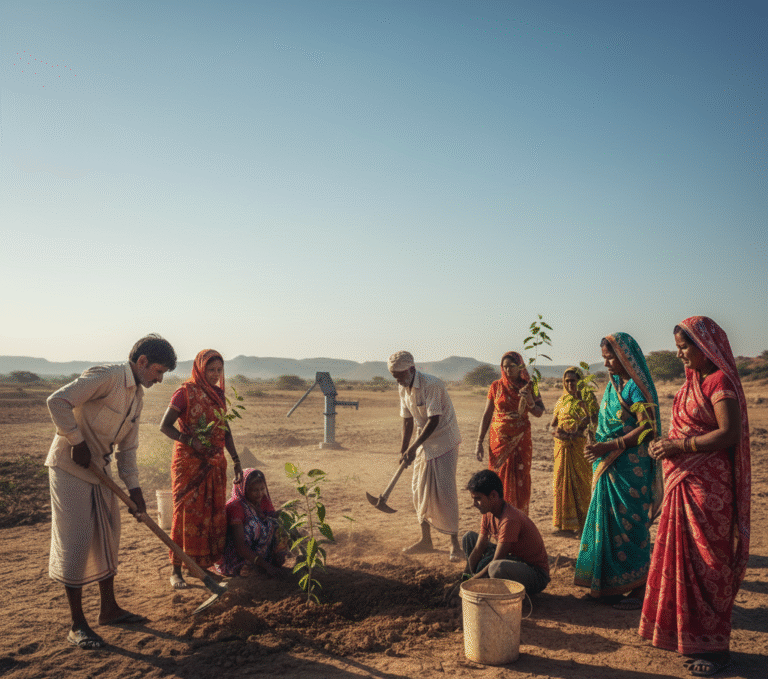
Trees play a vital role in combating desertification. Their roots bind soil, reduce erosion, and improve water infiltration. Afforestation and reforestation help restore degraded land by stabilizing soil and creating favorable microclimates.
In dry and semi-arid regions, vegetation cover protects land from wind erosion and supports biodiversity. Over time, tree plantations improve soil quality and contribute to long-term environmental recovery.
Water scarcity is closely linked to land degradation. When water resources are overused or mismanaged, soil dries out and loses its ability to support vegetation. Water conservation helps maintain soil moisture and sustain plant growth.
Effective water conservation measures include:
Rainwater harvesting
Groundwater recharge techniques
Efficient irrigation practices
These methods strengthen land resilience and reduce vulnerability to desertification.
Preventing desertification requires collective responsibility. Communities play a key role in protecting land through sustainable practices and environmental awareness. When land users understand the long-term impact of degradation, they are more likely to adopt responsible land management approaches.
Community participation strengthens conservation efforts and ensures that land restoration initiatives are sustained over time.
Strong policies and strategic planning are essential to address desertification at scale. Environmental regulations, land-use planning, and monitoring systems help prevent further degradation and promote restoration.
Long-term solutions require collaboration between institutions, organizations, and communities to ensure land resources are protected and regenerated.
Flybird Foundation believes that protecting land is fundamental to environmental balance, food security, and sustainable development. The Foundation emphasizes awareness-driven approaches that highlight the importance of land conservation and responsible resource management.
Through its focus on long-term sustainability, Flybird Foundation supports initiatives that encourage environmentally responsible practices. By promoting awareness and ecological responsibility, the Foundation aims to contribute to healthier landscapes and resilient ecosystems.
Promoting awareness about desertification and land degradation
Supporting sustainable land and water management practices
Encouraging afforestation and environmental restoration initiatives
Advocating long-term ecological balance and land sustainability
Preventing desertification requires consistent action and responsible decision-making at every level.
Key actions include:
Adopting sustainable land-use practices
Supporting afforestation and green initiatives
Conserving soil and water resources
Promoting environmental awareness and responsibility
Collective effort strengthens the impact of land restoration initiatives.
Desertification threatens the foundation of ecosystems, agriculture, and livelihoods by turning productive land into barren terrain. Its impact reaches far beyond the environment, affecting food security, economic stability, and climate resilience. Addressing land degradation is essential for protecting natural resources and ensuring sustainable development.
Combating desertification requires long-term thinking, responsible land management, and collective action. Sustainable practices such as afforestation, water conservation, and soil protection offer practical solutions that restore degraded land and strengthen ecological balance.
Through its commitment to environmental sustainability and land restoration, Flybird Foundation supports awareness and responsible practices that contribute to protecting land resources. By planting hope in dry lands today, the Foundation envisions a future where restored landscapes sustain life, resilience, and opportunity for generations to come.

Together, we spread hope, inspire change, and shape brighter futures.
Flybird Foundation © All Rights Reserved.