
+91 9008 41 9008
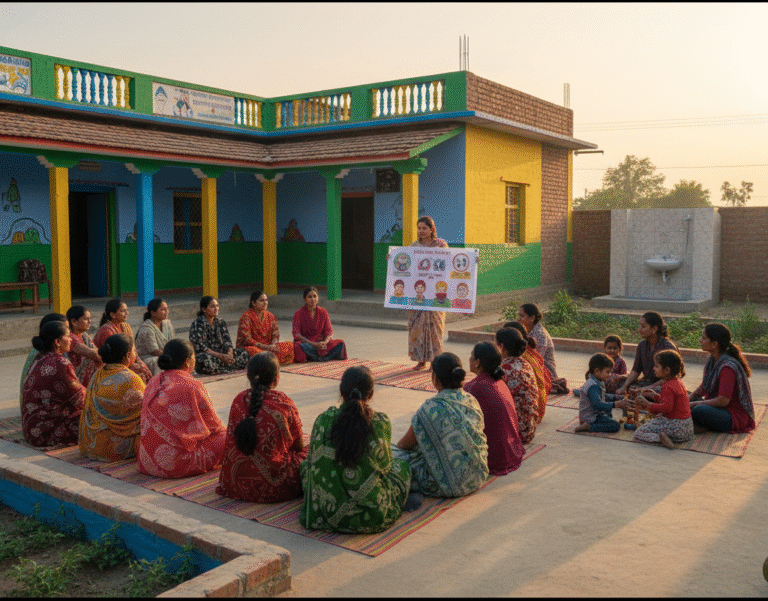
Safety is not just the absence of violence.
It is the presence of dignity, the freedom to speak, the right to dream, and the assurance that someone will protect you when you cannot protect yourself.
In many rural areas of India, women and children grow up with silent fears, fears they never express, fears they learn to normalize, and fears they carry throughout their lives. Unsafe homes, unsafe streets, unsafe schools, and unsafe mindsets slowly crush the confidence of two groups who deserve the highest care.
A safe space is not merely a room.
It is a promise.
A promise that every woman and every child matters.
A promise that no one should suffer in silence.
A promise that rural communities can become nurturing, protective, and empowering.
This blog explores how these safe spaces can be created, strengthened, and sustained, and how Flybird Foundation is working towards this mission.
Safety challenges in villages are often subtle but deeply rooted.
While cities deal with visible issues, rural areas struggle with social silence, outdated customs, and deeply woven norms that discourage speaking up.
Key elements of the rural safety gap include:
Isolation of households makes women and children vulnerable to unreported abuse.
Limited access to police, helplines, and counseling services means victims often have nowhere to turn.
Cultural norms often prioritize family honour over individual safety.
Low literacy rates make women unaware of their rights.
Patriarchy and gender bias create environments where children fear punishment for voicing concerns.
When silence becomes a culture, danger hides behind closed doors.
Living in fear does not just harm the body, it slowly breaks the mind.
Women who feel unsafe often:
Avoid public spaces
Restrict their education
Fear taking up jobs
Develop low self-esteem
Internalize the belief that their pain does not matter
Children who grow up in unsafe environments:
Lose their ability to trust adults
Struggle in school
Develop behavioural issues or trauma
Carry emotional wounds into adulthood
Creating safe spaces is about breaking these cycles.
A dedicated community center can transform an entire village ecosystem.
Why community centers are essential:
They serve as safe shelters during emergencies.
They create a neutral environment where women and children can express themselves.
They host counseling sessions, helplines, self-help meetings, and skill-building programs.
Trained female volunteers provide warmth, comfort, and listening ears.
Such centers often become the heartbeat of rural empowerment.
Children spend most of their day at school.
A safe school becomes a child’s refuge, a place where they feel protected.
Components of a safe-school environment:
Zero tolerance for bullying, abuse, or discrimination
Teachers trained to identify signs of distress
Child protection committees involving parents and staff
Safe, clean classrooms and playgrounds
Secure travel routes for girls
Awareness classes about good touch, bad touch, and safe behaviors
When children feel safe at school, they learn better, grow confidently, and build respect-based relationships.
Local governance plays a powerful role in rural transformation.
How Panchayats and committees contribute:
Mapping unsafe zones in the village
Enforcing safety protocols in public spaces
Encouraging community surveillance
Setting up women-led vigilance groups
Reporting cases responsibly without fear or favor
When leadership is accountable, communities flourish.
Safety begins in the mind before it reaches the environment.
Workshops on:
Consent
Respect
Gender roles
Boundaries
Emotional well-being
…help reshape old ideas.
Men and boys are included as allies, not blamed as enemies. This ensures long-term, sustainable mindset change, something rural India desperately needs.
Financial independence is one of the most powerful safety tools.
How empowerment supports protection:
Women with income become less vulnerable to exploitation
They gain social respect
They can leave abusive environments
They make decisions with confidence
Their children receive better opportunities
Self-help groups, rural microbusinesses, tailoring units, food-processing initiatives, and handicraft clusters all become stepping stones toward safer lives.
Even in rural areas, mobile technology is a game-changer.
Practical uses include:
WhatsApp alert groups for emergencies
SOS apps for instant reporting
Direct access to helplines
Community-wide safety announcements
Digital literacy programs for women and teens
Technology creates a bridge where physical access is limited.
Safety must start at home.
Parents, guardians, and elders play the biggest role in creating emotionally secure environments.
Safe homes encourage:
Open communication
Respect for boundaries
Positive discipline rather than fear-based parenting
Awareness about child protection
Eliminating harmful practices and family-level discrimination
A safe home gives children the wings to dream.
Flybird Foundation is committed to creating villages where safety is a fundamental right.
Our focus areas include:
Community awareness and education
School safety programs
Women’s self-help and leadership development
Support groups for survivors
Rural youth leadership
Infrastructure improvement
Emotional wellness programs
Our mission is clear: no woman or child should ever feel alone, unheard, or unprotected.
A trust circle is a small, intimate group that meets regularly to share experiences, stories, and emotions.
Why trust circles matter:
They reduce isolation
They help survivors find strength together
They allow children to speak freely
They build community-wide solidarity
Support begins with listening, and trust circles make listening possible.
Every village has compassionate individuals willing to help—mothers, teachers, elders, youth leaders.
Training them as safety guardians ensures:
Immediate response to emergencies
Vigilance during festivals and public gatherings
Support during crises
Monitoring unsafe zones
Acting as bridges between victims and authorities
A trained volunteer can save a life.
Survivors need more than a safe room; they need healing.
Healing spaces provide:
Trauma counseling
Art therapy
Music sessions
Storytelling circles
Guided self-expression
Emotional rebuilding programs
Healing is the beginning of empowerment.
Safety education should blend into everyday activities.
Practical methods:
Discussing safety during community gatherings
Including protection lessons at Anganwadi centers
Working with schools to simplify safety messages
Conducting mother-daughter talks
Involving village elders as supporters
When everyone participates, education becomes part of daily life.
Physical safety is often ignored in rural planning.
Critical infrastructure improvements include:
Proper lighting on village roads
Safe public toilets
Secured water collection points
CCTV in community areas
Child-friendly pathways and school routes
Better infrastructure reduces risk and increases independence.
Creating safe spaces for women and children in rural areas is not a one-day activity; it is a continuous movement rooted in compassion, awareness, empowerment, and community accountability.
Safety is not a luxury.
It is a birthright.
A safe village is one where:
Women walk without fear
Children grow with confidence
Families respect boundaries
Communities protect their most vulnerable
The Flybird Foundation believes in building such villages where safety is not whispered but celebrated, where every woman and child is heard, valued, and empowered.
A safe space can change one’s life.
A safe village can change generations.

Together, we spread hope, inspire change, and shape brighter futures.
Flybird Foundation © All Rights Reserved.