
+91 9008 41 9008
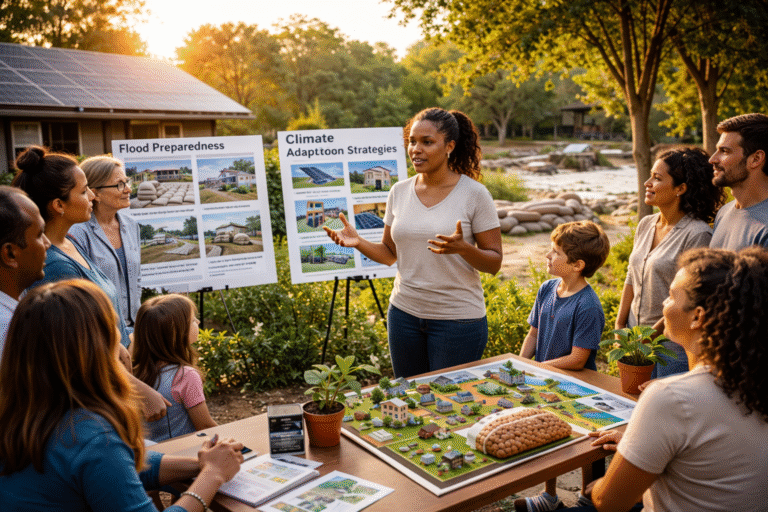
Climate change is no longer a distant headline or a scientific theory. It is a reality that rural communities experience every day, through the drying of wells, the unpredictability of rains, the distress of crop failures, and the unbearable rise in temperatures during peak seasons. For countless families who depend on agriculture, livestock, and natural resources, even the slightest environmental shift can disrupt livelihoods.
Yet, in the middle of these challenges lies a powerful truth: awareness is the first step toward resilience. When communities understand the changes happening around them, they learn how to adapt, respond, and protect their environment. This is the philosophy that drives the Flybird Foundation’s mission, empowering people with the knowledge needed to build climate-resilient communities.
Climate resilience simply means the ability of a community to withstand, adapt to, and recover from the effects of climate change. For villages across India, resilience is not optional—it is essential.
When rainfall becomes unpredictable, farmers need adaptive cropping practices.
When heat waves intensify, households must learn water-saving techniques.
When soil quality declines, communities must shift toward sustainable farming.
Resilience is not built overnight. It grows gradually through awareness, preparedness, and collective action.
Awareness is more than information—it is empowerment.
A climate-aware community:
Recognises early signs of environmental stress
Changes habits before damage becomes irreversible
Chooses sustainable alternatives consciously
Works together toward long-term environmental safety
When people understand the “why” behind climate problems, they automatically become part of the solution. Awareness triggers a cycle:
Knowledge → Responsibility → Habits → Resilience
This transformation begins with simple conversations: a workshop on water saving, a demonstration on composting, or a school activity explaining climate change.
Villages face unique climate risks that impact both daily life and long-term survival. Some of the most pressing challenges include:
Multiple states face severe groundwater depletion. Wells that once supported entire neighborhoods are drying earlier each year, making households dependent on tankers or distant sources.
Years of chemical-heavy farming, deforestation, and erosion have reduced soil fertility. When soil loses its strength, crops weaken, incomes drop, and food availability suffers.
Delayed rains, sudden storms, or prolonged dry spells make farming unpredictable. Kharif crops are especially vulnerable to unexpected climate shifts.
Temperatures have touched record highs in many regions, affecting outdoor workers, water availability, and even children’s school routines.
Disappearing birds, pollinators, and native plants weaken ecological balance. Villages that once thrived with greenery now face barren landscapes.
Addressing these challenges requires a combination of traditional wisdom, new knowledge, and community cooperation.
Education remains one of the strongest tools for long-term climate resilience.
For Students
Climate lessons in schools spark curiosity and responsibility.
Children learn:
How trees regulate temperature
Why water must be saved
How waste segregation protects the soil
What sustainable habits can save the future
These young learners often carry the message home, influencing the habits of their parents and grandparents.
For Farmers
Practical workshops help farmers understand smarter practices:
Drip irrigation
Mulching
Organic fertilisers
Crop rotation
Soil testing
This knowledge not only safeguards crops but also strengthens the village economy.
For the Community
Climate discussions in local gatherings ensure everyone understands the importance of adopting sustainable practices.
Before modern technologies existed, communities relied on centuries-old wisdom to protect their environment, and many of these practices still hold the key to climate resilience.
Earthen water storage tanks kept water cool and reduced evaporation.
Organic farming methods nurtured soil health naturally.
Indigenous seed preservation ensured crop stability during harsh weather.
Community ponds helped manage rainfall effectively.
Blending these techniques with modern solutions creates a powerful, sustainable path forward.
No climate initiative succeeds without people.
The strongest changes come from communities working together.
Villagers forming water committees to monitor usage
Youth groups taking responsibility for tree care
Local volunteers running waste segregation initiatives
Elders leading awareness gatherings
Participation builds ownership. And when people feel ownership, they remain committed—despite challenges, despite slow results, despite setbacks.
Community action transforms climate responsibility into a shared mission.
Awareness must be engaging, relatable, and practical. That’s why impactful programs often include:
1. Street Plays and Nukkad Nataks
These performances communicate climate issues using humor, storytelling, and powerful visuals.
2. Demonstrations on Rainwater Harvesting and Drip Irrigation
Villagers learn by watching real-life models they can replicate.
3. Women-Led Climate Dialogues
Women often manage household resources and become natural leaders in sustainability.
4. School Climate Clubs
Students take part in competitions, clean-up drives, and plantation activities.
These awareness initiatives create ripples that influence entire communities.
Real change requires consistency, not one-time events.
Awareness becomes meaningful only when it turns into action and eventually into habit:
Switching from plastic bags to cloth bags
Using buckets instead of showers to save water
Composting kitchen waste daily
Segregating biodegradable and non-biodegradable waste
Planting saplings and nurturing them for months
Behavioral change takes time, but once it begins, it grows stronger with every small step.
Young people are energetic, curious, and open to adopting new practices. Their role is crucial because:
They understand technology better
They can influence peers and parents
They bring fresh ideas to old problems
They are the future decision-makers
Youth-led initiatives like plantation drives, rallies, recycling projects, and climate clubs spark enthusiasm across the community.
Women hold a unique position in climate resilience because they manage household resources and influence daily practices.
Their contributions include:
Leading kitchen waste composting
Encouraging water-saving habits
Practising responsible energy usage
Running self-help groups focused on sustainability
Teaching children about environmental responsibility
Empowering women means empowering the entire community.
At the heart of the Flybird Foundation’s mission is the belief that every community deserves the knowledge and tools to face climate challenges confidently.
Here’s how the Foundation contributes:
Tree plantation and long-term tree care programs
Water conservation awareness, including demonstrations and workshops
School outreach sessions focusing on climate education
Sustainable lifestyle workshops that teach daily eco-friendly habits
Community volunteer programs that bring youth and elders together
Collaborative initiatives with local groups, farmers, and women’s collectives
Awareness marches, village talks, and interactive activities
Each initiative strengthens community bonds while empowering people to adopt a climate-friendly lifestyle.
Small actions, when followed by many people, create deep and lasting impact.
Villages can start with:
Waste segregation at home
Planting native trees
Setting up rainwater harvesting systems
Kitchen gardening to reduce dependence on market produce
Reducing plastic consumption
Choosing bicycles or shared transport when possible
The goal is not perfection—it’s progress.
Local leadership accelerates climate awareness because leaders influence decision-making.
A sarpanch encouraging tree plantation increases participation.
School principals can initiate climate clubs.
Panchayat committees can promote water conservation laws.
Local influencers can motivate families through storytelling and community dialogue.
When leaders take the first step, people follow with trust.
Technology, even in rural areas, has become a powerful ally in climate resilience:
Weather alert apps help farmers plan irrigation and harvest cycles
Solar lighting reduces energy consumption
Digital training videos educate villagers on sustainable farming
Low-cost mobile tools assist in soil testing and crop planning
Technology bridges knowledge gaps and helps communities adapt faster to climate risks.
Building climate-resilient communities is not the responsibility of a single individual. It is a collective movement rooted in awareness, strengthened by unity, and guided by hope. When villagers understand how climate change affects their everyday life, they take meaningful action. When youth participate, energy grows. When women lead, households transform. When leaders support, change becomes sustainable.
Awareness may seem like a small beginning, but it is the strongest foundation upon which resilient communities are built.
The Flybird Foundation remains committed to empowering villages with knowledge, strengthening civic participation, and nurturing sustainable habits that protect the earth for generations to come. With continuous awareness, collaborative effort, and community-driven action, every village can become a model of climate resilience stronger, safer, and more sustainable than ever before.

Together, we spread hope, inspire change, and shape brighter futures.
Flybird Foundation © All Rights Reserved.