
+91 9008 41 9008
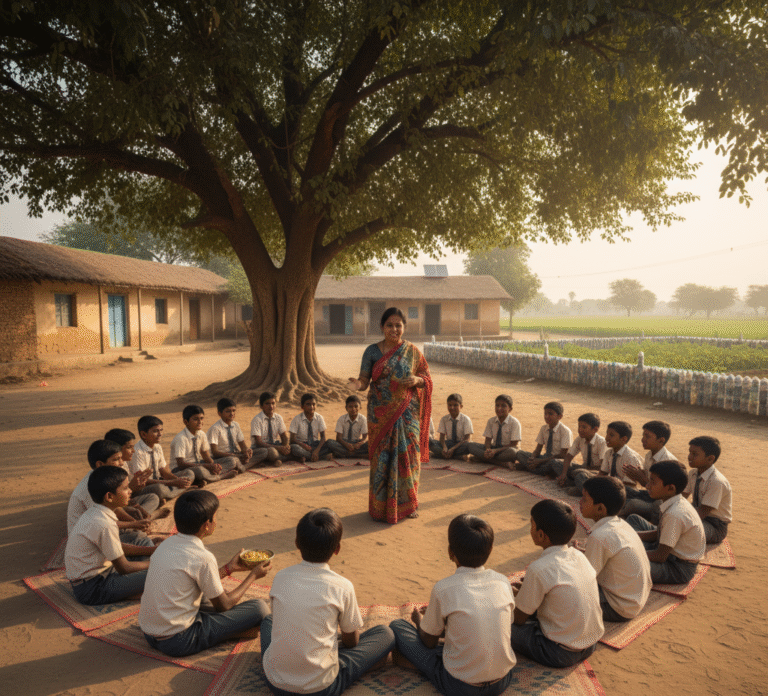
Education has always been seen as the foundation on which futures are built. For decades, schools focused on textbooks, exams, and marks, believing that academic success alone could shape a child’s life. But the world children grow up in today is vastly different. They face more complexities, more diversity, and more social realities than ever before. In such a world, reading chapters is not enough. Children must learn to understand feelings, respect differences, and recognise their role in society. This is where education must go beyond books.
Today, true learning means nurturing values like empathy, equality, and awareness, values that turn students into responsible citizens and compassionate human beings. When these qualities are cultivated early, they influence every choice, every interaction, and every path a child follows as they grow. This is the purpose modern education must fulfil, and this is where schools hold enormous transformative potential.
Education beyond books does not replace academic learning, it strengthens it. It ensures that while children learn mathematics, science, and language, they also learn how to treat others kindly, how to respect people from all backgrounds, and how to understand the world they live in.
When children explore values, they develop:
Emotional depth – the ability to understand feelings and respond sensitively
Moral courage – the strength to speak up when something is wrong
Social awareness – the understanding that every action has an impact
Inclusive thinking – the belief that everyone deserves respect and fairness
A classroom that teaches only information prepares a child for tests.
A classroom that teaches values prepares a child for life.
Empathy is one of the first qualities that helps children form genuine connections. It teaches them that every person carries their own story, their own struggles, and their own emotions. When schools emphasise empathy, children learn to look at the world through kinder eyes.
Teachers can introduce empathy through:
A simple story about a child struggling with loneliness or a farmer facing drought can open a child’s imagination. Suddenly, the world outside their school becomes real. They begin to understand someone else’s pain, joy, or challenges.
When children listen to their peers speak about their experiences, they learn patience and respect. They discover that differences in background, abilities, or opinions are normal.
Group activities like helping classmates, writing letters of gratitude, or role-playing during value-based workshops teach compassion naturally and effortlessly.
Empathy is not taught—it is nurtured. And when a child begins to feel empathy, they grow into adults who are thoughtful and considerate, capable of forming supportive communities.
Children are not born with biases; they learn them from the environment around them. Schools have the power to ensure that children grow up with fairness in their hearts instead of prejudice.
Teaching equality means helping children understand:
Every person deserves the same respect
Gender does not define capability
All cultures, religions, and backgrounds are valuable
Disabilities are not limitations
Every child has something unique to offer
Classrooms can encourage equality with simple practices:
1. Inclusive participation
Teachers can ensure that every child—especially quiet or shy students—gets equal opportunities to express themselves.
2. Celebrating differences
When schools highlight festivals, languages, cultures, and traditions from across India, children learn to appreciate diversity instead of fearing it.
3. Discouraging stereotypes gently but firmly
Whenever a child says, “Boys don’t cry” or “Girls can’t do that,” teachers can step in and guide them with correct values.
Equality taught in school becomes equality practiced in society. It helps children grow into adults who believe in fairness, justice, and dignity for all.
Awareness helps children see the world clearly. It teaches them to recognise problems, understand consequences, and think critically about their surroundings.
Schools can introduce awareness through various themes:
Health and hygiene
Teaching children about cleanliness, nutrition, and personal hygiene helps them grow into healthier adults who can also influence their families and communities.
Environmental responsibility
Climate change, water scarcity, and pollution are real futures children will inherit. Awareness-driven activities—like plantation drives, recycling projects, or clean-up campaigns—help them understand their role in protecting the planet.
Social issues
Sensitive topics like gender equality, child safety, or emotional well-being can be addressed in age-appropriate ways, giving children clarity and confidence.
Community engagement
Visits to farms, old-age homes, local government offices, or nearby communities help children develop broader perspectives about society.
Awareness empowers. When children understand challenges, they become part of the solution. They become leaders who think beyond themselves.
Schools can become powerful centres of transformation if they integrate values naturally into daily learning. Some effective approaches include:
Hands-on workshops on kindness, environmental care, or anti-bullying deeply influence children because they learn through experience, not memorization.
Allowing children to speak freely encourages independent thinking. Discussions on respect, fairness, or emotions help children express themselves and develop clarity.
Teachers play a crucial role. When educators are trained to handle value-based education, they guide children with sensitivity, patience, and understanding.
Values must be supported both at school and home. Sessions with parents help them reinforce empathy, respect, and awareness in daily life.
Education becomes truly meaningful when it shapes a child’s character alongside their knowledge. Schools that adopt this approach become places where children flourish as complete human beings.
Flybird Foundation is committed to ensuring that children receive learning that goes far beyond traditional academics. The foundation believes that values can transform young minds and turn them into compassionate and responsible individuals.
The foundation organizes school workshops on empathy, equality, hygiene, environmental care, and child safety. These sessions use storytelling, games, art, and role-play to make learning memorable.
Flybird Foundation runs awareness drives on topics like cleanliness, waste segregation, women’s safety, and health practices—ensuring students understand real-life issues.
Through collaborative programs, the foundation works closely with teachers and school leadership to integrate values into the school ecosystem.
Many students who participated in these programs have shown improved confidence, better behavior, and a deeper sense of responsibility. Their actions at home and school reflect how value-based learning is shaping their lives.
Flybird Foundation believes that when a child learns to care, the entire community transforms.
Real transformations are often seen in the smallest actions of children.
Like the young girl who began sharing her lunch with a classmate who often came to school hungry. No teacher instructed her—she acted out of learned empathy.
Or the boy who once refused to sit beside a differently-abled student but later became one of his closest friends after a workshop on understanding differences. Equality became real to him.
There were children who started planting saplings in their neighbourhoods, children who helped their parents segregate waste at home, children who gently corrected friends when they mocked someone.
These small stories prove that value-based learning plants seeds of change. And these seeds continue to grow as children mature into thoughtful individuals.
Values taught early in life become habits that stay forever. A child who learns empathy grows into an adult who is patient and compassionate. A child who learns equality becomes a responsible citizen who respects people from all backgrounds. A child who is aware becomes a leader who understands society’s challenges and actively strives to solve them.
Children influence families, neighbourhoods, and communities. One value-driven child often inspires many others. Over time, this ripple effect creates a society where people live with understanding, fairness, and harmony.
This is why investing in children’s values is one of the most powerful ways to build a better future.
Educating beyond books is not a modern trend—it is a necessity. While academic learning builds knowledge, value-based education builds character. Schools that teach empathy, equality, and awareness help children become emotionally strong, socially responsible, and morally grounded.
Flybird Foundation is proud to be a part of this transformation. Through its programs, campaigns, and partnerships, it is shaping young minds with values that will guide them throughout life. When children learn to care, respect, and understand, they grow into adults who contribute positively to their communities. And when that happens, the future becomes brighter—not just for them, but for all of us.

Together, we spread hope, inspire change, and shape brighter futures.
Flybird Foundation © All Rights Reserved.