+91 9008 41 9008
For many families living in rural India, the day often ends much earlier than it should. As the sun sets, homes fall into darkness. Children try to study under dim lanterns, farmers wrap up work because they cannot operate after dusk, and households rely on kerosene lamps that emit smoke and consume precious money. Electricity, though present in many villages, is often unreliable—flickering, unstable, or unavailable for long hours.
But imagine a home where the lights stay on even during power cuts. Where a child can study late without straining their eyes. Where a mother can finish her household work safely at night. Where a farmer can charge his tools, a shopkeeper can run his business longer, and families can feel secure after sunset.
This is the promise of solar energy.
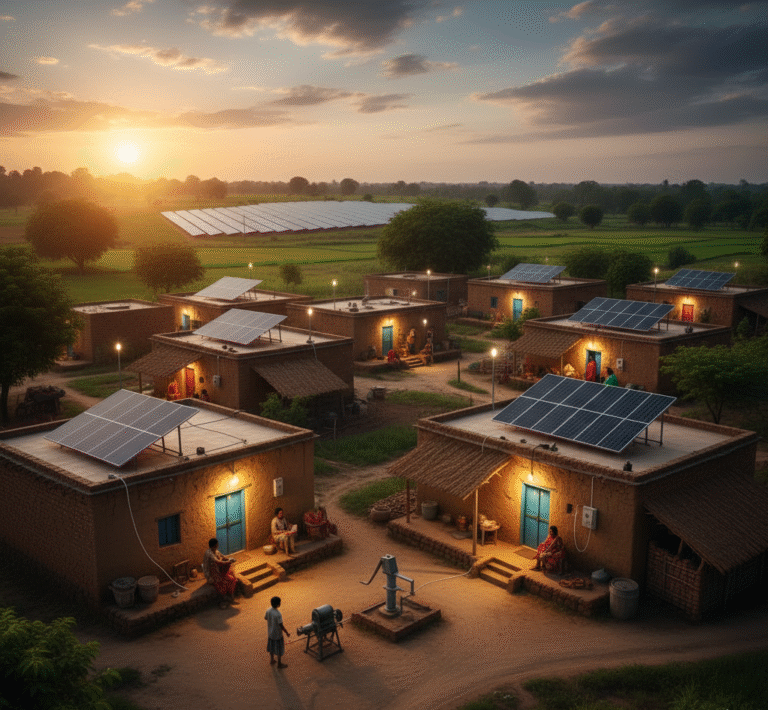
And this is where the Flybird Foundation is stepping in—bringing clean, renewable, dependable solar power to rural communities that need it most. Through awareness, installations, and community-driven participation, the Foundation is proving that sunlight doesn’t just brighten homes; it transforms lives.
In many rural areas, electricity is still a luxury. Power cuts can last for hours, sometimes even days. Even when electricity is available, voltage fluctuations make appliances difficult to use. For families with limited income, buying generators or paying high electricity bills is not an option.
This energy gap affects daily life in many ways:
Children cannot study properly after sunset
Women often cook or work in poor lighting
Small shops lose evening customers
Mobile phones remain uncharged during emergencies
Healthcare facilities struggle to operate efficiently
Lack of reliable energy creates a cycle of limited opportunity. And breaking this cycle requires a solution that is accessible, affordable, and long-lasting.
Solar energy fits all three.
Solar power is not just an environmental solution—it is a social solution. Rural areas receive abundant sunlight throughout the year, making solar energy a natural choice for powering homes and community spaces.
Solar brings:
Consistent power supply even in remote locations
Lower electricity costs for families
Better lighting for studying, cooking, and working
Reduced dependence on kerosene lamps
Improved safety during nighttime
Support for small businesses and farming activities
The moment solar panels are installed on a rural home, the entire rhythm of life changes. Light becomes reliability, and reliability becomes opportunity.
The Flybird Foundation believes that access to energy is a fundamental right, not a privilege. It is the foundation of education, livelihood, safety, and growth. With this conviction, the Foundation began a solar awareness and installation program designed specifically for rural communities.
The mission is simple but powerful:
Bring clean, reliable, and affordable solar energy to every rural household that needs it.
Through workshops, village-level discussions, demonstrations, and solar installation projects, the Foundation helps families understand how solar works, how it reduces cost, and how it can light up their homes for years.
The program also focuses on long-term sustainability, ensuring villagers can maintain their solar units themselves.
The impact of clean energy becomes visible the moment the first switch is turned on. Solar lighting and power systems create a ripple effect across daily life.
Education Becomes Easier
Children no longer struggle with smoky lanterns. They can study under bright, stable light and complete homework without difficulty.
Women Gain Comfort and Safety
Cooking, cleaning, and other evening tasks become safer and more manageable when homes are properly lit.
Small Businesses Grow
Shops stay open longer, earning more income. Tailors, barbers, and small vendors benefit directly from extended working hours.
Families Feel Secure
Bright homes discourage unwanted visitors, making nights calmer and safer.
Communication Improves
Charged mobile phones mean families can stay connected, receive updates, and handle emergencies better.
Solar energy doesn’t just brighten rooms—it brightens opportunities.
Before installations begin, the Flybird Foundation invests time in building awareness. Many rural households are unfamiliar with solar technology, and misconceptions often exist.
Common concerns include:
“Solar panels are too costly.”
“What if they stop working?”
“Will they work during monsoon?”
“Can they support daily appliances?”
To address this, the Foundation holds hands-on awareness sessions that explain:
How solar panels convert sunlight into energy
How batteries store power for night-time use
Why solar units require minimal maintenance
How long the systems last
How much families can save each month
Once people understand the long-term benefits, hesitation turns into excitement.
The Foundation adopts a community-centric approach, ensuring installations benefit the maximum number of families.
The process includes:
Conducting surveys to identify households with the most urgent energy needs
Involving local leaders, teachers, and volunteers
Training selected villagers to maintain solar systems
Setting up demonstration units for public viewing
Installing rooftop panels and small solar kits for homes
Each installation becomes a symbol of progress for the village.
When rural students gain access to uninterrupted lighting, their confidence grows. They can revise lessons at night, prepare for exams, and pursue higher education without barriers created by darkness.
Teachers report:
Better attendance
Improved concentration
Higher exam scores
More participation in schoolwork
Solar energy indirectly strengthens the entire education ecosystem.
Women often become the true changemakers in the solar journey. They manage household budgets, understand daily struggles, and see the direct benefits of clean energy.
Women help in:
Encouraging neighbors to adopt solar systems
Managing and maintaining household solar kits
Participating in energy training sessions
Becoming community ambassadors for clean energy
Their involvement ensures the movement spreads faster and sustains longer.
Solar power opens the door to new livelihood opportunities.
Villagers can now run:
Small shops
Tailoring services
Phone charging stations
Evening tuitions
Cold storage for produce (in advanced setups)
With reliable electricity, income sources expand, helping families improve their quality of life.
Beyond homes, the Flybird Foundation works to solar-power community spaces such as:
Village libraries
Common halls
Anganwadi centers
Schools
Water pumps
Evening meeting areas
These spaces become hubs where the community gathers, learns, collaborates, and grows.
When multiple homes in a village adopt solar, the transformation becomes visible:
Streets remain lit
Children walk safely at night
Shops operate longer
The village appears more vibrant
Other communities take inspiration
What begins with a few homes slowly evolves into a model village that others want to replicate.
The Flybird Foundation envisions a future where every rural household has access to reliable clean energy. The long-term goal includes:
More installations across underserved villages
Advanced training for local technicians
Setting up solar-powered community services
Encouraging youth to take part in green energy initiatives
Expanding to off-grid areas where electricity is still unavailable
A solar-powered village is not a dream—it is a future that is within reach.
Solar energy has the power to rewrite the story of rural India. It brings stability where there was uncertainty, possibility where there were limitations, and hope where there was hardship. By lighting homes, it lights futures. By lowering costs, it strengthens families. By empowering communities, it shapes a better tomorrow.
With the Flybird Foundation’s commitment to clean energy for all, rural homes gain more than electricity—they gain dignity, opportunity, and a path toward long-term progress.
A single solar panel on a rooftop becomes much more than a device.
It becomes a symbol of transformation, equality, and possibility.

Together, we spread hope, inspire change, and shape brighter futures.
Flybird Foundation © All Rights Reserved.